
GOP seeks Supreme Court stay to restore discounted TV ad rates for party committees
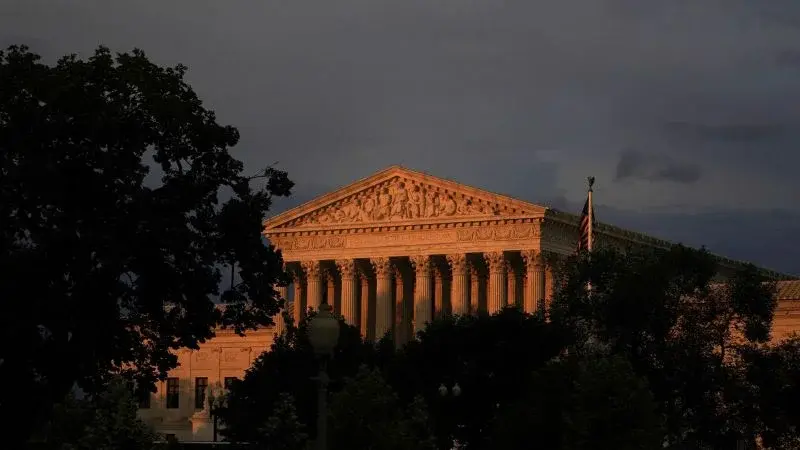
Republican congressional committees have petitioned the Supreme Court to halt a 4th Circuit ruling that denies political parties access to discounted television advertising rates. The 4th Circuit ruled that only individual candidates, not party committees or super PACs, are entitled to the 'lowest unit charge' mandated by law. Democrats, who rely more on candidate-level fundraising, welcomed the ruling, while Republicans, who dominate national party spending, argue it undermines their financial advantage. The dispute centers on whether the FCC’s interpretation of 'use by a candidate' includes ads purchased by party committees. Broadcasters are now caught in a standoff, with Democrats threatening legal action against stations offering discounts and Republicans warning of FEC complaints if stations refuse them. The Supreme Court must decide whether to intervene before the 60-day pre-election discount period begins on September 4.
Key points
- The National Republican Congressional Committee and National Republican Senatorial Committee filed an emergency appeal with Chief Justice John Roberts to block a 4th Circuit ruling that denies party committees discounted TV ad rates.
- The 4th Court of Appeals ruled 2-1 that the FCC’s order extending 'lowest unit charge' discounts to party committees and joint fundraising committees violates the plain language of the law, which reserves discounts for individual candidates.
- The Trump administration’s Solicitor General, D. John Sauer, joined the GOP committees in urging the Supreme Court to act quickly, citing uncertainty in ad contracts and the need for immediate relief.
- Democratic candidates, who benefit from the ruling due to their stronger candidate-level fundraising, sent letters to broadcasters warning that offering discounted rates to party committees may constitute unlawful corporate in-kind contributions.
- Republicans countered by telling broadcasters to ignore the Democratic warnings, arguing that stations have long exercised discretion in setting ad rates and that refusing discounts could trigger FEC complaints for past violations.
- The Republican National Committee holds over $130 million in cash, while the Democratic National Committee is in debt, making the ad rate dispute a critical factor in the 2026 midterm spending race.
Background
This dispute follows a recent Supreme Court ruling that struck down federal limits on coordinated spending between political parties and candidates, a decision that favored Republican fundraising structures. The current ad rate case is part of a broader legal battle over the interpretation of campaign finance laws, particularly the definition of 'use by a candidate' in the context of party-purchased ads. The FCC’s 1991 guidance and a 2025 statement by the Trump administration’s solicitor general, which limited discounts to candidate spending, present a legal contradiction for the GOP’s current position. The case also intersects with ongoing FCC efforts to reshape broadcast ownership rules, including the repeal of the 39% household reach limit, which has drawn criticism from Democratic FCC Commissioner Anna Gomez.
How outlets are covering it
Politico emphasizes the emergency nature of the GOP’s appeal and the financial stakes, noting the RNC’s $130 million cash reserve versus the DNC’s debt. It highlights the role of Judge Wilkinson’s dissent and the Trump administration’s involvement. Ars Technica focuses on the legal technicalities, including the 1991 FCC guidance and the solicitor general’s prior statements, which contradict the current GOP position. It also notes the FCC’s broader regulatory agenda, including broadcast ownership rules. Axios centers on the immediate standoff between Democrats and Republicans over broadcaster compliance, detailing the legal threats from both sides and the potential impact on the 2026 midterms. CNN’s primary source is largely obscured by technical code, but its headline aligns with the GOP’s request for a Supreme Court stay.
Why it matters
The outcome of this case will determine whether political parties and super PACs can access discounted TV ad rates, directly impacting the cost and reach of their campaigns in the 2026 midterms. A ruling in favor of the GOP could amplify their financial advantage, while a ruling upholding the 4th Circuit decision would benefit Democrats, who rely more on candidate-level fundraising. The case also tests the limits of FCC authority and the interpretation of campaign finance laws, with potential implications for future elections and broadcast industry practices.
What to watch
The Supreme Court must decide whether to grant the emergency stay requested by the GOP committees. If the court acts quickly, it could halt the 4th Circuit ruling before the 60-day pre-election discount period begins on September 4. If the court denies the stay, broadcasters will likely follow the 4th Circuit ruling, and the case may proceed to a full appeal. The outcome will also influence how broadcasters navigate the legal threats from both parties and could set a precedent for future campaign finance disputes.
- Republicans ask Supreme Court to let them air TV ads for less CNN
- Republicans ask Supreme Court to block campaign advertising ruling Politico
- Appeals Court Rules for Democrats in TV Ad Case The New York Times
- GOP heads to Supreme Court after losing case over TV election ad prices Ars Technica
- Scoop: National Democrats and Republicans squeeze local TV stations in ad rate war Axios
Want the full story? Read the original reporting
Read on CNN