
GOP Redistricting Blitz Backfires as Democrats Win Midterms
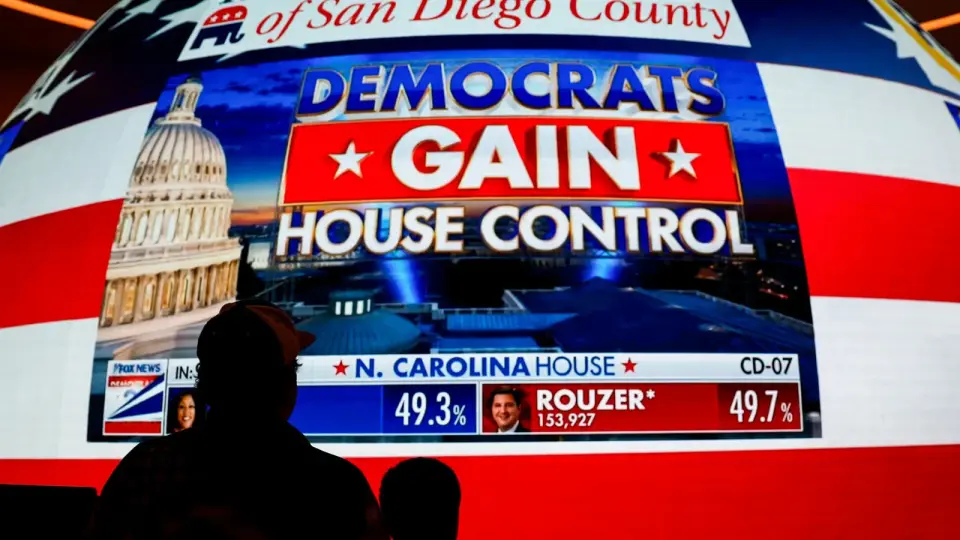
Republican efforts to redraw congressional maps ahead of the 2026 midterms failed to secure the expected House majority. Despite redrawing 15 districts in nine states, Democrats retained 11 targeted seats and gained six others, resulting in a historic Democratic majority. The backlash was driven by strong Latino turnout and Democratic counter-redistricting in California.
Key points
- Republicans redrew 15 congressional districts across nine states, but Democrats retained 11 of those targeted seats, including four in Texas and all four in Florida.
- Democrats gained six additional seats through counter-redistricting in California and Utah, offsetting Republican gains in Texas and Tennessee.
- The Supreme Court’s April decision in Louisiana v. Callais weakened anti-minority gerrymandering protections, enabling Republican map changes in the South, but voter turnout among targeted communities surged.
- Democrats achieved one of the largest congressional majorities in modern history, with Hakeem Jeffries poised to become Speaker, while Republicans lost control of key state legislatures in Texas and Georgia.
- Ballot measures in Colorado, Maryland, and Missouri restricted future mid-decade redistricting, while voter ID laws were expanded in North Carolina, Ohio, and Nevada.
Background
The redistricting war began in 2025 when President Trump demanded Texas redraw its map to add five Republican seats. This triggered Democratic counter-moves in California and Virginia, and a Supreme Court ruling in April 2026 that weakened racial gerrymandering protections. Prior to the election, Trump’s approval rating had hit an 80-year low, and Latino voter support in Texas had collapsed, undermining Republican projections.
How outlets are covering it
Rolling Stone and The Atlantic emphasize the total failure of the Republican strategy, noting that targeted Democratic incumbents in Florida, Ohio, and Alabama prevailed despite map changes. KCCI provides granular data, confirming that 11 of 15 Republican-targeted seats remained Democratic, while Democrats flipped six seats in California and Utah. The New Yorker frames the event as a 'marginal skirmish' that failed to stop a broader Democratic 'tsunami,' highlighting that state-level trifectas in Michigan, Minnesota, and Wisconsin will shape future maps. All sources agree that the redistricting effort backfired, but The New Yorker notes that the outcome may not fully reflect the map changes due to broader voter dissatisfaction with Trump.
Why it matters
The failure of the redistricting effort signals a shift in power dynamics, with Democrats gaining control of key state legislatures and passing ballot measures to restrict future mid-decade redistricting. This could limit Republican influence in the 2028 cycle and prompt congressional debates on banning partisan redistricting between censuses. The surge in Latino and Black voter turnout also indicates a potential long-term realignment in the South and Southwest.
What to watch
Democrats will likely pursue redistricting in states where they now hold trifectas, such as Wisconsin and Michigan, though legal obstacles remain. Congress may debate banning mid-decade redistricting or mandating independent commissions. In Texas, Republicans could attempt a final map change in the lame-duck session before Democrats take over the governor’s mansion. The outcome of pending races in North Carolina, Louisiana, and Florida will determine the final House composition.
- Dummymander: The GOP’s Bid to Rig the Midterm Map Failed Spectacularly Rolling Stone
- Republicans Redistricted Themselves Out of Congress The Atlantic
- Republican redistricting failed to flip most targeted districts KCCI
- What This Week’s Elections Mean for The Future of Elections The New Yorker
- Did Republican efforts to redistrict the House turn into a dummymander? A state-by-state guide CBS News
Want the full story? Read the original reporting
Read on Rolling Stone