
GOP Tax Cuts Fail to Pay for Themselves as Deficit Hits $2 Trillion
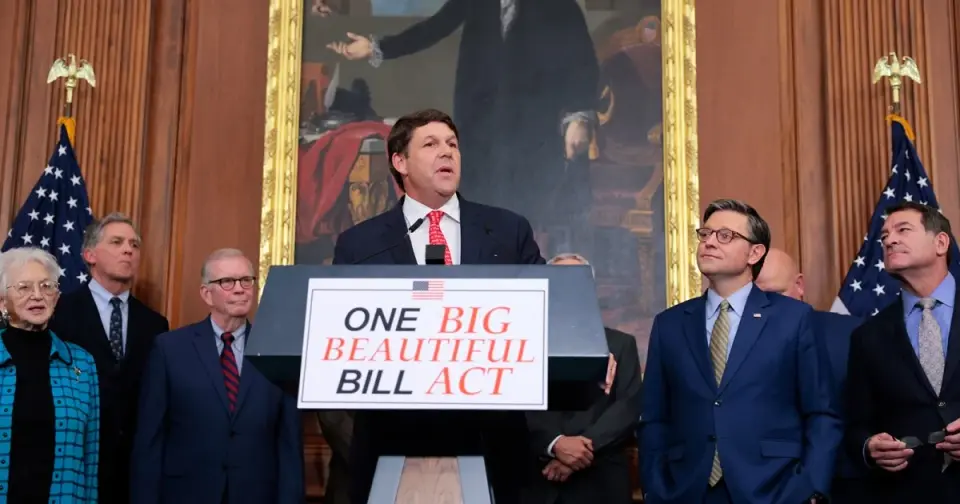
One year after enactment, the 2025 Republican tax cuts have failed to reduce the federal deficit, which remains near $2 trillion annually. Official projections now estimate the law will add $4.7 trillion to the national debt over the next decade, contradicting initial claims that the measure would pay for itself through economic growth. While some lawmakers blame government shutdowns and the Iran war for poor growth, others acknowledge the need for bipartisan changes to entitlement programs like Social Security and Medicare to address the rising $40 trillion debt.
Key points
- The federal deficit remains approximately $2 trillion per year, with the 2025 tax law projected to add $4.7 trillion to the national debt over the next decade.
- Republican officials have shifted from claiming the tax cuts would reduce the deficit to blaming government shutdowns, the Iran war, and faulty CBO models for the lack of expected economic growth.
- House Budget Committee Chair Jodey Arrington and Rep. Lloyd Smucker acknowledge the need for bipartisan changes to Social Security and Medicare to address the fiscal crisis.
- The debt ceiling was set at $41.1 trillion, and Republicans are facing pressure to address the rising debt despite previous promises of fiscal responsibility.
Background
The 2025 tax cuts, known as the One Big Beautiful Bill, were enacted with the promise of being deficit-neutral or even deficit-reducing through increased economic growth. However, the federal debt has reached $40 trillion, and the deficit has remained high. Earlier projections by the CBO and JCT estimated the law would add $3.4 trillion to the deficit, but updated figures now show a higher cost of $4.7 trillion. The archive articles do not provide relevant background for this specific fiscal story, as they cover unrelated topics such as earwax, Apple financing, Meta glasses, and H-2A wages.
Why it matters
The failure of the 2025 tax cuts to pay for themselves highlights the growing fiscal crisis in the US, with the national debt reaching $40 trillion and the deficit remaining near $2 trillion annually. This has led to a shift in Republican rhetoric, from promising fiscal responsibility to acknowledging the need for changes to entitlement programs. The situation raises concerns about the long-term sustainability of the US budget and the potential impact on economic growth and public services.
What to watch
Republicans are expected to face pressure to address the rising debt and deficit, potentially through bipartisan changes to Social Security and Medicare. The debt ceiling, set at $41.1 trillion, may require further increases, and lawmakers are likely to continue debating the long-term fiscal implications of the 2025 tax cuts. The outcome of these debates will be crucial for the future of the US budget and economic stability.
Want the full story? Read the original reporting
Read on MS NOW