
Grand Jury Rejects DOJ Bid to Indict Cassidy Hutchinson Over Jan. 6 Testimony
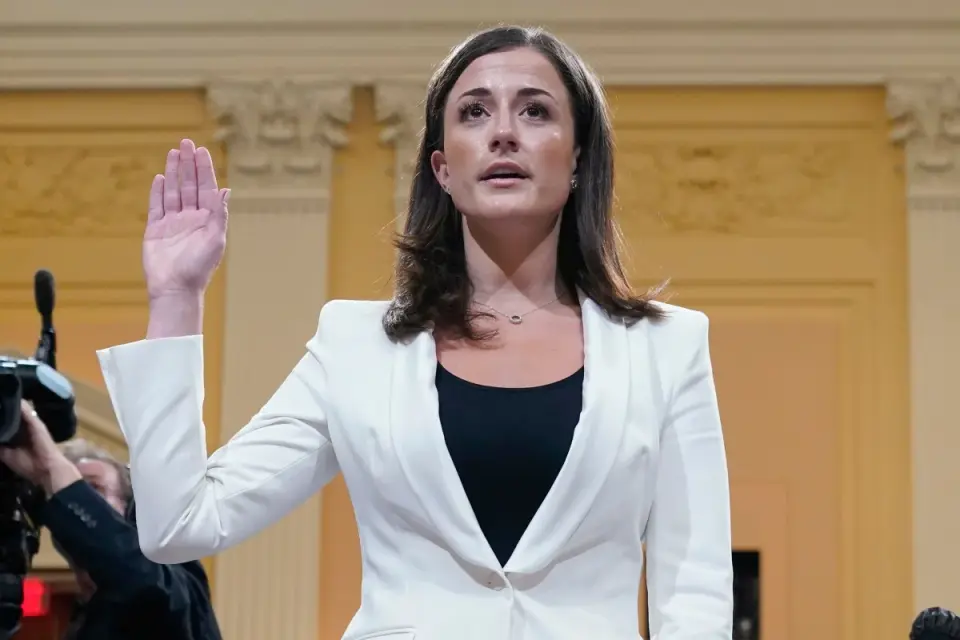
A federal grand jury in Washington declined to indict former White House aide Cassidy Hutchinson, rejecting the Justice Department’s attempt to charge her with lying about her 2022 testimony regarding President Donald Trump’s actions during the January 6, 2021, Capitol attack. The decision marks a significant setback for the administration’s legal strategy against political critics, following similar grand jury rejections in other high-profile cases.
Key points
- A federal grand jury in Washington, D.C., declined to indict Cassidy Hutchinson, rejecting the Justice Department’s attempt to charge her with lying about her 2022 testimony regarding President Trump’s actions during the January 6, 2021, Capitol attack.
- The case was handled by the DOJ’s Civil Rights Division, which has faced scrutiny for pursuing charges against perceived adversaries of the president.
- Hutchinson, a former aide to White House Chief of Staff Mark Meadows, had given damaging testimony about Trump’s behavior during the Capitol attack, including claims that he urged the removal of metal detectors and attempted to force his way to the Capitol.
- The grand jury’s refusal to indict does not bar the DOJ from attempting to charge her again in the future.
- The decision is part of a broader pattern of the Trump administration using federal resources against political adversaries, including recent attempts to prosecute former FBI Director James Comey and a search of the home of Rep. Ilhan Omar.
Background
Hutchinson’s 2022 testimony before the House Select Committee investigating January 6 was highly publicized, drawing 13 million viewers. She described Trump as angry and defiant, claiming he tried to let armed protesters bypass security screenings and attempted to join the mob at the Capitol. Her account was later disputed by a Secret Service driver, though some aspects were corroborated. The case had been referred to the DOJ by Republican lawmakers in 2026, with the Civil Rights Division taking an unusual role in the investigation.
How outlets are covering it
AP and The New York Times emphasize the grand jury’s rejection as a significant setback for the Justice Department’s efforts to prosecute political adversaries, noting that some prosecutors were skeptical of the case. The Washington Post highlights the unusual involvement of the Civil Rights Division and the low threshold for grand jury indictments, while The Guardian focuses on the broader pattern of the administration targeting perceived enemies. All sources agree that the decision is part of a larger trend of politically sensitive actions by the DOJ in the run-up to midterm elections.
Why it matters
The grand jury’s rejection underscores the challenges the Justice Department faces in securing indictments against political critics, highlighting the low threshold for grand jury decisions and the skepticism within the DOJ itself. It also reflects the broader political tensions surrounding the January 6 investigation and the administration’s efforts to hold perceived adversaries accountable.
What to watch
The Justice Department may attempt to charge Hutchinson again in the future, as the grand jury’s rejection does not bar further prosecution. The administration is likely to continue pursuing other politically sensitive cases, including the ongoing investigation into former FBI Director James Comey and the search of Rep. Ilhan Omar’s home.
- Grand jury refuses to indict former White House aide Cassidy Hutchinson, AP sources say AP News
- Grand Jury Declines to Bring Charges Against Cassidy Hutchinson The New York Times
- Grand jury declines to indict ex-White House staffer who testified about January 6 The Guardian
- Grand jury declines to indict Cassidy Hutchinson over Jan. 6 testimony The Washington Post
- DOJ fails to indict Cassidy Hutchinson, a key Jan. 6 witness Axios
Want the full story? Read the original reporting
Read on AP News