
House passes Ratepayer Protection Act to shift data center energy costs to tech firms
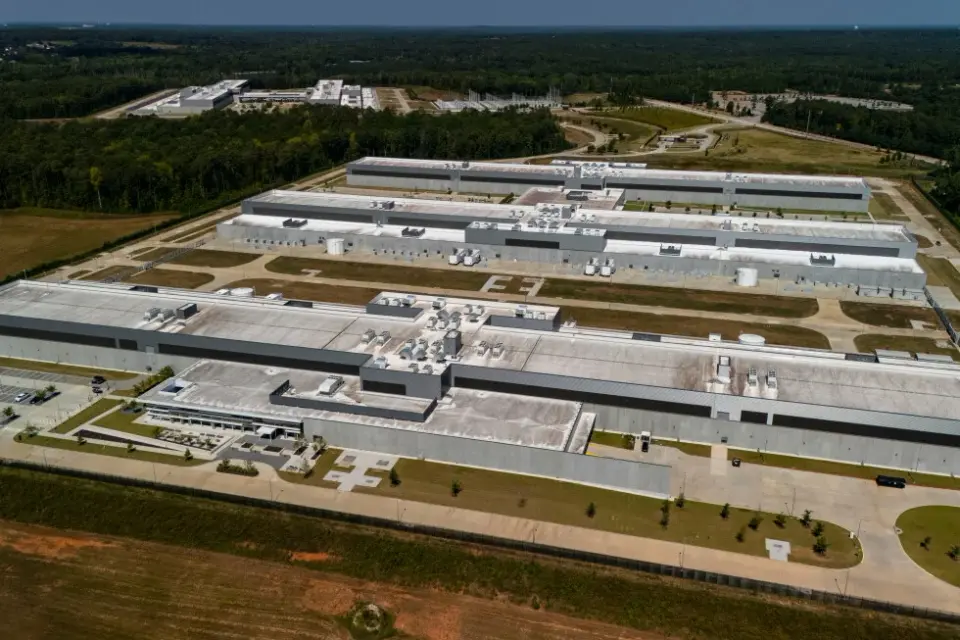
The U.S. House passed the Ratepayer Protection Act with a 417-3 vote, aiming to ensure data center operators cover the full costs of energy infrastructure upgrades rather than passing those expenses to residential consumers. The bipartisan measure, sponsored by Rep. Gabe Evans (R-Colo.) and Rep. Kathy Castor (D-Fla.), now moves to the Senate amid growing public concern over rising electricity bills linked to artificial intelligence expansion.
Key points
- The House approved the Ratepayer Protection Act with a 417-3 margin, marking the first major legislative action addressing data center energy costs.
- The bill requires large power customers to cover 100% of costs for new generation and transmission upgrades, though it only encourages states to adopt this federal standard rather than mandating it.
- A poll by the AP-NORC Center and the Energy Policy Institute at the University of Chicago found that 66% of Americans are extremely or very concerned about data centers' impact on energy prices, and 57% are concerned about water supply impacts.
- The legislation now heads to the Senate, where Majority Leader John Thune indicated quick passage could be achieved via a consent agreement, though Democratic ranking member Martin Heinrich criticized the bill as a 'voluntary structure' that does not go far enough.
- House Majority Leader Steve Scalise supported the bill, emphasizing the need to balance technological advancement with local consumer interests, while Energy and Commerce Chair Brett Guthrie noted the measure aligns with White House objectives despite President Trump's general opposition to AI regulation.
Background
This development follows weeks of internal debate among House Republicans regarding how to address growing public backlash against data centers ahead of the 2026 midterm elections. Previous coverage noted that the bill was advanced under expedited rules due to political pressure from vulnerable districts, and that Senate reception remains uncertain. The measure is the first significant congressional response to the costs associated with the AI boom, building on earlier discussions about requiring tech firms to fund infrastructure upgrades.
How outlets are covering it
AP News highlights the public sentiment driving the legislation, citing a new poll showing high levels of concern among Americans regarding energy and water impacts, and quotes Rep. Frank Pallone (D-N.J.) criticizing the bill as imperfect but a starting point. AP also notes President Trump's social media comments dismissing communities opposed to data centers as 'backwards and poor.' Politico emphasizes the political dynamics, describing the bill as a signature GOP legislative win ahead of midterms and noting that only three progressive Democrats voted against it. Politico points out that while the bill aligns with White House objectives, it faces criticism from Senate Democrats like Martin Heinrich who view it as insufficient. Both outlets agree on the 417-3 vote count and the bipartisan nature of the support, but AP focuses more on consumer impact and public opinion, while Politico focuses on the legislative strategy and Senate prospects.
Why it matters
The passage of the Ratepayer Protection Act represents a significant shift in federal policy regarding the financial burden of AI infrastructure, potentially preventing cost-shifting to residential consumers. As public concern over energy prices and water usage grows, this legislation may set a precedent for future regulations on large-scale data center development. The bill's progression to the Senate could influence the trajectory of AI-related infrastructure policy in the United States, balancing technological growth with consumer protection.
What to watch
The Ratepayer Protection Act will now be considered by the Senate, where Majority Leader John Thune suggests a consent agreement could facilitate passage before the November midterm elections. Senate Democrats, including Martin Heinrich, have expressed skepticism about the bill's effectiveness, potentially leading to amendments or further debate. The outcome in the Senate will determine whether the federal standard for data center cost coverage becomes law or remains a voluntary framework for states to consider.
- House passes bill aimed at addressing impact of data centers on energy costs AP News
- House Passes Bill Taking Aim at Data Center Electricity Costs The New York Times
- Trump wants more data centers, most Americans don’t. Here's what you need to know about data centers and why they are so polarizing. Yahoo Tech
- House advances bill to rein in AI data center utility costs CNBC
- House overwhelmingly passes bill to shield ratepayers from data centers Politico
Want the full story? Read the original reporting
Read on AP News