
Kansas Meatpacking Towns Flip Blue After ICE Raids Spark Voter Backlash
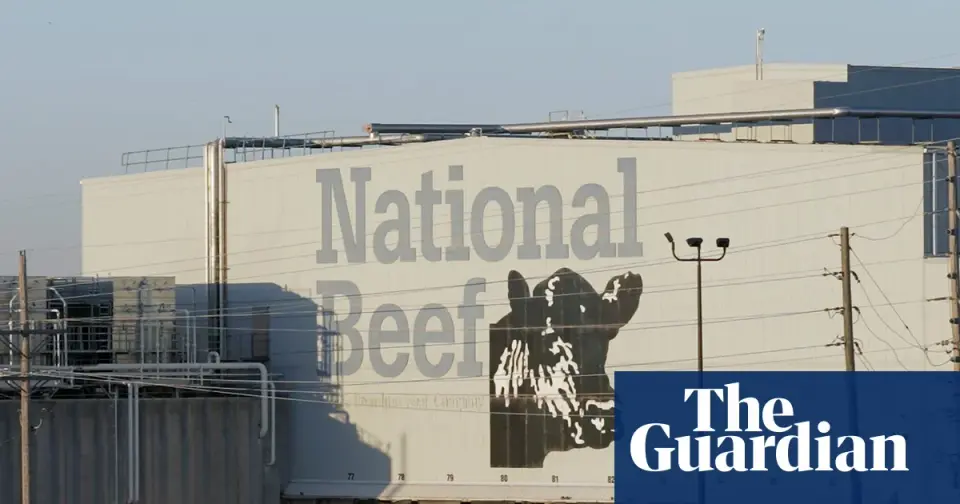
Late September 2026 ICE raids in southwestern Kansas disrupted the meatpacking industry and triggered a political backlash, flipping traditionally Republican counties to the left. This shift helped Democrat Adam Hamilton win the US Senate seat, marking the first Democratic victory in Kansas since 1932. While President Trump acknowledged his deportation tactics may have been too harsh, he appointed hardliner Stephen Miller as White House chief of staff, signaling a mixed approach to future enforcement.
Key points
- ICE agents conducted aggressive raids in Dodge City, Garden City, and Liberal in late September 2026, causing businesses to close and families to fear leaving their homes.
- The operations disrupted the 'Golden Triangle of Meatpacking,' which supplies roughly a quarter of US beef, leading the Kansas Livestock Association to warn of rising consumer prices.
- Local officials, including Republican Senator Roger Marshall, criticized the lack of advance notice and the disruptive nature of the raids, urging the administration to consult local leaders.
- Voter sentiment shifted dramatically; Ford County swung 39 points and Seward County 52 points toward Democrats compared to 2024 results.
- The Wichita Eagle reported that none of the five 'heinous criminals' claimed by the Trump administration were actually arrested during the surge, as four had been deported earlier and one was already in prison.
- Despite acknowledging his policies might be 'too tough' on 60 Minutes, President Trump appointed Stephen Miller, the architect of aggressive deportation policies, as White House chief of staff.
Background
This development follows a broader national trend where visible immigration enforcement actions, such as the Minneapolis shootings and New York arrests, alienated voters previously supportive of strict border measures. Earlier coverage noted that local leaders in Los Angeles had warned that ICE raids were intended to suppress voter turnout, while other cases highlighted legal challenges regarding third-country deportations. The Kansas incident represents a specific, localized manifestation of this national backlash, where abstract policy debates became personal trauma for rural communities.
How outlets are covering it
The Guardian emphasizes the grassroots mobilization, highlighting how non-voters like veteran Jose Del Real and organizer Amy Soberanes were galvanized by the visible brutality of the raids. Reason Magazine focuses on the electoral data, noting that while the southwestern counties were not decisive for the overall Senate race, the 52-point swing in Seward County illustrates the depth of the Republican collapse. KWCH provides a local perspective from Liberal, where residents expressed fear and some considered leaving the state, while local officials like Vice Mayor Janeth Vazquez called for better immigration policies rather than open borders. All sources agree that the lack of coordination with local officials and the disruption of the beef industry were key factors in the political shift.
Why it matters
The Kansas results signal a potential limit to the Trump administration's aggressive deportation agenda, demonstrating that even deep red areas can flip if enforcement tactics disrupt local economies and community stability. The appointment of Stephen Miller as chief of staff suggests the administration may continue its hardline approach despite electoral losses, creating a tension between political reality and policy direction. This case study may influence how both parties approach immigration issues in the next presidential campaign, particularly regarding the balance between enforcement and economic stability in rural areas.
What to watch
Congressional Democrats, having won control, are expected to push for oversight and reforms to ICE operations. The Trump administration must decide whether to moderate its enforcement tactics or double down with Stephen Miller in a senior role. Local Kansas communities will watch for whether the new Democratic senator, Adam Hamilton, delivers on promises to address the concerns of the meatpacking industry and immigrant populations. The next presidential campaign will likely feature immigration enforcement as a central issue, with voters in similar rural areas potentially serving as bellwethers for national sentiment.
- How ICE raids in Kansas meatpacking country sparked fury – and turned voters against Trump The Guardian
- Kansas towns hit by ICE raids flipped to Democrats. Now they demand accountability Reuters
- Trump's Immigration Crackdowns Helped Turn Kansas Blue Reason Magazine
- Latino voters help fuel Kansas’ blue wave NPR
- Liberal residents reflect on ICE raids, election results in southwest Kansas KWCH
Want the full story? Read the original reporting
Read on The Guardian