
Kennedy Blasts Vance’s Iran Blame, Citing Economic Pain as True Cause of GOP Midterm Collapse
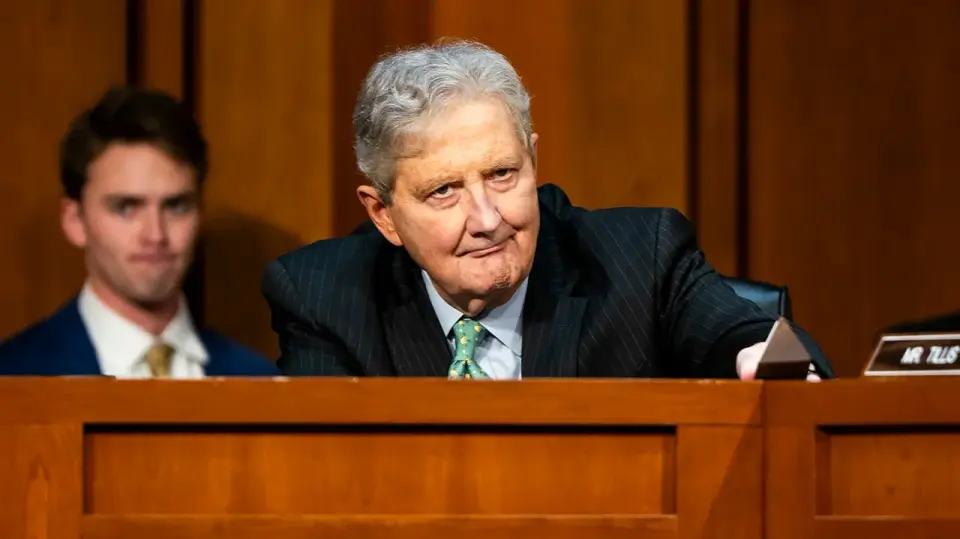
Sen. John Kennedy (R-La.) rejected Vice President JD Vance’s assertion that the Iran war caused the Republican Party’s historic midterm losses, arguing instead that voters were primarily motivated by economic pain and inflation. Kennedy told CNN that the defeat was 'a lot deeper than that,' criticizing Vance’s post-election analysis for ignoring the cost of living. While Trump acknowledged the war hurt his party, he blamed rising gasoline prices and a 'great dislike' for Israel. The conflict highlights a rift within the GOP over whether foreign policy or domestic economics drove the Democratic gains of over 40 House seats and at least eight Senate seats.
Key points
- Sen. John Kennedy criticized VP JD Vance for blaming the Iran war for GOP losses, stating the issue was 'a lot deeper' and centered on economic pain.
- Kennedy argued Democrats better acknowledged inflation and cost-of-living issues, noting that while inflation started under Biden, the economy 'belongs to President Trump' now.
- An Economist/YouGov poll found 67% of Americans disapproved of Trump’s handling of the economy, slightly higher than the 61% disapproval of his foreign policy.
- Trump admitted the war hurt Republicans but cited rising gasoline prices and a 'great dislike' for Israel as key factors, while defending the conflict as necessary to prevent Iranian nuclear weapons.
- Vance was removed from Iran negotiations by Trump, who directed him to focus on investigating corruption in Democratic-controlled states, signaling a shift away from diplomatic engagement with Tehran.
Background
This dispute follows the 2026 midterm elections, where Democrats gained significant ground, including more than 40 House seats and at least eight Senate seats. Prior to the election, Kennedy had warned that Republicans needed to address high prices. Recent archive coverage notes that Kennedy is weighing a 2028 presidential bid if the GOP field appears weak, while other lawmakers have looked to Marco Rubio as a potential unifying alternative to Vance. The current conflict underscores internal party divisions over whether the Iran war or domestic economic struggles were the primary drivers of the Republican defeat.
How outlets are covering it
The Hill and CNN report that Kennedy explicitly rejected Vance’s narrative, with Kennedy telling CNN that the loss was not because of Iran and criticizing Vance for not doing himself any favors with his analysis. CNN notes that Trump agreed with Vance that the war was a factor but emphasized gasoline prices and anti-Israel sentiment. The Jerusalem Post highlights Trump’s claim that Gulf states, including Saudi Arabia, asked him to refrain from escalating the war, suggesting the conflict’s duration was influenced by regional diplomacy rather than purely domestic political calculations. While Kennedy focuses on economic messaging, Trump and Vance emphasize the war and its secondary effects on energy prices and foreign policy alignment.
Why it matters
The disagreement over the cause of the midterm losses signals a strategic split within the Republican Party as it prepares for the 2028 presidential cycle. If the party continues to prioritize foreign policy narratives over economic concerns, it may face further electoral challenges. The removal of Vance from Iran talks and the shift toward domestic fraud investigations indicate a pivot in administration priorities, potentially affecting US foreign policy and domestic political dynamics in the coming years.
What to watch
Kennedy plans to run for Senate reelection but has not ruled out a 2028 presidential bid. Trump is preparing for a confrontation with a Democratic-controlled Congress, predicting he will veto many bills but eventually seek deals on healthcare and drug prices. The future of US-Iran relations remains uncertain, with Trump claiming control over the Strait of Hormuz and seized funds, while Vance is redirected to investigate corruption in Democratic-run states. The GOP will likely continue to debate the balance between foreign policy and economic messaging in its 2028 strategy.
- Senate Republican on Vance blaming midterm GOP losses on Iran war: ‘Put down the crack pipe’ The Hill
- Opinion | JD Vance Trots Out an Old Scapegoat The New York Times
- Trump says ‘great dislike’ for Israel contributed to Republican midterm losses CNN
- Opinion | The War or the Wallet: What Drove Voters? WSJ
- Trump says Gulf allies urged restraint on Iran, admits war hurt Republicans in midterms The Jerusalem Post
Want the full story? Read the original reporting
Read on The Hill