
Lamont and Fazio Clash on Cost of Living in First CT Debate
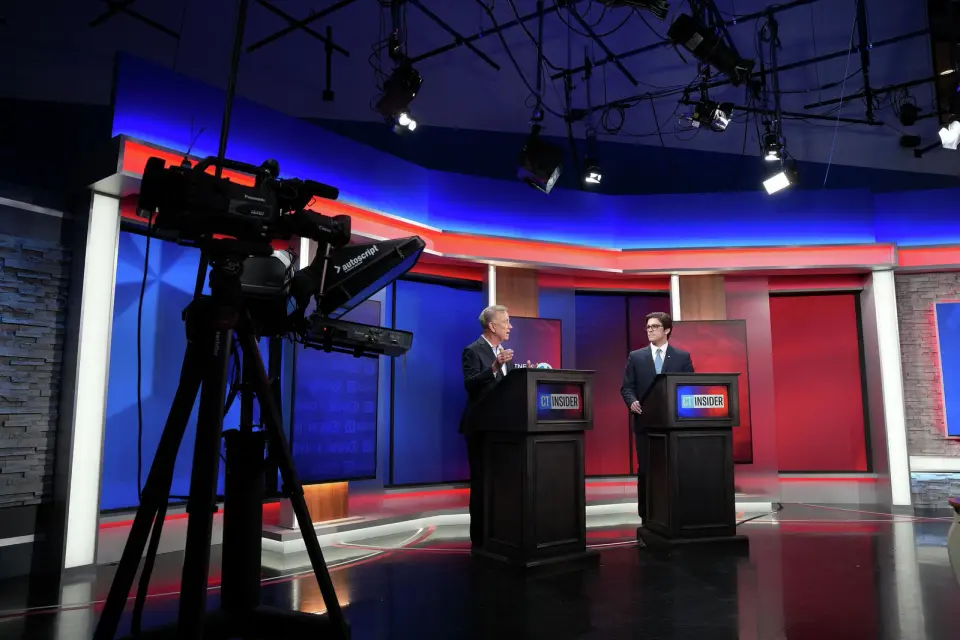
In the first televised debate for Connecticut governor, incumbent Ned Lamont and challenger Ryan Fazio clashed over the state’s cost of living, with Fazio accusing Lamont of raising taxes while Lamont cited fiscal stability and external economic pressures.
Key points
- Fazio, a 36-year-old Republican state senator, aggressively framed the debate around high energy bills, taxes, and unemployment, urging voters to ignore national distractions and focus on state-level failures.
- Lamont, a 72-year-old Democrat seeking a third term, defended his record by highlighting eight consecutive balanced budgets and economic growth, attributing current inflation to federal tariffs and the war in Iran.
- The debate featured a dispute over tax figures: Fazio claimed a $3 billion cumulative tax increase, while Lamont argued the net annual increase was only $412 million after accounting for cuts and new programs like Paid Family and Medical Leave.
- Fazio proposed a gas tax holiday, arguing the state’s transportation fund has a surplus, while Lamont dismissed it as a superficial gesture that ignores the broader financial impact on families.
- A second and final debate is scheduled for Tuesday, October 28, 2026, on WTNH, Channel 8, following early voting that saw over 140,000 votes cast by Wednesday night.
Background
Connecticut is facing a competitive gubernatorial race with Ned Lamont, the current governor, seeking a third term that would make him the state’s longest-serving governor since statehood. The race has been influenced by national economic issues, including inflation and federal policies, which both candidates have addressed in their campaigns. Early voting has already seen significant participation, with over 140,000 votes cast by Wednesday night, indicating a high level of voter engagement in the upcoming election.
How outlets are covering it
The Democratic Governors Association (DGA) praised Lamont’s performance, stating he 'dominated' the debate and portrayed Fazio as an 'empty suit' beholden to Donald Trump. In contrast, CT Mirror reported that Fazio was an 'assured television presence' who effectively challenged Lamont’s narrative on economic issues. While the DGA emphasized Lamont’s leadership and results, CT Mirror highlighted Fazio’s aggressive tactics and the specific policy disagreements, such as the gas tax holiday and tax accounting, that emerged during the debate.
Why it matters
The debate highlights the growing influence of national economic issues on state-level politics, as both candidates sought to frame the election around the cost of living and fiscal responsibility. The outcome of the race could have significant implications for Connecticut’s future economic policies and its relationship with federal initiatives, particularly regarding tariffs and energy costs. Additionally, the high level of early voting suggests a strong voter interest in the election, which could influence the final outcome.
What to watch
The next major event in the race is the second and final debate, scheduled for Tuesday, October 28, 2026, on WTNH, Channel 8. This debate will provide another opportunity for both candidates to address key issues and potentially shift public opinion. Additionally, the results of the election will be closely watched as they could set the tone for other gubernatorial races across the country, particularly in states where Democrats are seeking to maintain their 'blue firewall' against Republican advances.
- CT gets first side-by-side look at Lamont and Fazio in TV debate CT Mirror
- Lamont, Fazio face off in first televised debate WFSB
- A recap of the Connecticut governor debate between Ned Lamont and Ryan Fazio CT Insider
- Vote 2026: As Early Voting approaches, cost of living driving race for CT governor News12 | Connecticut
- DGA Statement on Gov. Ned Lamont’s Win in the Connecticut Gubernatorial Debate Democratic Governors Association
Want the full story? Read the original reporting
Read on CT Mirror