
Midterm Forecasting Showdown: Polls and Prediction Markets Converge on Democratic Sweep
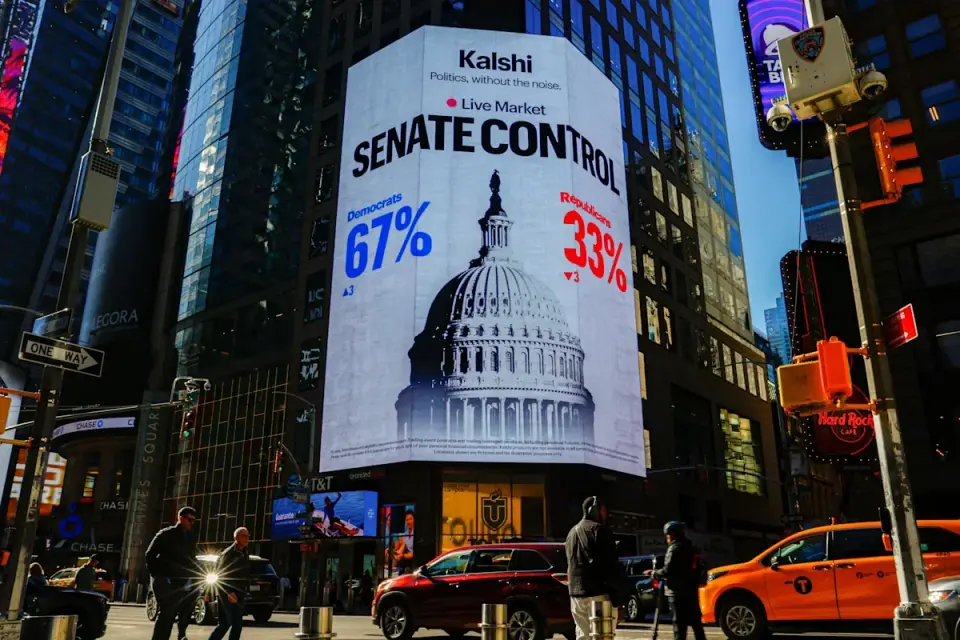
As the 2026 US midterms approach, prediction markets and traditional polls have largely converged on a Democratic victory in both the House and Senate, narrowing previous discrepancies. While markets initially lagged polls by several points in the Senate, the gap has shrunk to under three percentage points. This convergence follows a period of intense scrutiny after prediction markets missed key outcomes in Brazil and other 2026 races, raising questions about their reliability compared to statistical models.
Key points
- Democrats are favored to win both chambers, with polling models showing an 80.2% chance for the Senate and 96.2% for the House, compared to 77.3% and 94% in prediction markets.
- The gap between markets and polls in the Senate narrowed from 7.3 percentage points in September to 2.9 points on Tuesday, while House odds remained closely aligned.
- Trading volume on midterm markets surpassed $1.2 billion, exceeding levels from the 2024 presidential election, according to Kalshi.
- Senators Elizabeth Warren and John Curtis sent a joint letter to Kalshi and Polymarket expressing concerns over election-related contracts and potential market manipulation.
- A lawsuit in Utah challenges federal rules that override state anti-gambling laws, with the group Better Markets supporting the state's stance.
Background
This convergence follows a turbulent period for prediction markets, which faced criticism after mispricing the 2026 Brazilian presidential election and several US state races. In 2024, markets correctly predicted a Trump victory despite polls showing a tie, boosting their reputation. However, recent misses in Brazil, Serbia, and US primaries have led experts to question whether market accuracy relies on 'wisdom of the crowd' or a small group of skilled traders. Our earlier coverage noted that while markets and polls agreed on a Democratic sweep, internal party doubts and historical Republican resilience in red states remained variables.
How outlets are covering it
Yahoo Finance emphasizes the narrowing gap between markets and polls as a sign of maturing forecasting tools, highlighting the high stakes for platforms like Kalshi and Polymarket. The Guardian provides a critical analysis, arguing that markets often fail in high-profile elections due to an influx of recreational 'dumb money' that distorts prices, and notes that accuracy is driven by a small minority of skilled traders rather than the crowd. Axios, while largely obscured by cookie notices in the provided text, aligns with the narrative of a 'blue wave' but offers limited new data in the excerpt. The outlets differ in tone: Yahoo focuses on the statistical convergence, while The Guardian questions the fundamental reliability of market-based forecasting.
Why it matters
The outcome of the midterms will determine whether Democrats can investigate the current administration and block its legislative agenda. The accuracy of prediction markets versus polls will influence public trust in financial forecasting tools and may trigger stricter regulatory scrutiny from Congress, particularly regarding election-related contracts and market manipulation.
What to watch
Election Day results will serve as the ultimate test for prediction markets. If Democrats win as forecast, markets will likely claim vindication; if not, the backlash could accelerate legislative efforts to regulate or restrict election-related betting. The Utah lawsuit and the Warren-Curtis letter suggest that legal and regulatory challenges to these platforms are imminent.
- Prediction markets vs. polls: Election forecasting industry faces midterm test Yahoo Finance
- Prediction markets face US midterms test as election bets soar Reuters
- Are prediction markets accurate on elections? The US midterms are a big test The Guardian
- Election Trading Stagnates on Prediction Markets After 2024 Boom Bloomberg.com
- Prediction markets have a lot riding on the blue wave Axios
Want the full story? Read the original reporting
Read on Yahoo Finance