
Mississippi’s historic Senate win defies decades of racial and political barriers
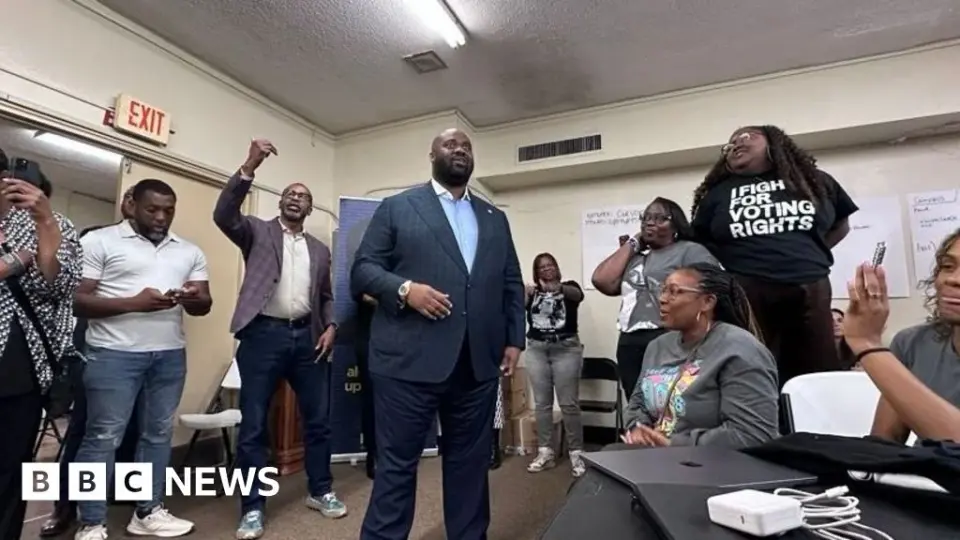
Democrat Scott Colom has won the US Senate seat for Mississippi, becoming the first Black person to hold the office since 1881. The victory, confirmed over a week after the election, marks the first Democratic win in the state in 40 years. It was driven by a massive surge in Black voter turnout, extensive grassroots organizing by the NAACP, and a viral campaign ad criticizing the Republican incumbent. The result is seen as a historic breakthrough in a state that has long been a Republican stronghold.
Key points
- Scott Colom defeated incumbent Cindy Hyde-Smith, ending a 40-year Republican hold on the Senate seat and becoming the first Black senator from Mississippi since Reconstruction.
- The NAACP reported knocking on 150,000 doors and visiting 2,500 churches, doubling their previous efforts, while exit polls showed 91% of Black voters supported Colom.
- Colom won despite a $2 million funding deficit compared to Hyde-Smith, aided by a viral ad mocking the incumbent’s advice to 'pick another protein' due to high beef prices.
- Voter turnout in Mississippi increased by approximately 300,000 compared to the 2022 midterms, with significant participation from young voters and historically Black colleges.
- The victory is part of a broader national Democratic surge in the 2026 midterms, which saw the party flip a record number of seats in Congress.
Background
Mississippi has historically been a Republican stronghold, with President Trump winning the state by over 22 points in 2024. The state’s political landscape was shaped by decades of racial oppression and voting restrictions, including the assassination of civil rights leader Medgar Evers in 1963. Recent developments, including a 2026 Supreme Court ruling that weakened the Voting Rights Act, had raised concerns about Black political representation. However, the 2026 midterms saw a national 'tsunami' of Black voter support for Democrats, reversing previous trends of declining minority representation.
How outlets are covering it
BBC emphasized the emotional and historical significance of the win, highlighting the connection to the NAACP’s headquarters and the legacy of Medgar Evers. Vox focused on the grassroots strategy, featuring Rep. Bennie Thompson’s account of how the Democratic Senatorial Campaign Committee initially ignored Colom, forcing a low-budget, social media-driven campaign. Politico highlighted the role of a 27-year-old content creator, Ryan Sayles, in producing the viral 'pick another protein' ad that outperformed national endorsements. All sources agree on the historic nature of the win but differ in emphasis: BBC on the civil rights legacy, Vox on the political mechanics and national party dynamics, and Politico on the digital campaign strategy.
Why it matters
Colom’s victory challenges the narrative that Black voters in the Deep South are politically marginalized. It demonstrates that high voter turnout and grassroots organizing can overcome structural barriers and funding deficits. The win also signals a potential shift in Republican strongholds, as national backlash against economic policies drove voters to support Democrats in other states like Texas and Iowa. For Black communities in Mississippi, it represents a symbolic and practical restoration of political power after more than a century of exclusion from the Senate.
What to watch
Colom will take office as a US senator, likely focusing on issues of voting rights and economic affordability. The Democratic Party may reassess its strategy in Southern states, potentially increasing support for future candidates. Republicans will need to analyze the impact of the viral ad and the surge in Black voter turnout to adjust their campaigns in future elections. The NAACP and organizations like Mississippi Votes will likely continue their grassroots efforts to maintain high voter engagement.
- Black Mississippians celebrate a victory almost no one saw coming BBC
- Don’t Be So Surprised That Mississippi Turned Blue The Atlantic
- Meet the 27-year-old behind the protein ad that helped flip Mississippi Politico
- “A rich message, but a poor campaign”: How Scott Colom beat the odds in Mississippi Vox
- Even Scott Colom’s Backers Were Skeptical. Here’s How He Won in Mississippi. The New York Times
Want the full story? Read the original reporting
Read on BBC