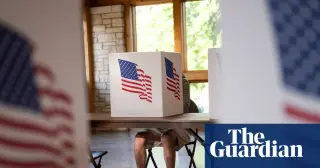
A federal judge blocked the USPS from implementing President Donald Trump’s plan to limit mail-ballot delivery nationwide, ruling the proposed regulation violated a 2020 settlement and would expand federal oversight of elections.
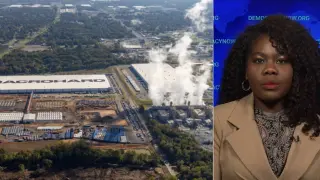
The Trump administration’s Department of Justice has asked to intervene in a NAACP lawsuit against Elon Musk’s xAI over its Colossus gas plant, seeking to dismiss the case on national-security grounds and arguing that enforcing the Clean Air Act is not in the public interest. The piece argues the DOJ is misapplying law to shield corporate polluters, undermining citizen enforcement and environmental justice for Black communities near Memphis, while highlighting the ongoing tension between corporate power and environmental protection.
The Justice Department moved to dismiss the NAACP's Clean Air Act lawsuit against Elon Musk’s xAI, arguing the case could threaten national security by hindering AI development; the NAACP contends xAI operates dozens of unpermitted gas turbines in Black communities in Mississippi and near Memphis, Tennessee, violating environmental law and harming residents, with a preliminary injunction hearing pending.
The U.S. Justice Department urged a federal court to throw out the NAACP‑filed pollution lawsuit against Elon Musk’s xAI, arguing national-security concerns and potential harm to energy and AI innovation. The suit accuses xAI of operating gas turbines near homes and a school in Southaven, Mississippi, to power its Colossus 2 data center in nearby Memphis without proper air permits. Legal experts warn the DOJ’s intervention could undermine citizen-suit protections that allow communities to hold polluters accountable, with broader implications for environmental enforcement.
The US Department of Justice filed a motion to dismiss the NAACP’s Clean Air Act lawsuit accusing xAI of operating unpermitted natural gas turbines powering the Colossus 2 data center in Memphis, Tennessee, arguing that blocking the power project could threaten national security and energy supply; Earthjustice and other critics call the move a power grab, while xAI has not commented, and the article notes Grok’s use in Pentagon AI initiatives.
The Department of Justice urged a federal court to dismiss a NAACP lawsuit accusing Elon Musk’s xAI of polluting a Southaven, Mississippi neighborhood with 57 gas turbines, arguing the facility is essential for national security and that the Clean Air Act allows termination of citizen suits; advocates say polluters must follow environmental laws and challenge the defense.
The Trump administration asks a Mississippi federal court to dismiss the NAACP’s Clean Air Act suit against xAI and its unit over alleged unpermitted gas turbines at the Colossus Plant powering the Grok data center, arguing federal enforcement isn’t needed after the Mississippi DEQ deemed some turbines mobile sources not subject to permits. The NAACP contends the turbines threaten health in Black communities, while SELC warns that blocking citizen enforcement could undermine environmental justice. The case, in the Northern District of Mississippi, also touches on national security claims tied to Grok’s military data-center uses.
The DOJ and Mississippi moved to intervene in the NAACP’s lawsuit against Elon Musk’s xAI, asking to join as a plaintiff and then have the suit dismissed, arguing Grok is a national-security asset and the gas-turbine-powered data center is essential to AI and Pentagon operations; the NAACP alleges unpermitted turbines near Memphis violate the Clean Air Act and seeks injunctions, while xAI has expanded turbine counts and SpaceX filings indicate continued turbine purchases.
The USPS began implementing a rule tied to President Trump’s plan to restrict mail-in voting, drawing sharp criticism from the American Postal Workers Union and prompting multiple lawsuits over legality and voter access; the NAACP has sued to block the rule, DHS is exploring coordinating with USPS to monitor ballot flows, and California and Wisconsin report slower ballot delivery since the changes.
NAACP launches the 'Out of Bounds' boycott urging Black athletes and fans to withhold support from public universities in seven Southern states over voting-rights restrictions, warning it could deplete SEC/ACC rosters amid redistricting battles tied to the Voting Rights Act.
Facing a wave of redistricting in the South, the NAACP launches the Out of Bounds campaign to pressure Black student-athletes and fans to boycott top public universities in reform-target states until voting maps diluting Black power are reversed; the Congressional Black Caucus also opposes the SCORE Act, highlighting dwindling legal options as Republican-drawn maps reshape political power in the region.
The NAACP launched the Out of Bounds campaign, urging Black athletes, families, alumni and fans to boycott public university athletic programs in eight Southern states to pressure lawmakers to restore fair Black voting representation amid ongoing redistricting and voting-rights battles.
The NAACP launches the Out of Bounds campaign, urging Black student-athletes to withhold commitments to SEC schools in the South after a Supreme Court ruling that weakened the Voting Rights Act and spurred redistricting backlash. The effort aims to redirect support and funding to HBCUs, press for state voting-rights protections, and amplify protests and political action in response to the ruling and its consequences for Black communities.
The NAACP unveils the 'Out of Bounds' campaign, urging Black athletes, families, fans, and consumers to withhold commitments, tickets, and sponsorship from flagship public universities in eight states (Tennessee, Louisiana, Alabama, Florida, Mississippi, South Carolina, Texas, Georgia) that have moved to dilute Black voting power following a Supreme Court ruling. Recruits are asked to withhold commitments, current athletes to leverage their platforms and consider transfers, and fans to redirect spending to HBCUs. The campaign aims to pressure states to restore fair maps and meaningful Black representation and will continue until protections and redistricting reflect Black power.
The U.S. Supreme Court reversed a lower-court redistricting order that forced Mississippi to redraw districts to create more Black-majority seats and ended the GOP Senate supermajority, sending the case back to a district court to decide whether private citizens may sue to enforce Section 2 of the Voting Rights Act; the decision relies on the Louisiana v. Callais framework and leaves open whether the 2022 maps will be reinstated, with Justice Jackson dissenting on the private-enforcement issue.