
Missouri redistricting fight escalates as 8th Circuit defies Supreme Court order
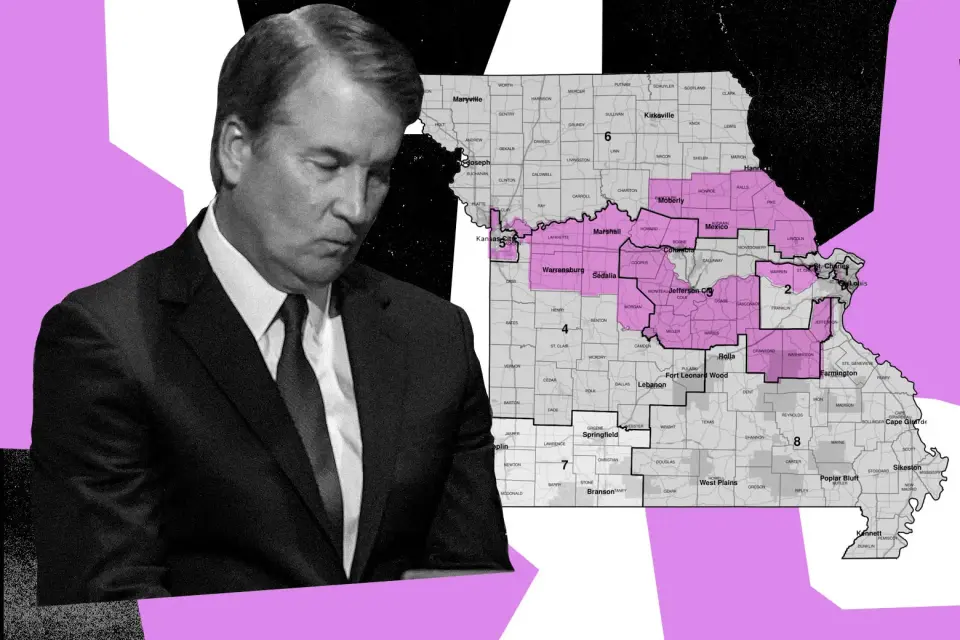
The 8th Circuit Court of Appeals ordered Missouri to use a Republican-favored 2025 congressional map for the November 2026 midterms, directly contradicting a recent Supreme Court stay. This move aims to secure an additional House seat for the GOP but faces immediate legal challenges from referendum backers who argue it violates federal orders and state law.
Key points
- The 8th Circuit ruled that Missouri must use the 2025 map for the general election to match the primary, citing the Elections Clause, despite the Supreme Court previously blocking this map twice.
- Missouri officials and Republican candidates argue that switching maps now would cause voter confusion and disenfranchise hundreds of thousands of voters who already voted in the primary under the new districts.
- Opponents, including the group People Not Politicians, argue the 8th Circuit ruling violates the Supreme Court's September 10 order and that the 2022 map is already in use for ongoing absentee and military voting.
- The Supreme Court is expected to review the case again, with Justice Kavanaugh ordering a response by Wednesday afternoon, as the dispute centers on whether federal courts can override state supreme court rulings on state law.
- The 2025 map is designed to give Republicans an additional House seat, potentially eliminating the district of Democratic Rep. Emanuel Cleaver, while the 2022 map features six Republican and two Democratic seats.
Background
This dispute follows a series of Supreme Court interventions in 2026, including a September 8 order blocking the 2025 map and a September 4 ruling on discounted political ad rates. The Missouri Supreme Court had previously invalidated the 2025 map due to procedural issues by the state secretary, leading to the current federal-state judicial conflict.
How outlets are covering it
Slate emphasizes the 8th Circuit's defiance of the Supreme Court and its expansion of federal power under the Elections Clause, noting that the panel ignored the Missouri Supreme Court's authority over state law. SCOTUSblog highlights the procedural arguments, with Missouri and Republican plaintiffs claiming the opponents lack standing and that stability requires using the 2025 map. Democracy Docket focuses on the practical impact, arguing that the 2022 map is already in use for absentee voting and that the 8th Circuit's ruling creates the chaos it claims to avoid. All sources agree that the Supreme Court is likely to intervene again, but they differ on the legitimacy of the 8th Circuit's reasoning and the standing of the parties involved.
Why it matters
The outcome will determine whether Missouri uses a map that favors Republicans in the 2026 midterms, potentially shifting the balance of power in the U.S. House. It also sets a precedent for the limits of federal court intervention in state redistricting cases and the interpretation of the Elections Clause, which could affect future gerrymandering disputes in other states.
What to watch
The Supreme Court is expected to rule on the 8th Circuit's decision, with Justice Kavanaugh ordering a response by Wednesday afternoon. If the Supreme Court upholds the 8th Circuit, Missouri will use the 2025 map; if it reverses, the state will revert to the 2022 map for the November general election. The case may also lead to further legal challenges from voters and candidates affected by the map switch.
- Republican Judges Defy Supreme Court to Try to Boost GOP in Midterms Slate Magazine
- Missouri seeks to use congressional redistricting map expected to benefit Republicans SCOTUSblog
- Missouri redistricting fight returns to US Supreme Court for third time Missouri Independent
- In final plea, referendum backers ask Supreme Court to stop Missouri from changing maps after voting began democracydocket.com
- Trump-backed Missouri congressional map returns to the Supreme Court for the third time AP News
Want the full story? Read the original reporting
Read on Slate Magazine