
Missouri Supreme Court Reverses Trump-Backed Redistricting, Orders Voter Vote
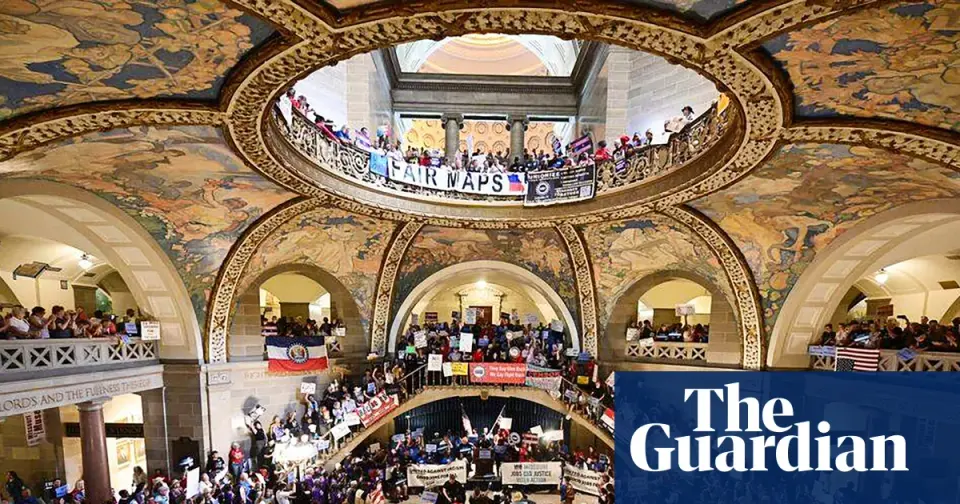
The Missouri Supreme Court unanimously blocked the use of new congressional districts for the November 2026 general election, ruling that a citizen referendum must be held instead. The court ordered Secretary of State Denny Hoskins to place the map on the ballot, reverting the state to its 2022 district lines for the upcoming vote. This decision overturns a lower court ruling and validates a petition with over 300,000 signatures, forcing a public vote on the map's validity. Republicans have vowed to appeal to the U.S. Supreme Court, calling the move a constitutional crisis, while Democrats celebrate the return of the previous boundaries. The ruling impacts the 5th District race, allowing Democrat Emanuel Cleaver to run in his traditional Kansas City-based seat rather than the newly drawn rural-heavy district. It is part of a broader national battle over mid-decade redistricting efforts prompted by President Trump.
Key points
- The Missouri Supreme Court unanimously ruled that the new congressional map cannot be used for the November 2026 general election, ordering a referendum instead.
- The court declared the 2022 congressional map remains in full force, invalidating the 2025 redistricting law (HB 1) until voters approve it.
- Secretary of State Denny Hoskins was ordered to certify the referendum petition, which had over 300,000 signatures, and place it on the November ballot by September 8.
- The ruling affects the 5th Congressional District, allowing Democrat Emanuel Cleaver to run in his previous Kansas City-based district, where he has won with over 60% of the vote.
- Missouri Attorney General Catherine Hanaway and Governor Mike Kehoe criticized the decision, with Hanaway vowing to appeal to the U.S. Supreme Court.
- The court also ordered Amendment 6, which protects citizen initiative powers, to be placed on the ballot, reversing a lower court decision.
Background
This ruling follows a year of legal battles over mid-decade redistricting in Missouri, prompted by President Trump's call for Republicans to redraw districts to gain a midterm advantage. In August 2025, Governor Mike Kehoe called a special session to redraw the 5th District, shifting it from Kansas City to rural areas. Opponents, led by the group People Not Politicians, collected over 300,000 signatures for a referendum, but Secretary of State Denny Hoskins rejected the petition in August 2026, arguing redistricting could not be subject to a public vote. Lower courts initially sided with Hoskins, but the Missouri Supreme Court expedited the appeal to beat the ballot deadline. The decision is part of a national trend of redistricting lawsuits, with Republicans hoping to gain up to 10 additional House seats, though Missouri is one of few states where courts have blocked such efforts.
How outlets are covering it
The Missouri Supreme Court and advocacy group People Not Politicians framed the ruling as a victory for democratic process, with executive director Richard von Glahn stating the decision reaffirms that 'people, not politicians, will have the final say.' The court emphasized that the referendum petition was legal and that the new map 'is not the law and has never been the law.' In contrast, Republican leaders, including Attorney General Catherine Hanaway and Governor Mike Kehoe, condemned the decision as an 'unprecedented' violation of federal law and a 'constitutional crisis,' arguing it disenfranchises voters and disrespects the legislative process. Trump called the ruling 'horrible, ridiculous, and unConstitutional.' Legal experts noted the path for federal intervention was narrow, while the court's separate ruling on Amendment 6 highlighted Hoskins' failure to provide valid reasons for rejecting the initiative petition. The ruling also created uncertainty, as voters faced different candidates in the November general election than in the August primary, with both Cleaver and Republican Rick Brattin vowing to continue their campaigns regardless of the map outcome.
Why it matters
The ruling sets a precedent for mid-decade redistricting challenges, potentially influencing similar lawsuits in other states. It directly impacts the 2026 midterm elections by reverting Missouri to its 2022 congressional map, which could affect the balance of power in the U.S. House, where Republicans hold a slim majority. The decision also strengthens citizen initiative powers through the inclusion of Amendment 6 on the ballot, which would bar lawmakers from limiting such powers in the future. The outcome highlights the tension between legislative authority and public referendum rights, with the court's emphasis on the Missouri Constitution's provision for referendums on 'any act' of the legislature. The ruling may also influence future redistricting efforts, as it demonstrates that courts can block maps even after primaries, though the potential U.S. Supreme Court appeal remains a key uncertainty.
What to watch
The referendum on the new congressional map will appear as Proposition A on the November 3, 2026 ballot, with a 'no' vote rejecting the map and a 'yes' vote approving it for future elections. Missouri Attorney General Catherine Hanaway has vowed to appeal the decision to the U.S. Supreme Court, though legal experts doubt the federal court will intervene. The 5th District race will proceed under the 2022 map, with Democrat Emanuel Cleaver and Republican Rick Brattin both continuing their campaigns. The court's order requires Secretary of State Denny Hoskins to finalize the ballot by September 8, 2026, ensuring the referendum is included. The outcome of the referendum will determine whether the new map takes effect 30 days after approval, potentially impacting future elections. The ruling also sets the stage for further legal battles over Amendment 6, which seeks to protect citizen initiative powers from legislative repeal.
- Missouri supreme court throws out new congressional maps backed by Trump The Guardian
- Missouri Supreme Court rules new GOP-drawn map can’t be used for November elections NBC News
- Missouri voters to decide new congressional map in November Axios
- Missouri Supreme Court orders gerrymandered map, Amendment 6 to go on November ballot KOMU 8
- Missouri high court blocks GOP-backed congressional maps ahead of midterms, Trump blasts 'ridiculous' ruling Fox News
Want the full story? Read the original reporting
Read on The Guardian