
Missouri voters reject GOP redistricting map, preserving Democratic seat in Kansas City
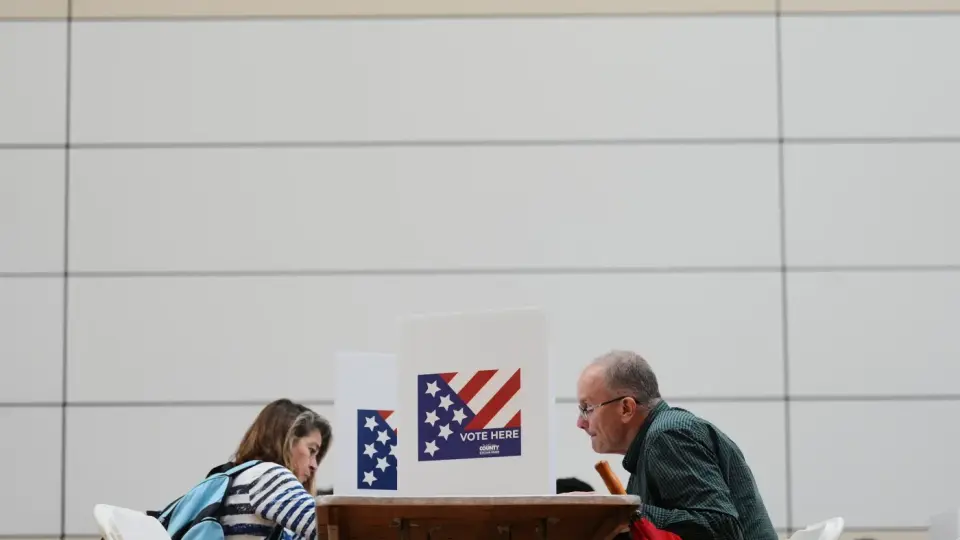
Missouri voters rejected a Republican-backed congressional map on November 3, 2026, preserving the 2022 boundaries that favor Democrats in the Kansas City area. The defeat of the new map, which was pushed by President Trump and state GOP leaders, ensures Democratic Rep. Emanuel Cleaver retains his seat. The decision concludes a year-long legal battle involving the U.S. Supreme Court and a referendum effort by the group People Not Politicians.
Key points
- Missouri voters rejected the Republican-drawn congressional map via a ballot measure, according to Associated Press and NBC News projections.
- The rejected map was designed to oust Democratic Rep. Emanuel Cleaver by redrawing his Kansas City district into a heavily Republican-leaning area.
- The 2022 map, which includes two solidly Democratic districts, was used for the November 3 elections after the U.S. Supreme Court blocked the new boundaries three times.
- Emanuel Cleaver won reelection decisively against Republican candidate Rick Brattin, who attributed his loss to the court's decision to use the older map.
- The group People Not Politicians Missouri collected over 300,000 signatures to place the referendum on the ballot, exceeding the 106,000 required.
Background
This vote concludes a protracted legal dispute that began in 2025 when Missouri GOP lawmakers passed new district lines in response to a national mid-decade redistricting push by President Trump. Earlier in 2026, the U.S. Supreme Court blocked the implementation of the new map three times, citing logistical chaos and the fact that absentee voting had already commenced under the 2022 boundaries. The current vote serves as a final referendum on those boundaries, following previous archival reports of conflicting rulings between state and federal courts.
How outlets are covering it
NPR and The New York Times emphasize the result as a definitive rejection of the Republican strategy to flip a Democratic seat, noting that Missouri now retains two solidly Democratic districts. NBC News highlights the political significance for the GOP, describing the outcome as a blow after a year-long effort to carve up a Democratic-held district. KMBC focuses on the local impact, detailing how the map dispute paralyzed the campaign of Republican candidate Rick Brattin, who filed suit over the primary process. While all sources agree on the outcome, NBC and NYT stress the broader national context of mid-decade redistricting, whereas KMBC centers on the specific candidate dynamics in District 5.
Why it matters
The rejection of the map prevents Republicans from gaining an additional House seat in Missouri and preserves the political influence of Democratic Rep. Emanuel Cleaver. It signals a potential shift in the national redistricting landscape, as Democratic-led states like Maryland and Colorado are simultaneously moving to counteract Republican gains through constitutional amendments and new district rules.
What to watch
The 2022 congressional map will remain in effect for future elections in Missouri. The mid-decade redistricting battle is expected to continue into the next election cycle, with Democratic-led states attempting to counteract Trump’s initial push and Republican-led states responding to recent Supreme Court rulings regarding majority-Black districts.
- Missouri voters turn down a Republican-backed congressional map NPR
- Missouri voters block Republican-drawn congressional map NBC News
- Missouri Voters Reject Congressional Map Redrawn to Boost Republicans The New York Times
- Missouri District 5 Election Results: Decisive win for Democratic Incumbent Cleaver KMBC
- What is Missouri's Proposition A? Here's what 'yes' and 'no' votes mean on Tuesday KSDK
Want the full story? Read the original reporting
Read on NPR