
NC Mail Ballot Rejection Rates Spike Amid New Sealing Rules, Governor Warns
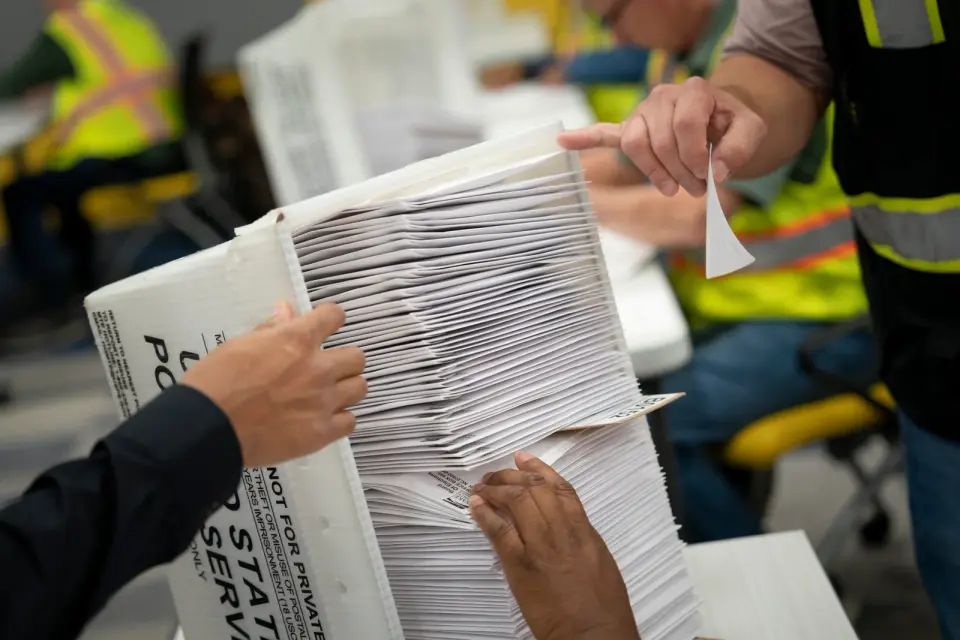
North Carolina Governor Josh Stein criticized new state election rules for causing a surge in rejected mail-in ballots, urging voters to cast ballots in person. The Republican-majority State Board of Elections approved strict sealing requirements in September, leading to rejection rates that some counties report are significantly higher than in 2022. While the governor claims rejection rates have doubled, state officials cite a smaller increase, and a federal judge recently upheld the rules, deeming it too late to block them.
Key points
- Gov. Josh Stein stated that new mail voting rules are causing rejection rates twice as high as in 2022, calling the situation 'infuriating.'
- The State Board of Elections approved new rules in September requiring voters to seal an inner envelope before placing it in an outer envelope; failure to do so results in ballot spoilage.
- A federal judge upheld the new rules on Monday, ruling that blocking them would be 'infeasible' because voting has already begun.
- Some Democratic-leaning counties report rejection rates between 7% and 8%, while the state board cites a preliminary increase of only 0.5 percentage points compared to 2022.
- Stein advised voters to seal both envelopes if mailing ballots or to vote in person to avoid having their votes rejected.
Background
This dispute follows a series of recent election-related developments in North Carolina, including a gas tax suspension signed by Governor Stein in October and earlier controversies involving Vice President JD Vance’s campaign rallies. The current ballot restrictions also follow a Supreme Court ruling that previously blocked federal attempts to restrict mail voting, highlighting ongoing tensions over voting access in the 2026 midterms.
How outlets are covering it
Democracy Docket and Governor Stein emphasize that the new rules are disenfranchising voters, citing data from Common Cause that shows rejection rates of approximately 3% across 27 counties, with some areas reaching 8%. In contrast, the State Board of Elections, via spokesperson Jason Tyson, downplayed the impact, stating that preliminary data shows only a 'slight increase' of 0.5 percentage points compared to the same period in 2022. The News & Observer noted that while some counties like Mecklenburg reported higher rejection rates, others like Guilford reported lower figures, and that not all rejections were due to the new sealing rule. WFAE reported that the federal judge’s decision to uphold the rules was based on the timing of the election, rather than the merits of the restrictions themselves.
Why it matters
The outcome of the 2026 midterms in North Carolina could be influenced by these ballot rejection rates, particularly in Democratic strongholds where higher rejection rates have been reported. If the new rules continue to disenfranchise voters, it may affect the overall turnout and the balance of power in the state legislature and potentially the U.S. Senate race, where former Gov. Roy Cooper is trailing GOP nominee Michael Whatley. The controversy also highlights the broader national debate over voting access and the impact of last-minute election rule changes on voter participation.
What to watch
Voters are encouraged to track their mail-in ballot status using the Ballottrax tool and to ensure they follow all instructions to avoid rejection. The state board will continue to monitor rejection rates as the election progresses, and affected voters may be sent new ballots or allowed to vote in person. The federal court’s decision means the rules will remain in effect for the remainder of the 2026 midterms, and any further legal challenges are unlikely to succeed at this stage.
- ‘Don’t let them take away your vote’: North Carolina governor slams 'infuriating' ballot rejections caused by new GOP restrictions Democracy Docket
- More NC mail-in ballots are being rejected. What voters can do about it WRAL
- Warning of surge in rejected mail ballots, NC Gov. Stein urges in-person voting News & Observer
- Exclusive: Thousands of North Carolina ballots set to be rejected after GOP imposed strict new rules, data shows Democracy Docket
- Federal judge allows North Carolina mail-in ballot rules to take effect WFAE
Want the full story? Read the original reporting
Read on Democracy Docket