
DHS Noncitizen Voting Claims Face Methodological Scrutiny Amid Midterm Push
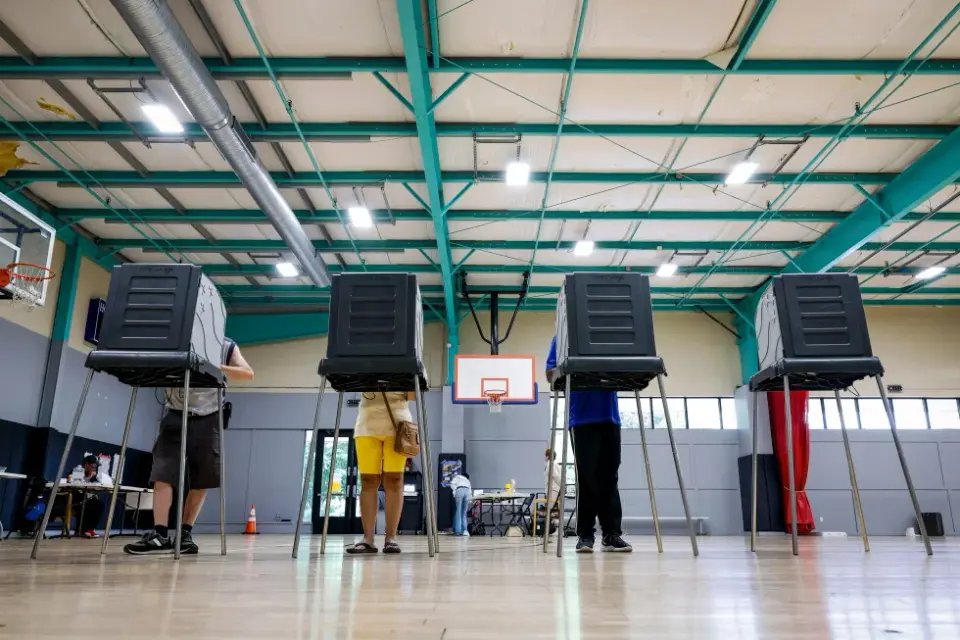
The Trump administration is leveraging unverified claims of widespread noncitizen voting to pressure states and push the SAVE America Act ahead of the 2026 midterms. While Homeland Security Secretary Markwayne Mullin alleges nearly 250,000 noncitizens are registered in four states, state officials and experts dispute the data's accuracy. A recent Census Bureau report, which Trump cited, has been criticized for lacking authors and using flawed third-party data. Critics argue the administration is using these claims to destabilize election confidence, while supporters maintain the measures are necessary for integrity.
Key points
- DHS Secretary Markwayne Mullin sent a July letter to California, Nevada, New Jersey, and Pennsylvania claiming up to 250,000 noncitizens are registered to vote, but state officials have expressed skepticism regarding the data's reliability.
- A U.S. Census Bureau report released in August claims 24,000 noncitizens voted in 2020, but experts like Marquette University’s Philip Rocco call it 'meaningless' due to missing authors, reliance on third-party data, and high potential for false positives.
- The administration is pushing the SAVE America Act, which requires proof of citizenship for voter registration, despite a 2025 study estimating 21.3 million eligible voters lack easy access to such documents.
- New Jersey disclosed that 6,600 noncitizens were improperly registered via a motor vehicle system error, but Governor Mikie Sherrill noted fewer than 400 actually voted, and the state is replacing the vendor involved.
- Critics, including Colorado Secretary of State Jena Griswold, argue the focus on noncitizen voting is an attempt to destabilize election administration and reject the 2026 results, while supporters view it as essential for election integrity.
Background
This controversy follows a series of earlier disputes in 2026 where the administration cited unverified figures, such as 278,000 noncitizens on rolls, to justify stricter election laws. Previous coverage highlighted that experts and fact-checkers found these claims methodologically flawed and exaggerated, noting that noncitizen voting is rare and that the SAVE America Act poses significant hurdles for eligible voters. The current debate is part of a broader pattern of using election integrity rhetoric to influence the 2026 midterms.
How outlets are covering it
AP News and the Milwaukee Journal Sentinel emphasize the lack of methodological rigor in the DHS and Census reports, with state officials and experts questioning the data's validity and the administration's motives. New York Magazine provides a broader historical and cultural context, framing the fear of noncitizen voting as a polarizing issue that contrasts with local efforts to expand immigrant suffrage, such as New York City's Local Law 11, which was struck down by courts. While AP and the Journal Sentinel focus on the immediate political and data disputes, New York Magazine explores the deeper societal tensions and the contradiction between excluding noncitizens from voting while relying on their labor and taxes.
Why it matters
The dispute over noncitizen voting claims is central to the 2026 midterm elections, as the administration uses these allegations to push for stricter voter ID laws and pressure states. The outcome could affect voter access and the integrity of the election process, with potential implications for millions of eligible voters who lack easy access to citizenship documents. The controversy also highlights the broader tension between election security and voter suppression, with critics arguing that the administration's actions are designed to destabilize confidence in the electoral system.
What to watch
The SAVE America Act remains stalled in the Senate, with some Republicans skeptical of its provisions. State officials are awaiting a methodology from DHS to verify the noncitizen registration claims. The administration may continue to use arrests and public statements to pressure states, while Democrats and experts will likely challenge the data's validity in court and public forums. The 2026 midterms will be a key test of the administration's election integrity agenda and its impact on voter access and participation.
- Noncitizen voting claims animate Trump's attacks on midterms and set up potential result challenges AP News
- The Census Bureau’s Unorthodox Foray Into Voter Roll Investigations Cato Institute
- DHS acknowledges the noncitizen numbers it touted on voter rolls were inflated NPR
- Wisconsin experts reject Census report claiming 500 noncitizen voters Milwaukee Journal Sentinel
- The Fear of Noncitizen Voting New York Magazine
Want the full story? Read the original reporting
Read on AP News