Trump claimed China had access to hundreds of millions of voter registration records; the article clarifies that much of this data is already publicly available through state voter rolls and commercial vendors (often for a fee), with varying privacy rules, and explains what is actually accessible versus restricted.
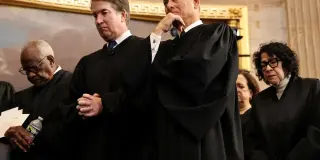
The Supreme Court agreed to hear a Republican challenge to Arizona’s 2022 voting law, which would require proof of citizenship to register to vote and allow 90‑day purges of voter rolls, arguing these provisions may violate the National Voter Registration Act. Lower courts struck down parts of the law, and the case could reshape state voting rules nationwide ahead of the 2028 elections as Republicans press to tighten voting rules and voting-rights groups push back.
The FBI searched the office of an Ohio voter-registration group as part of a federal investigation; the report provides limited detail on the group, the reasons for the search, or any potential charges.
Federal agents raided the Cleveland offices of the Ohio Organizing Collaborative, seizing computers and other materials as part of a probe into the group’s 2024 voter-registration efforts; agents also visited homes of affiliated individuals. The Justice Department declined to comment. The raids come amid a broader federal push to investigate election fraud, though officials say widespread fraud is rare and opponents warn the actions could intimidate voters.
FBI special agents searched the Ohio Organizing Collaborative’s office as part of a Justice Department probe into its voter-registration efforts. A board member accused the Trump administration of voter intimidation, and lawmakers called for transparency as the move fits a broader pattern of election-related actions and Trump’s unfounded fraud claims. The group, formed in 2007 to advance racial and economic justice, also has a past tied to a 2017 fraudulent registration case.
FBI agents raided the Cleveland offices of the Ohio Organizing Collaborative, a pro‑democracy group that helps register voters, and fanned out to staffers’ homes with subpoenas and device searches. Organizers and allies describe the actions as intimidation and say some approached people without warrants, highlighting concerns about voting‑rights enforcement and election integrity in swing states ahead of elections.
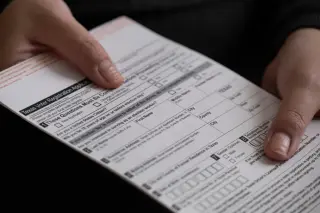
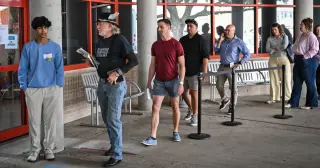
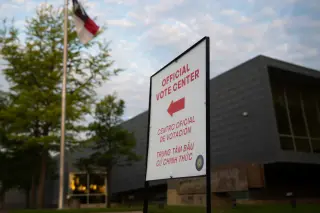
The SAVE Act would require in-person presentation of documents to register to vote, effectively ending online and mail registration. The Brennan Center estimates more than 21 million voting-age Americans lack the documents needed to register under the act. An Axios analysis shows the average American is about 20 minutes from the nearest election office, with rural residents averaging longer drives (roughly 49 minutes) and Apache County, AZ residents around 2.5 hours. The act's definition of 'appropriate elections official' is unclear, and access could hinge on office hours. Supporters say it boosts security; opponents warn it harms accessibility. The bill is stalled in the Senate, though several Republican states are pursuing similar measures.
With the SAVE America Act blocked by Democratic opposition, Republicans are considering a last-ditch procedural maneuver to advance stricter voter-registration, voter-ID, and mail-in voting rules, but the odds of success appear slim as Democrats remain united.
The SAVE America Act’s core requirement for citizenship proof in voter registration is politically charged, but evidence suggests noncitizen voting is extremely rare and any GOP advantage is unclear. Passport ownership correlates with education and income, varies by state, and recent data show Democrats often have greater access to passports in many regions. The bill’s potential electoral impact is not a guaranteed win for Republicans, and broader issues like gas prices, international conflicts, and inflation will likely drive the 2026 election more than this policy.
FactCheck.org lays out the dispute over the SAVE America Act: Sen. Schumer warns it could disenfranchise or purge millions by requiring in-person documentary proof of U.S. citizenship to register and by tapping a DHS purge mechanism, while Republicans and some experts say it wouldn’t deny legitimate voters. Analysts caution many Americans lack easy access to required documents, and the bill’s in-person proof, affidavit options, and potential purge provisions could suppress voting or mislabel citizens, with details depending on future EAC guidance. The House has passed the bill, the Senate is debating it, and its final impact remains uncertain.
Trump is pressing Republicans to pass the Save America Act, which would require proof of citizenship to register to vote and photo ID at the polls. Critics say it could disenfranchise eligible voters and might hurt Republicans in some districts, with unpredictable effects on voting patterns.
The Safeguard American Voter Eligibility Act would require documentary proof of U.S. citizenship to register to vote in federal elections. If enacted, it could largely restrict voter registration for many Americans, as Senate Republicans push for a floor vote amid opposition from Democrats and concerns about disenfranchisement.
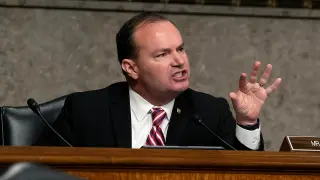
The Senate opened a lengthy floor debate on the Trump‑backed SAVE America Act, which would require proof of citizenship to register and photo ID to vote. Despite a narrow 51–48 advance vote and Murkowski siding with Democrats, the bill has little chance of passage in a 60‑vote‑required Senate. Republicans plan an extended debate with amendments, while Democrats argue the measure would purge rolls and suppress turnout. The showdown underscores Trump’s push to priority the voting‑rigor proposals ahead of the midterms.
The Justice Department’s Civil Rights Division has filed federal lawsuits against Utah, Oklahoma, Kentucky, West Virginia, and New Jersey for failing to produce complete statewide voter registration lists, raising the total of states facing such actions to 29 plus the District of Columbia; officials say accurate voter rolls are essential for election integrity, and the department will continue its oversight across federal elections.
A GOP push to require proof of citizenship to register to vote (the SAVE Act) is framed as a safeguard against noncitizen voting, but critics warn it would disenfranchise legal voters who lack documentation or are deterred by extra steps. State experiences with SAVE-based screening show misflagging and administrative errors that can remove or delay eligible voters, often affecting people of color and young voters; a Kansas 2011 law, blocked after it blocked tens of thousands of registrations with very few noncitizen registrations, serves as a cautionary precedent. Other states (New Hampshire, Arizona, Texas, Idaho) report similar issues and disparate impact. Given the rarity of actual noncitizen votes, many argue the potential harm to eligible voters outweighs any modest fraud prevention.