
NYC Council set to ban Central Park carriages by 2028 amid safety and welfare disputes
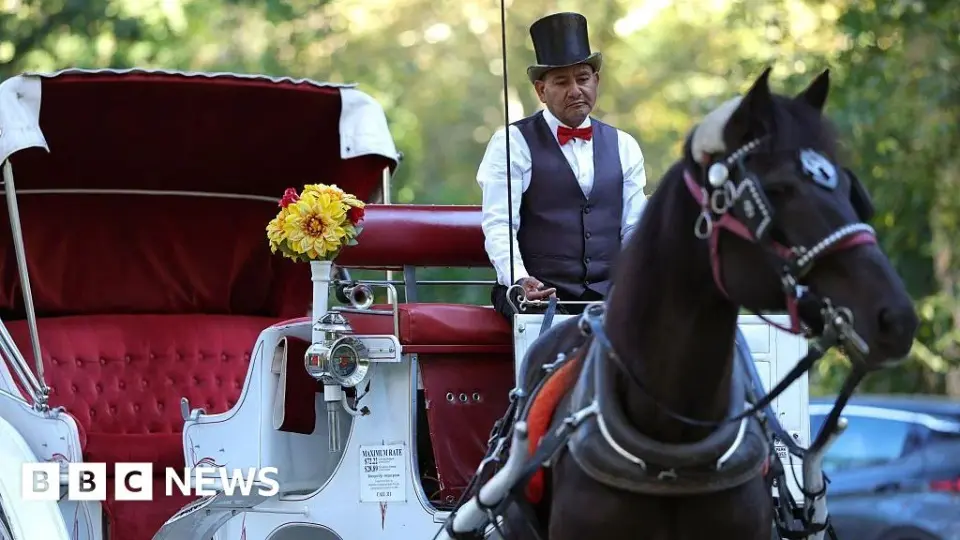
New York City Council is expected to pass legislation banning horse-drawn carriages in Central Park by June 2028. The move follows a fatal accident involving a tourist and long-standing animal welfare concerns. While Mayor Zohran Mamdani promises a transition plan for the roughly 200 affected drivers, the Transport Workers Union argues the support is inadequate and vows legal challenges. Drivers dispute claims of mistreatment, while activists and some residents cite safety risks and animal suffering as justification for the ban.
Key points
- The NYC Council is expected to pass 'Romanch's Law' on October 22, 2026, banning horse-drawn carriages in Central Park starting June 2028.
- The legislation follows the June 2026 death of 18-year-old tourist Romanch Mahajan, who fell from a carriage pulled by a runaway horse.
- Since 1982, 40 carriage horses have died in Central Park, with causes including overheating, collisions, and toxic plant ingestion.
- Mayor Zohran Mamdani supports the ban and has promised an 'industry transition framework' including job placement, training, and financial compensation for the approximately 200 drivers.
- The Transport Workers Union Local 100 opposes the ban, arguing the transition plan lacks guaranteed compensation and that drivers will be 'economically wiped out.'
- Drivers, such as Alexus Lawson and Medet Fidan, dispute allegations of mistreatment, stating that horses are 'working animals' and that the industry is highly regulated.
Background
Horse-drawn carriages have been a controversial tradition in Central Park for over 160 years. Previous attempts to ban the industry under Mayors Bill de Blasio and Eric Adams failed due to pushback from the Transport Workers Union and city council members. The American Society for the Prevention of Cruelty to Animals (ASPCA) was founded in 1866 in response to the mistreatment of carriage horses. The current legislation, known as 'Romanch's Law,' was named after the 18-year-old tourist who died in a carriage accident in June 2026.
How outlets are covering it
The BBC and Gothamist both report on the impending ban but highlight different aspects of the controversy. The BBC emphasizes the emotional toll on drivers like Alexus Lawson and Medet Fidan, who dispute claims of mistreatment and express concern for their horses' futures. It also notes the mixed opinions of tourists, with some supporting the ban for safety reasons and others viewing the carriages as a cultural staple. Gothamist focuses more on the political dynamics, highlighting the sense of betrayal among drivers who felt Mayor Mamdani failed to engage with them before pushing for the ban. It also notes the role of animal rights groups like NYCLASS and the potential impact on real estate developers who may benefit from the closure of the stables. Both sources agree that the ban is driven by safety concerns and animal welfare issues, but they differ in their emphasis on the drivers' perspectives and the political maneuvering behind the legislation.
Why it matters
The ban on horse-drawn carriages in Central Park is a significant policy decision that affects the livelihoods of approximately 200 drivers and the welfare of the horses. It also reflects broader debates about animal rights, public safety, and the role of traditional attractions in modern cities. The outcome of the vote and the implementation of the transition plan will have long-term implications for the city's tourism industry and its approach to animal welfare.
What to watch
The NYC Council is expected to vote on the ban on October 22, 2026. If passed, the ban will take effect in June 2028. The city is expected to develop a transition plan for the affected drivers by April 2027. The Transport Workers Union has vowed to challenge the ban legally if the transition plan is deemed inadequate. The fate of the horses is also uncertain, with concerns raised about their potential relocation to slaughter auctions.
- New York City reconsiders a classic attraction: are horse-drawn carriages abuse? BBC
- Mamdani expected to face legal trouble over PETA-backed horse carriage ban Fox News
- Horse carriage drivers protest ahead of NYC Council vote ABC7 New York
- With Horse Carriage Ban Set to Pass, Workers’ Future Remains Murky The New York Times
- NYC’s horse carriage drivers say they feel betrayed as lawmakers set to abolish industry Gothamist
Want the full story? Read the original reporting
Read on BBC