
Polls Signal Democratic Midterm Advantage, but Turnout Uncertainty Looms
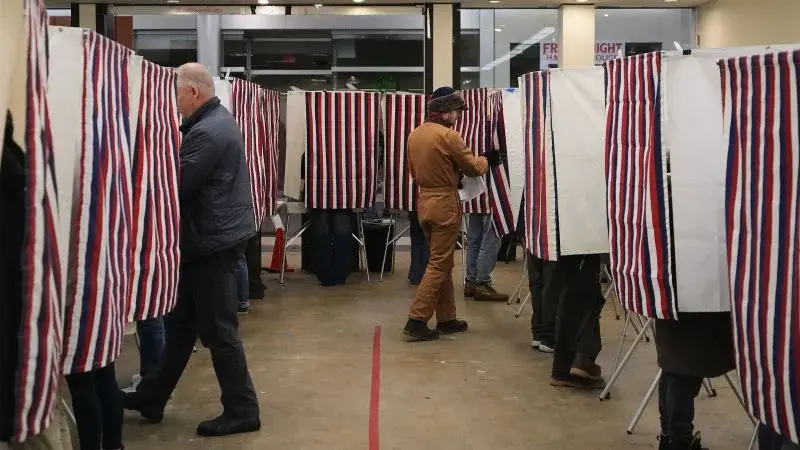
Polls indicate a strong Democratic advantage in the 2026 midterms, driven by low approval ratings for President Trump and economic dissatisfaction. However, experts warn that high Democratic enthusiasm may skew survey responses, while potential late Republican mobilization or nonresponse bias could alter outcomes in tight Senate races.
Key points
- National polls show Trump’s approval in the mid-to-low 30s, with broad voter dissatisfaction regarding the economy and cost of living.
- Democrats hold a consistent lead on the national generic ballot, suggesting a likely House majority, though the margin is uncertain.
- A significant partisan enthusiasm gap exists, with Democrats reporting higher motivation to vote than Republicans, the largest such gap since 1994.
- Pollsters face challenges with differential nonresponse, as engaged Democrats are more likely to answer surveys than disengaged Republicans.
- Recent presidential polls underestimated Republican support, but midterm polls have been more accurate in recent cycles.
Background
This election follows a period of heightened polarization and economic strain. Previous coverage noted intense debates in states like Maine and Michigan, where data centers and party loyalty were key issues. Recent polls showed Democrats leading in seven key Senate races, including Texas and Kansas, despite Republican spending advantages. The current analysis focuses on the reliability of these leads in the final days before the November 3 vote.
How outlets are covering it
CNN emphasizes that while polls clearly show Democratic momentum and voter desire for change, they cannot predict exact margins in tight races due to potential polling errors. The outlet highlights the risk that disengaged Republicans might still vote, or that over-enthusiastic Democrats might be overrepresented in surveys. The Washington Post agrees that outcomes could shift, noting historical instances where Republicans outperformed expectations in presidential races, though it acknowledges recent midterm polls have been more accurate. Becca Siegel, writing for MS NOW, argues that polls are better at identifying voter motivations than predicting close outcomes. She notes that current polling aligns with broader trends, such as low incumbent approval and high economic anxiety, but warns that online polling panels and AI-generated data introduce new risks. BBC correspondent Anthony Zurcher points out that while Democrats have high hopes, historical precedent shows the president’s party often suffers in midterms, yet structural disadvantages like redistricting and Republican spending advantages could limit Democratic gains. He notes that recent primary surprises do not necessarily indicate general election polling errors.
Why it matters
The outcome of the 2026 midterms will determine the balance of power in Congress and potentially check or amplify the executive branch’s authority. Accurate polling is crucial for understanding voter sentiment, but the uncertainty in turnout and response rates means that the final result could differ from current projections, impacting policy directions on the economy, foreign affairs, and domestic issues.
What to watch
Election Day is November 3, 2026. Early voting data and final polls will be closely monitored for shifts in turnout. Analysts will look for signs of late Republican mobilization or Democratic enthusiasm translating into votes. Post-election analysis will assess the accuracy of polling models and the impact of nonresponse bias on the results.
- What polls do and don’t tell us about the 2026 midterms CNN
- Are Polls Overstating Democrats’ Midterm Leads? Times Pollsters Weigh In. The New York Times
- What if the polls are wrong about a Democratic Senate? Mapping 4 scenarios. The Washington Post
- Opinion | I oversaw polling for Biden and Harris. Here’s how I’m reading the midterm polls. MS NOW
- Democrats have high hopes for midterms - but are the polls right? BBC
Want the full story? Read the original reporting
Read on CNN