
Prediction Markets and Analysts Signal Democratic Sweep in Seven Key Senate Races
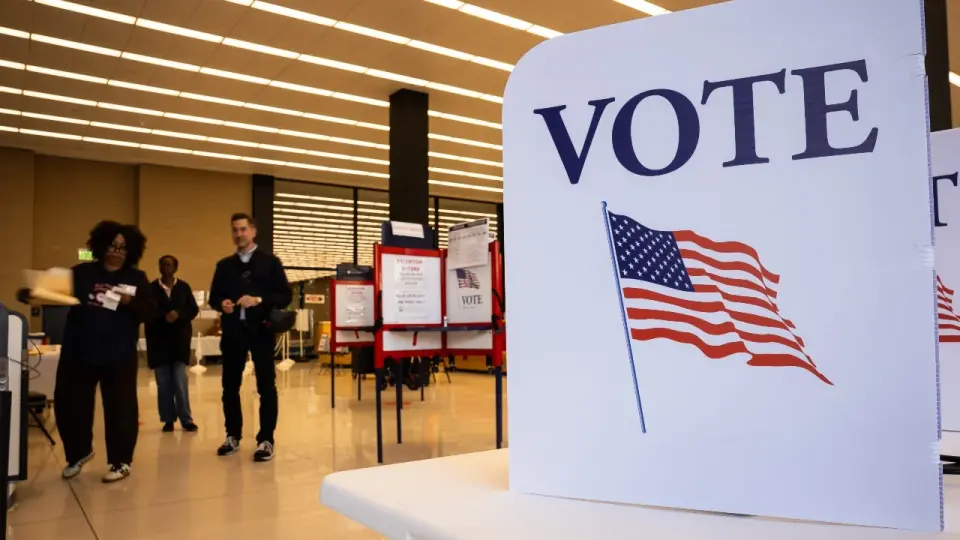
With less than 24 hours remaining before the 2026 midterm elections, prediction markets Kalshi and Polymarket indicate Democrats are favored to win all seven competitive Senate seats. Key races in Texas, Iowa, Maine, Kansas, Michigan, Ohio, and Alaska show Democratic leads ranging from 52% to 76%. Meanwhile, the Cook Political Report projects Democrats could gain 12 to 25 House seats, potentially securing their largest majority since 2009, driven by low approval ratings for President Trump and economic dissatisfaction among voters.
Key points
- Kalshi and Polymarket assign Democratic candidates 52% to 76% odds of victory in all seven pivotal Senate races, including Texas, Iowa, Maine, Kansas, Michigan, Ohio, and Alaska.
- In Texas, Democrat James Talarico holds a 76% advantage over Republican Attorney General Ken Paxton, while in Iowa, Democrat Josh Turek recently overtook Republican Rep. Ashley Hinson with 52% odds.
- The Cook Political Report estimates Democrats could flip 12 to 25 House seats, potentially reaching 240 seats, a majority larger than those achieved in 2006 and 2018 but smaller than the 2009 peak.
- Republicans are facing defensive challenges in previously safe districts in Indiana, Nevada, and Texas due to high prices, the unpopular war in Iran, and President Trump’s low approval ratings.
- Controversy in Alaska, where a New York Times report alleged Democratic voter confusion tactics, did not shift market odds; Democrat Mary Peltola retains a 72% lead over incumbent Dan S. Sullivan.
Background
Recent analysis from our archive highlights that prediction markets have faced scrutiny for reliability, particularly after discrepancies in international elections. Earlier reports noted tightening margins in the Michigan Senate race, where candidate Abdul El-Sayed adjusted his victory predictions as polls converged. Additionally, Ohio’s Senate race was identified as a critical battleground driven by economic concerns and gender gaps in voter support. These prior developments underscore the volatility and competitive nature of the 2026 midterm landscape, where traditional polling and market pricing are being tested against real-world outcomes.
How outlets are covering it
Mediaite emphasizes the consensus among prediction markets, noting that Kalshi and Polymarket align on Democratic favorites across all seven key Senate races, with specific odds provided for each candidate. The Washington Post focuses on the House, detailing how the Cook Political Report has reclassified numerous districts as competitive or likely Democratic flips, highlighting shifts in states like Virginia, Colorado, and Florida. The Cook Political Report itself provides the quantitative backbone, projecting a potential Democratic majority of 240 seats and attributing the shift to Trump’s low approval and economic factors. While Mediaite highlights the final pre-election market sentiment, the Washington Post and Cook Political Report offer a broader structural analysis of the House landscape, noting that heavy Republican spending has not reversed the trend. All sources agree on the Democratic advantage but differ in focus: Mediaite on Senate odds, while the others detail the House’s competitive expansion and the specific districts at risk for Republicans.
Why it matters
The convergence of prediction markets and nonpartisan analysts suggests a significant shift in power for the 2026 midterms. If Democrats secure the seven Senate seats and gain the projected House seats, they will likely control both chambers, impacting legislative agendas on economic policy, immigration, and foreign affairs. The low approval ratings for President Trump and dissatisfaction with economic conditions are driving this shift, indicating a potential backlash against the current administration. This outcome could reshape the political landscape for the next two years, influencing policy directions and the balance of power in Congress.
What to watch
Election Day results will determine if the prediction markets and analyst projections hold true. Democrats need to net only three House seats to win the majority, but the current projections suggest a much larger gain. In the Senate, the final votes will confirm if the 52% to 76% odds translate into actual victories. Post-election, the focus will shift to the new congressional composition and its impact on legislative priorities. Additionally, the controversy in Alaska regarding voter confusion tactics may lead to further scrutiny or legal challenges, though the current market odds suggest it will not affect the outcome.
- Prediction Markets Now Favor Democrats to Win ALL 7 of the Top Swing Senate Races Mediaite
- As voters head to the polls, Democrats bet that discontent will power their victory The Economist
- The House races that should raise alarms among Republicans The Washington Post
- Online Betting Odds Of Democratic Senate Win Surge On Election Day Forbes
- Four Days Out, a Dozen More House Races Move Toward Democrats Cook Political Report
Want the full story? Read the original reporting
Read on Mediaite