
Supreme Court Halts Legal Block on $400M White House Ballroom
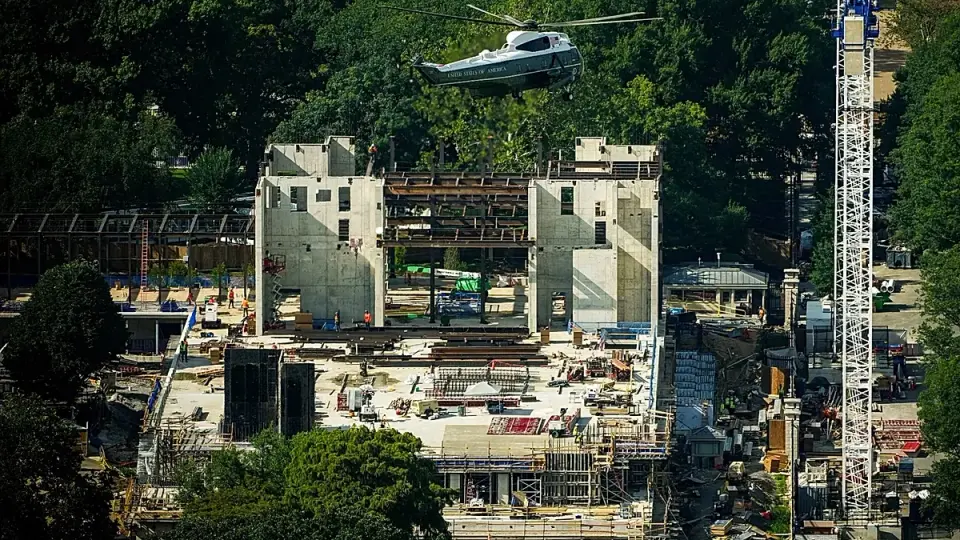
The Supreme Court issued a temporary stay allowing construction of a 90,000-square-foot White House ballroom to continue, blocking lower-court orders that would have halted work due to lack of congressional approval. The project, valued at nearly $400 million and funded by private donors, is 65% complete. The administration argues the project is a national security necessity, while critics contend the president lacks unilateral authority to alter federal properties without legislative consent.
Key points
- Chief Justice John Roberts granted an administrative stay, preventing a lower-court order from halting above-ground construction on the White House ballroom.
- The project, described as a 90,000-square-foot facility, is approximately 65% complete with a 250-person crew working around the clock.
- President Trump stated the project costs nearly $400 million and is funded entirely by private donors and corporations, with no taxpayer money involved.
- The National Trust for Historic Preservation argues the administration attempted to 'outrun the courts' by accelerating construction to a point of no return.
- The administration contends the project is vital for national security, a justification not mentioned when the project was initially unveiled as a private donation effort.
Background
The dispute began in late 2025 when the administration demolished the East Wing to begin construction. The National Trust for Historic Preservation sued in December 2025, seeking to pause work until congressional approvals were secured. Previous coverage noted that while underground security features continued, above-ground work faced legal challenges over presidential authority versus congressional power.
How outlets are covering it
Euronews highlights the financial aspect, noting Trump’s claim that the project is funded by 'patriots' and corporations, and frames the case as a test of presidential power limits. SCOTUSblog provides a detailed legal timeline, emphasizing the procedural history from District Judge Richard Leon’s initial order to the D.C. Circuit’s affirmation and the subsequent Supreme Court stay. SCOTUSblog notes the administration’s argument that Congress has broadly authorized executive construction, while Euronews focuses on the contradiction between the initial private funding narrative and the later national security justification. Both sources agree on the 65% completion rate and the temporary nature of the court’s decision.
Why it matters
The ruling sets a precedent for the limits of executive authority over federal properties and the role of judicial review in large-scale government projects. It highlights tensions between presidential prerogative and congressional oversight, particularly regarding the use of private funding to bypass legislative approval for significant structural changes to historic federal buildings.
What to watch
The Supreme Court is expected to deliberate on whether construction can proceed permanently as the broader legal battle continues. The administration plans to name the corporate donors in the coming weeks, while the National Trust for Historic Preservation may seek further legal avenues to challenge the project’s legality.
- Trump reveals cost of ballroom to be near $400m Euronews.com
- The Case of the Disappearing, Reappearing White House Ballroom Stairs The New York Times
- Trump Claims White House Ballroom Is Free For Taxpayers (Again)—Despite Other Evidence Forbes
- Supreme Court chief justice allows work on Trump's $400M White House ballroom to continue for now PBS
- Supreme Court allows White House ballroom construction to continue for now SCOTUSblog
Want the full story? Read the original reporting
Read on Euronews.com