
Roberts grants temporary stay to resume White House ballroom construction
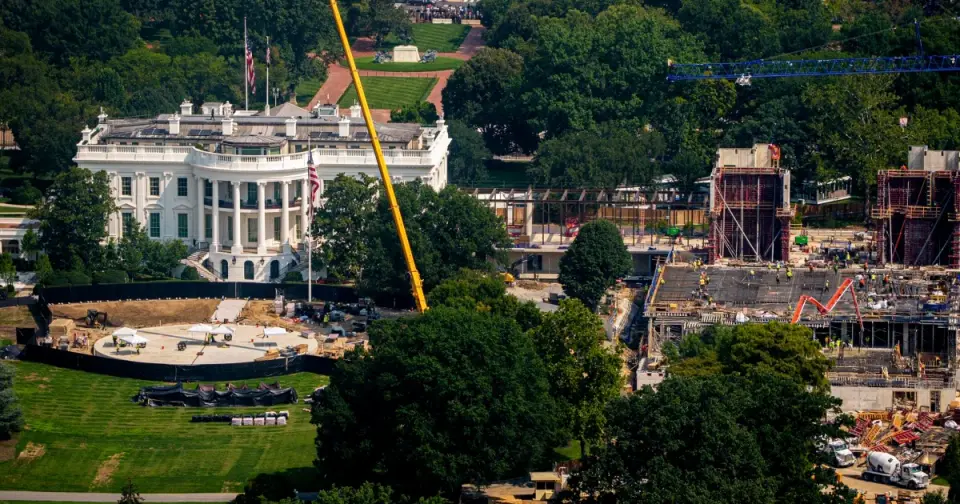
Chief Justice John Roberts issued a temporary stay on August 21, 2026, allowing the Trump administration to continue construction of a new White House ballroom. The move blocks lower court orders that would have halted the above-ground portion of the $400 million project. While the Supreme Court reviews the case, the administration argues the structure is vital for security, whereas critics contend the project bypassed congressional approval and violates historic preservation standards.
Key points
- Chief Justice John Roberts granted a temporary stay, permitting the above-ground construction of the White House ballroom to continue while the Supreme Court considers the case.
- The project is a $400 million, privately funded initiative that was 65% complete as of August 14, 2026, with a 250-person crew working 20 hours a day.
- The National Trust for Historic Preservation challenged the project, arguing the president lacked authority to proceed and that the design violates aesthetic and historic standards.
- A federal judge and the D.C. Circuit Court of Appeals had previously ruled that the ballroom construction must halt, though underground security components were allowed to proceed.
- The administration claims the new structure includes secure facilities and medical areas essential for national security, countering claims that the project was rushed to avoid judicial review.
Background
The dispute began after the Trump administration initiated a $400 million project to replace the old East Wing with a new ballroom and underground security complex. The National Trust for Historic Preservation sued, arguing the administration bypassed Congress by seeking private donations instead of legislative authorization. Lower courts initially blocked the above-ground construction, leading to an urgent appeal to the Supreme Court with a deadline set for August 21, 2026.
How outlets are covering it
NBC News reports that the Supreme Court’s decision is provisional, allowing work to continue while the justices deliberate on the merits of the case. Fox News contributor Hugh Hewitt argues that the president has constitutional authority to secure the Executive Mansion and that lower court rulings were an overreach. Hewitt emphasizes the need for modernized security facilities against evolving threats, while the National Trust for Historic Preservation maintains that the administration lacked the legal authority to proceed without congressional approval.
Why it matters
The ruling sets a precedent for presidential authority over the Executive Mansion and its grounds. It highlights the tension between executive security needs and judicial oversight of historic preservation and congressional funding requirements. The outcome may influence future disputes over federal construction projects and the limits of executive power in national security matters.
What to watch
The Supreme Court will continue to review the case, potentially issuing a final ruling on whether the construction should be permanently halted or allowed to proceed. The administration aims to complete the project by November 2026, while the National Trust for Historic Preservation may seek further legal remedies if the court ultimately rules against them.
- Supreme Court temporarily allows Trump ballroom construction to continue NBC News
- US Chief Justice Lets Trump Keep Building Ballroom for Now Bloomberg.com
- SCOTUS expected to decide whether Trump's ballroom project can move forward NPR
- MORNING GLORY: SCOTUS should urgently allow construction at the White House to proceed Fox News
- The White House Ballroom Finally Gets Its Day at High Court WSJ
Want the full story? Read the original reporting
Read on NBC News