
Senate blocks data center bill as Husted's midterm gamble fails
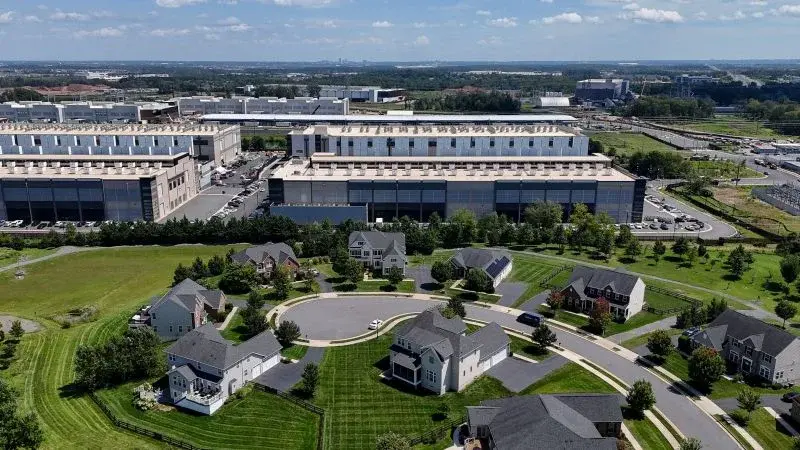
Senate Democrats blocked the Ratepayer Protection Act on Wednesday, denying Republicans a key cost-of-living win ahead of the midterms. The bill, led by vulnerable Ohio Senator Jon Husted, failed to reach the 60-vote threshold needed to overcome a filibuster. While the measure passed the House overwhelmingly, Democrats argued it was a weak, optional standard that lacked enforcement mechanisms. The failure deprives Husted of a major campaign talking point in his competitive race against Sherrod Brown, where data center costs have become a central issue.
Key points
- The Ratepayer Protection Act failed in the Senate on a 57-43 vote, falling short of the 60 votes required to close debate.
- The bill, which passed the House 417-3, would have required state regulators to consider federal standards forcing data centers to cover their own energy costs.
- Senate Democrats, led by Chuck Schumer, opposed the measure, calling it a 'fraud' and 'toothless' because it lacked mandatory enforcement.
- The vote was a significant setback for Ohio Senator Jon Husted, who pushed for the bill to counter attacks from rival Sherrod Brown regarding rising utility bills.
- Republicans argued the bill was a necessary step to show voters they are addressing affordability, while Democrats insisted it was a political ploy with no real impact.
Background
This vote occurred during the Senate's final days in Washington before the November midterms, a period marked by intense partisan gridlock over economic issues. Previous coverage noted that Republicans were scrambling to pass cost-of-living legislation to counter polling showing Democrats within striking distance of retaking the chamber. The data center issue had emerged as a 'sleeper issue' for the cycle, with internal Republican memos warning that it was the primary liability for Husted in Ohio. The broader context includes ongoing debates over AI safety and stock trading bans, which also failed to advance in the same legislative window.
How outlets are covering it
CNN and NBC News framed the vote as a critical failure for Republicans to address voter concerns about affordability, highlighting the strategic importance for Husted's re-election bid. MS NOW emphasized the bill's lack of practical impact, noting that even some Republicans acknowledged it was more of a political maneuver than a substantive policy change. Politico focused on the Democratic strategy to block the bill, with Schumer calling it a 'fraud' and urging support for more robust measures from Democrats Van Hollen and Heinrich. All sources agreed that the bill's failure would likely intensify the debate over data center costs in the final weeks of the campaign, with Democrats arguing the measure was a 'bait-and-switch' and Republicans insisting it was the only viable option before the election.
Why it matters
The failure of the Ratepayer Protection Act underscores the deep partisan divide over how to handle the economic impacts of AI and data center expansion. For Republicans, it removes a key talking point to counter Democratic attacks on high living costs, potentially weakening their position in battleground states like Ohio. For Democrats, it validates their argument that Republicans are prioritizing political messaging over substantive policy. The outcome may influence voter perceptions of which party is more responsive to economic anxieties in the upcoming midterms, where control of Congress is at stake.
What to watch
Senate Republicans are expected to leave Washington and not return until after the midterms, with some expressing concern that their party has not done enough to address the cost of living. Democrats have vowed to seek passage of more robust data center measures, including bills from Sens. Van Hollen and Heinrich. In Ohio, Sherrod Brown's campaign is likely to continue attacking Husted over data centers, while Husted's team will emphasize the House's overwhelming support for the bill. The vote may also influence the broader narrative on AI safety and energy costs in the final weeks of the campaign.
- Democrats block data centers bill, derailing Senate GOP bid to act on affordability ahead of midterms CNN
- Republicans bet a data center bill can help them in November. Democrats say it’s all a ploy. MS NOW
- Democrats gear up to tank data center legislation Politico
- Senate Democrats block Sen. Husted-led bill on data centers, calling it ‘toothless’ NBC News
- Republicans tee up bill on data centers for one of the final votes before the midterms AP News
Want the full story? Read the original reporting
Read on CNN