
Senate Budget Chair’s 'Ponzi Scheme' Rhetoric Sparks Bipartisan Clash Over Social Security Reform
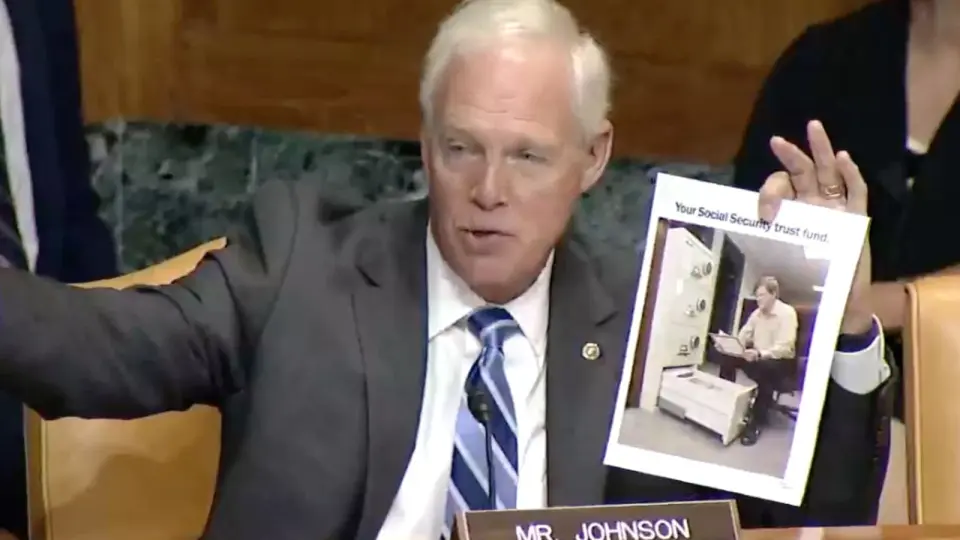
Senate Budget Committee Chairman Ron Johnson (R-Wis.) ignited a political firestorm by labeling Social Security a 'legal Ponzi scheme' and suggesting it should be shut down, a stance he later softened during a hearing. While experts and Democrats criticized the framing as misleading and politically motivated, the debate highlights a genuine bipartisan consensus that the program faces a funding shortfall. The core dispute centers on whether to raise the taxable income cap or rely on general revenue, with projections indicating potential benefit cuts by 2032 if no legislative action is taken.
Key points
- Johnson initially claimed on Fox Business that Social Security is unfixable and should be shut down, later describing his comments as 'imprecise' during a Senate hearing.
- The Social Security retirement trust fund is projected to be depleted by late 2032, potentially reducing benefits to 78% of scheduled amounts.
- Critics argue the 'Ponzi scheme' label ignores that Social Security operates on a separate budget and does not contribute to the national debt held by the public.
- Bipartisan proposals to address the shortfall include raising the taxable income cap, currently set at $184,500, or taxing investment income.
- A 2025 AARP survey found 49% of recent claimants or planners cited fears of program insolvency as a reason to claim benefits early.
Background
This controversy follows a series of recent Senate hearings on Social Security’s future, including sessions in June and August 2026. Previous archive coverage noted Johnson’s release of a report warning of a $511 billion shortfall by 2032 and his subsequent recantation of the 'shut down' rhetoric. The program has faced long-term fiscal concerns for decades, with Congress repeatedly deferring major reforms to future sessions.
How outlets are covering it
CNBC emphasizes the technical inaccuracies in Johnson’s 'Ponzi scheme' analogy, citing experts who note Social Security’s separate budget and lack of borrowing. WBFF focuses on the partisan impasse, highlighting Democratic accusations of 'scare tactics' and Johnson’s defense that his rhetoric was necessary to draw public attention. Both sources agree on the imminent funding crisis but diverge on the viability of Johnson’s proposed solutions, with critics arguing that using general revenue would 'explode' the national debt.
Why it matters
The debate underscores the political risks of Social Security reform ahead of the 2028 election cycle. With the trust fund depletion date approaching in 2032, the lack of consensus on solutions could lead to benefit cuts or increased fiscal instability. Public anxiety is already influencing behavior, with nearly half of surveyed Americans claiming benefits early due to fears of program insolvency.
What to watch
The next session of Congress, beginning in 2027, may provide an opportunity for 'serious' hearings on Social Security reform, as the current Senate members will be in office when the trust fund depletion date hits in 2032. Lawmakers are expected to debate raising the taxable income cap or other revenue measures, though political toxicity around raising the retirement age remains a barrier.
- What Ron Johnson's 'Ponzi scheme' label gets wrong about Social Security, experts say CNBC
- Ron Johnson’s Social Security plan would add $190 trillion to the national debt, CRFB says Fortune
- Social Security impasse irks Senate: 'Maybe now the American people will pay attention’ WBFF
- Sen. Ron Johnson says he used ‘imprecise language’ regarding end of Social Security WPR
- Ron Johnson: Remark about shutting down Social Security was ‘imprecise’ The Hill
Want the full story? Read the original reporting
Read on CNBC