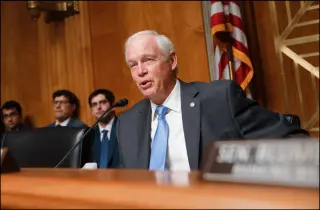
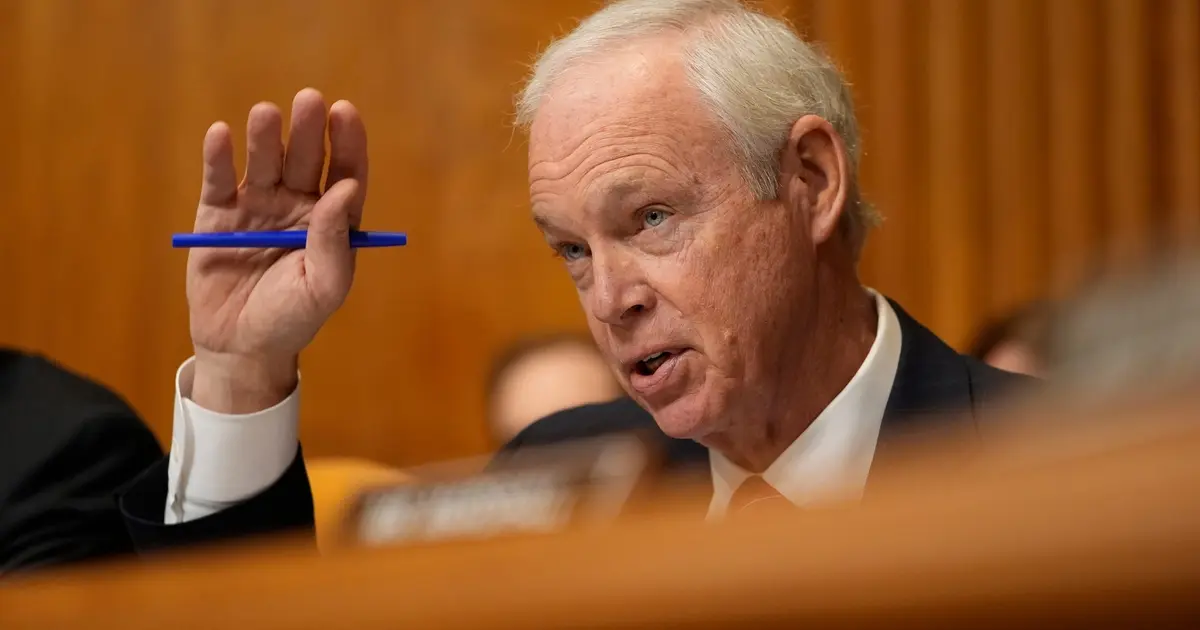
Senate Budget Committee Chair Ron Johnson blocked a Democratic-led bill to restore $810 million in federal funding that President Trump unilaterally canceled without congressional approval. The move, known as a 'pocket rescission,' was condemned by the Government Accountability Office as unconstitutional, but Johnson argued the president has the right to cut spending. While some Republicans criticized the action as an overreach, others defended it as necessary to eliminate waste, highlighting a growing rift within the GOP on executive power.
Ohio Democrat Sherrod Brown blamed a Meta advertising error for losing thousands of votes and dollars, while the Senate blocked a bill to restore $810 million in federal funding and a data center cost measure. Republicans also failed to pass an AI deepfake law and a stock trading restriction, as Democrats cited insufficient protections. The Senate is set to recess for midterms, with no consensus on a spending bill.
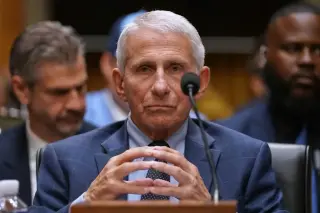
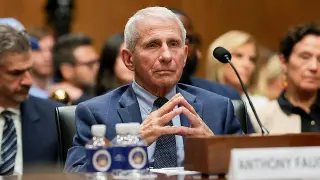
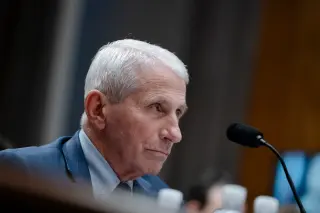
Dr. Anthony Fauci has declined a voluntary request to testify before a second Senate panel investigating his role in the COVID-19 response. His attorney argues that compelling further testimony after a contentious July hearing would constitute political harassment. This refusal follows a recent vote by the Senate Homeland Security and Governmental Affairs Committee to hold Fauci in contempt of Congress after he invoked his Fifth Amendment rights over 100 times. Committee chairman Rand Paul is now seeking to bypass a full Senate vote by sending the contempt referral directly to the U.S. Attorney’s Office in Washington, D.C. The dispute centers on whether Fauci’s prior Fifth Amendment invocation remains valid given a preemptive pardon issued by former President Joe Biden. While Republicans argue the pardon removed the risk of federal prosecution, Fauci’s legal team maintains that the pardon does not negate his right to avoid self-incrimination. Meanwhile, Senator Ron Johnson’s parallel investigation has already obtained significant records, including Fauci’s pandemic-era cellphone and over 1,000 pages of his personal diary. The situation highlights ongoing tensions between congressional investigators and former public health officials regarding pandemic accountability and the legal boundaries of executive pardons.
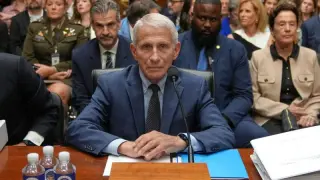
Anthony Fauci’s legal team rejected a voluntary testimony request from Sen. Ron Johnson, citing harassment concerns. This follows a party-line Senate vote to hold Fauci in contempt after he invoked the Fifth Amendment over 100 times during a July 29 hearing. While the committee bypassed a full Senate vote by sending the referral directly to the Justice Department, legal experts argue this violates statutory procedures requiring full chamber approval. Fauci’s defense argues his Fifth Amendment rights remain valid due to state-level investigations, despite a preemptive pardon from former President Biden.
Republican Sens. Ron Johnson and Rand Paul released Fauci’s text messages as part of a Senate probe into his Covid-19 leadership, including exchanges on vaccine safety in pregnancy. The messages show Fauci noting data gaps and cautioning about vaccination timing and potential miscarriage risk after the second dose, with CDC officials weighing the concerns; authorities later maintained vaccines were safe for pregnant people.
U.S. Sen. Ron Johnson and Sen. Rand Paul released one text from Anthony Fauci’s government-issued iPhone as part of a large HHS data dump containing more than 34,000 messages; the released exchange from January 2021 involves Fauci, Rochelle Walensky, and Vivek Murthy discussing COVID-19 vaccination in pregnancy and related safety notes, with more messages expected to be released while privacy and public-health implications are considered.
Sen. Ron Johnson said he obtained Anthony Fauci’s phone records from the Trump administration ahead of a planned Senate vote to hold Fauci in contempt for declining to answer Republicans’ questions about the pandemic at a hearing.
Sen. Ron Johnson (R-Wis.) is set to chair the Senate Budget Committee after Lindsey Graham’s death, tasked with pressing deficit-reduction priorities as the GOP debates a third reconciliation bill to fund the Iran war and other priorities. A longtime fiscal hawk, Johnson says he’ll broker consensus across the conference and insists on offsets, even as intra-party divisions complicate the path forward; his leadership could be short if Grassley takes the gavel next year.
Sen. Ron Johnson said Mitch McConnell’s hospital-bed photo may be an older image, signaling skepticism about the official health update as other conservatives question the narration surrounding the Kentucky senator’s hospitalization.
Sen. Ron Johnson says he’ll move quickly on a GOP-only budget reconciliation bill (Reconciliation 3.0), coordinating with House Republicans and the White House to offset new spending—potentially via fraud crackdowns on Medicare/Medicaid and other cuts—while considering a voter-ID measure. The push comes as Johnson assumes a leadership role after Sen. Lindsey Graham’s death reshapes Senate dynamics and as Republicans rally behind Trump’s defense funding request of about $350 billion. The process also features ongoing talks with House Budget Chair Arrington and scrutiny from fiscal conservatives over how to score offsets, with the party navigating internal disagreements and the broader July legislative sprint.
Sen. Ron Johnson floated holding a cloture vote to end the 60-vote filibuster to pressure Democrats as the Senate gears up to consider the House-passed SAVE America Act. Republicans plan to advance the elections measure with 51 votes, but final passage would still require 60 votes, making it unlikely given anticipated Democratic opposition. The move highlights ongoing GOP strategy around reforming or bypassing the filibuster amid broader election-law and policy battles in the chamber.
Senator Ron Johnson intervened by texting then-President Trump to express concerns about the FDA's restrictions on a Duchenne muscular dystrophy drug, Elevidys, and its impact on patients, amid ongoing political and pharmaceutical conflicts involving RFK Jr.'s team and the FDA.
Sen. Ron Johnson criticized the large legislative bill supporting Trump's tax cuts and increased defense spending, calling it a 'disgusting abomination,' and expressed agreement with Elon Musk's negative comments about the bill's impact on deficits and social programs.
Senator Ron Johnson is leading a conservative push against President Trump's expansive tax and spending bill, citing concerns over increased deficits and fiscal responsibility, and highlighting internal Republican disagreements that could impact the bill's passage.
Wisconsin's Senator Ron Johnson leads opposition among Republicans to a major budget bill supported by President Trump, criticizing its impact on the deficit and spending, while other Republicans and Democrats express concerns over its effects on health and social programs. The bill faces potential rejection in the Senate due to intra-party disagreements and its controversial provisions.