
Supreme Court blocks Trump’s mail-ballot rules ahead of midterms
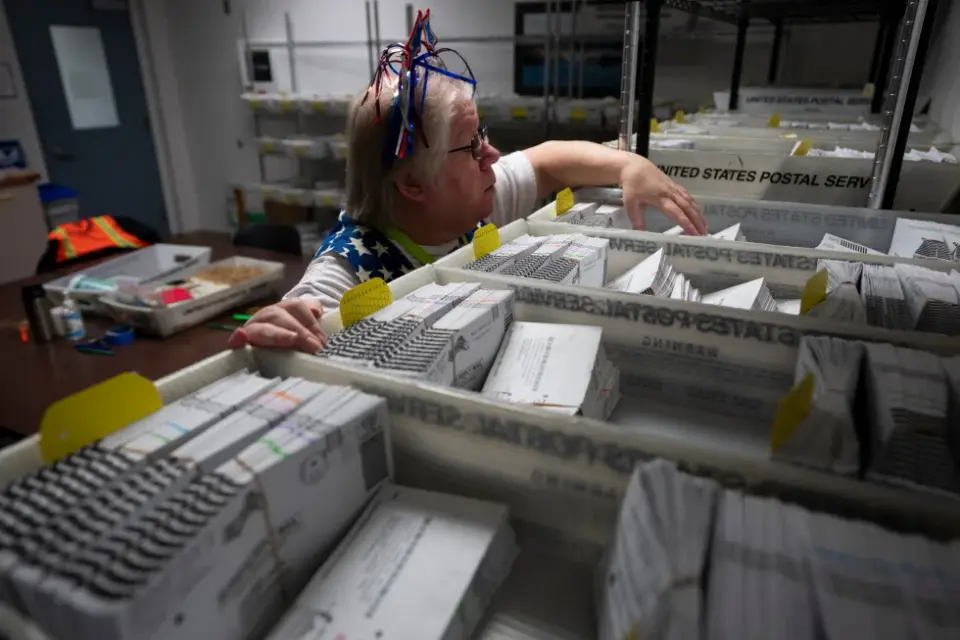
The Supreme Court blocked a Trump administration plan to restrict mail-in ballots via the Postal Service before the 2026 midterms. The court ruled the changes were unlikely to succeed legally and too disruptive to implement so close to Election Day. Justices Alito and Thomas dissented, arguing the Postal Service had authority to regulate mail, while the majority cited timing and potential voter disenfranchisement as reasons to halt the rules.
Key points
- The Supreme Court rejected the Trump administration’s emergency request to enforce new Postal Service rules for mail-in ballots, blocking the plan before the November 2026 midterm elections.
- The majority order, which appeared to be 7-2, stated the government was 'unlikely to succeed on the merits' and that implementing the rules so close to the election would be 'arbitrary and capricious.'
- The proposed rules required states to submit voter lists to the Postal Service and use specific envelope designs with bar codes, a change critics argued would cause massive confusion and disenfranchisement.
- Justices Samuel Alito and Clarence Thomas dissented, arguing the Postal Service had broad authority to regulate mail and that the legal challenges were a 'Hail Mary' pass unlikely to win in full litigation.
- Justice Brett Kavanaugh concurred, acknowledging a 'fair prospect' that the rules fell within Postal Service purview but agreeing they could not be implemented in time for the midterms.
- The decision follows a March executive order by President Trump and previous lower-court injunctions by Judge Indira Talwani, who warned of 'significant disenfranchisement' and noted the Postal Service’s verification portal was not yet operational.
Background
This ruling concludes a weeks-long legal battle that began after President Trump signed an executive order in March 2026 directing the Postal Service to create new guidelines for mail voting. The administration had previously won a procedural victory in August, allowing planning to continue, but lower courts blocked the actual implementation. The dispute arose after Trump failed to pass the SAVE America Act in Congress, leading him to use federal postal authority to impose voting restrictions. The case involved challenges from Democratic-led states and voting rights groups, including the ACLU and League of Women Voters, who argued the plan violated state and congressional control over elections.
How outlets are covering it
The New York Times emphasized the ruling as a major loss for the Trump administration and a win for Democratic-led states, highlighting the dissent from Justices Alito and Thomas as a pattern of conservative support for the administration’s agenda. AP News focused on the practical impossibility of the rules, citing a whistleblower report that a single bar code error could cause entire batches of ballots to be discarded. NBC News noted the division among conservative justices, with Kavanaugh agreeing to block the rules due to timing, while Alito and Thomas argued for immediate enforcement. CNN and other outlets framed the decision as a rejection of federal overreach into state-controlled elections, with Republican election officials in states like Utah expressing relief that mail voting would continue as usual. The administration characterized the changes as 'modest' design requirements, while challengers described them as an existential threat to the democratic process.
Why it matters
The decision preserves the status quo for mail-in voting in the 2026 midterms, preventing potential widespread disenfranchisement and administrative chaos in states that rely heavily on mail ballots. It limits the Trump administration’s ability to use federal postal authority to impose election rules, reinforcing the principle that states and Congress control election procedures. The ruling also sets a precedent for the timing of election-related regulations, suggesting that significant changes cannot be implemented so close to an election, even if the underlying legal authority is debatable. For voters, it ensures that existing mail voting processes remain intact, avoiding the risk of millions of ballots being rejected or delayed due to new, untested federal requirements.
What to watch
The legal battle over the merits of the Postal Service’s authority to regulate mail-in ballots will continue in lower courts, as the Supreme Court’s order was not a final decision on the legality of the rules. The Trump administration may pursue further litigation or seek to implement the rules in future elections, though the timing constraints cited by the court may limit immediate action. States that had prepared contingency plans to abandon mail voting if the rules were enforced will now revert to standard procedures. The Postal Service will likely continue to develop its verification portal, but its use for ballot screening may be delayed or abandoned. The outcome of the midterms will be a key indicator of the impact of the ruling, as mail voting remains a central method for many voters. Future disputes may focus on the constitutionality of federal election rules and the scope of Postal Service authority, potentially leading to further Supreme Court challenges.
- Supreme Court rejects Trump mail ballot restrictions ahead of midterms AP News
- Supreme Court Rejects Trump’s Restrictions on Mail-In Ballots: Live Updates The New York Times
- Supreme Court rejects Trump’s plan to limit mail-in voting in midterms CNN
- Supreme Court says Trump can’t enforce new mail-in ballot regulation NBC News
- Supreme Court blocks sweeping mail ballot restrictions for midterm elections The Washington Post
Want the full story? Read the original reporting
Read on AP News