
Hassett Faces Tapper’s Reality Check on Strait of Hormuz
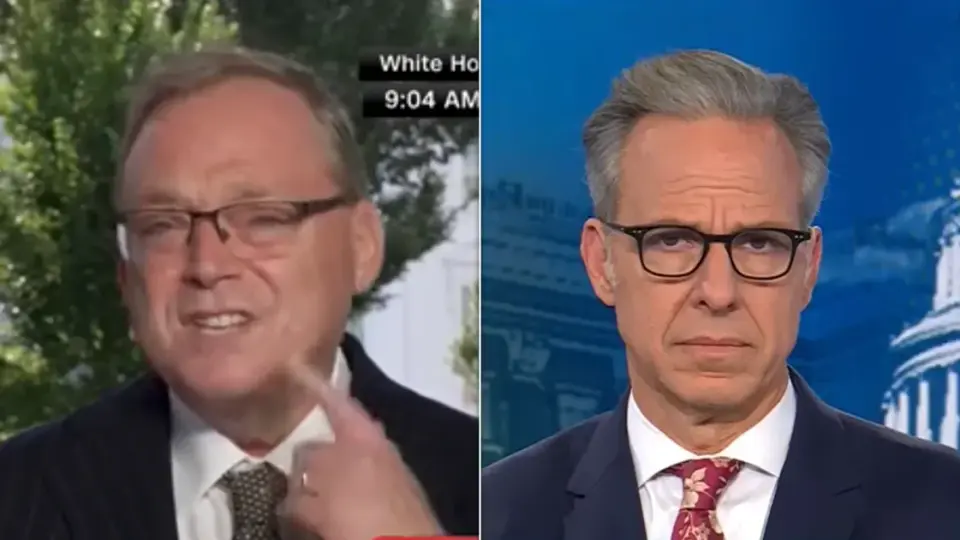
National Economic Council Director Kevin Hassett faced intense scrutiny from CNN’s Jake Tapper on Sunday after failing to deliver on his prediction that shipping through the Strait of Hormuz would soon normalize. Tapper confronted Hassett with his previous 'bullish' comments, highlighting that the waterway remains closed six months after the U.S. entered a conflict with Iran. While Hassett noted oil prices dropped from $100 to $80 per barrel, he admitted gas prices remain higher than desired. The U.S. is nearing a deal, but Iran demands the lifting of sanctions and war reparations before reopening the strait.
Key points
- CNN host Jake Tapper confronted National Economic Council Director Kevin Hassett on 'State of the Union' regarding his failed prediction that Strait of Hormuz traffic would return to normal 'really, really soon.'
- The Strait of Hormuz remains effectively closed nearly six months after President Donald Trump initiated a war with Iran, with the U.S. currently nearing a deal to reopen it.
- Iranian Foreign Minister Abbas Araghchi stated that talks with Oman are 'approaching the final stages,' but Iran refuses to reopen the waterway until the U.S. meets its demands.
- Iran’s conditions for reopening include lifting the naval blockade and sanctions, paying war reparations, releasing frozen assets, and ending attacks on its allies.
- Hassett acknowledged that while oil prices fell from $100 to $80 per barrel, U.S. gas prices remain at $4.01 per gallon, up from $3.15 a year ago, and are 'still higher than we would like.'
- Tapper challenged Hassett’s claim that there is 'a heck of a lot' of traffic moving through the strait, cutting him off to emphasize that current activity does not match his previous optimistic forecasts.
Background
This incident follows earlier criticism of Hassett’s economic analysis, such as his dismissal of weak July jobs data by focusing only on sectoral gains. The current dispute highlights the ongoing tension between White House optimism and the reality of prolonged geopolitical conflicts affecting global energy markets.
Why it matters
The Strait of Hormuz is a critical global oil chokepoint; its closure directly impacts U.S. gas prices and global energy stability. The public confrontation underscores the gap between administration promises and geopolitical realities, potentially affecting market confidence and diplomatic negotiations.
What to watch
Negotiations between the U.S. and Iran, mediated by Oman, are in their final stages. The outcome will determine whether the Strait reopens, potentially lowering oil prices, or if the blockade persists, keeping energy costs elevated and geopolitical tensions high.
Want the full story? Read the original reporting
Read on HuffPost