
Tarrant County Finalizes Polling Site Cuts Amid Midterm Tensions
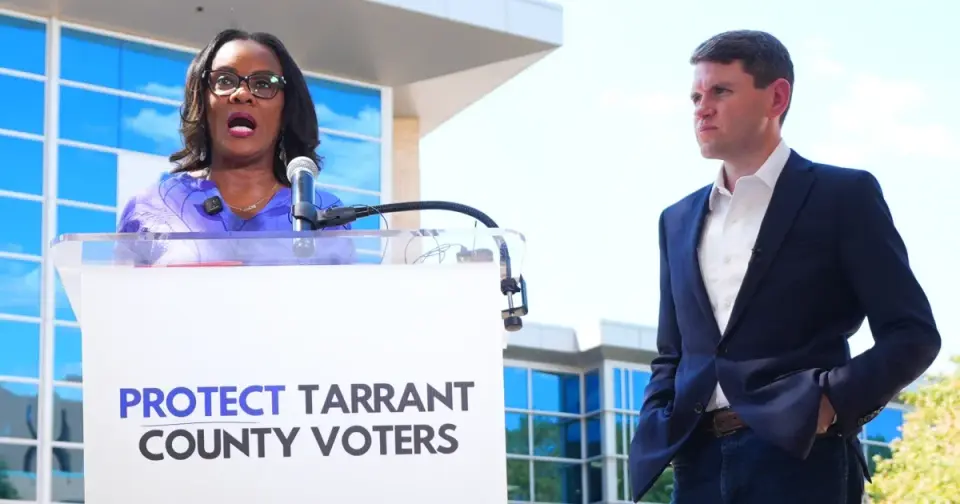
Tarrant County commissioners approved a plan to reduce Election Day polling locations by 92 for the 2026 midterms, leaving 224 sites for 1.3 million voters. The decision, passed 3-2 by Republicans, follows a revised proposal that added sites after initial backlash. Democrats and civil rights groups argue the cuts disproportionately burden minority and low-income communities, while officials cite cost savings and low turnout at closed sites. The move occurs in a key battleground county where Democratic Senate candidate James Talarico is challenging Republican Attorney General Ken Paxton.
Key points
- Tarrant County Commissioners Court voted to reduce polling sites from 316 in 2022 to 224 for the 2026 midterms, a 30% decrease.
- The final plan includes 47 early voting locations, down from 50 in 2022, and exceeds the statutory minimum by 54 sites.
- Three Republican commissioners supported the plan, while two Democrats voted against it, citing concerns over voter access in minority areas.
- The NAACP and ACLU condemned the cuts as voter suppression, noting that many closures are in majority-minority neighborhoods in Fort Worth and Arlington.
- County officials, including Judge Tim O’Hare, argued the reductions save resources and that remaining sites are accessible and sufficient for voters.
Background
Tarrant County has become a critical political battleground in Texas, shifting from a Republican stronghold to a competitive area with growing Democratic support. Previous attempts to cut polling sites in August 2026 faced intense public opposition, leading to a revised proposal. The county’s demographic shifts, including a significant Hispanic and Black population, have made voting access a central issue in the upcoming Senate race between James Talarico and Ken Paxton.
How outlets are covering it
NBC News and CBS News report that the final plan, while less severe than the initial proposal, still draws sharp criticism from Democrats and voting rights advocates. The New Republic and Democracy Docket emphasize the political stakes, linking the cuts to the Senate race and highlighting the arrests of protesters during earlier hearings. While county officials frame the reductions as necessary for efficiency and cost-saving, opponents argue the cuts target low-income and minority communities, potentially suppressing turnout. The debate reflects broader tensions in Texas over voting access and the role of countywide voting in reducing polling sites.
Why it matters
The reduction of polling sites in Tarrant County could influence voter turnout in a pivotal midterm race, where small margins often decide outcomes. The decision sets a precedent for other Texas counties considering similar cuts, potentially affecting access to voting across the state. As Tarrant County becomes a key bellwether for national elections, the controversy underscores the ongoing struggle over voting rights and the balance between administrative efficiency and equitable access.
What to watch
The approved plan will take effect for the November 2026 midterms, with 224 polling sites serving 1.3 million voters. Civil rights groups may pursue legal challenges if they believe the cuts violate voting rights. The outcome of the Senate race between Talarico and Paxton will be closely watched, as it could signal broader shifts in Texas politics. Other Texas counties may follow Tarrant County’s lead in reducing polling sites, depending on local political dynamics and voter turnout trends.
- Key Texas county votes to cut polling sites ahead of the midterms NBC News
- Tarrant County commissioners to vote on new plan reducing polling locations CBS News
- After outraged voters revolted, Texas battleground county takes up new plan to cut polling locations Democracy Docket
- Talarico Sounds Alarm as Texas Plans to Close Dozens of Polling Sites The New Republic
- Democrats Cry Foul at Texas County’s Plan to Slash Polling Sites notus.org
Want the full story? Read the original reporting
Read on NBC News