
Texas Early Voting Records Signal Democratic Surge, but Analysts Warn of Premature Conclusions
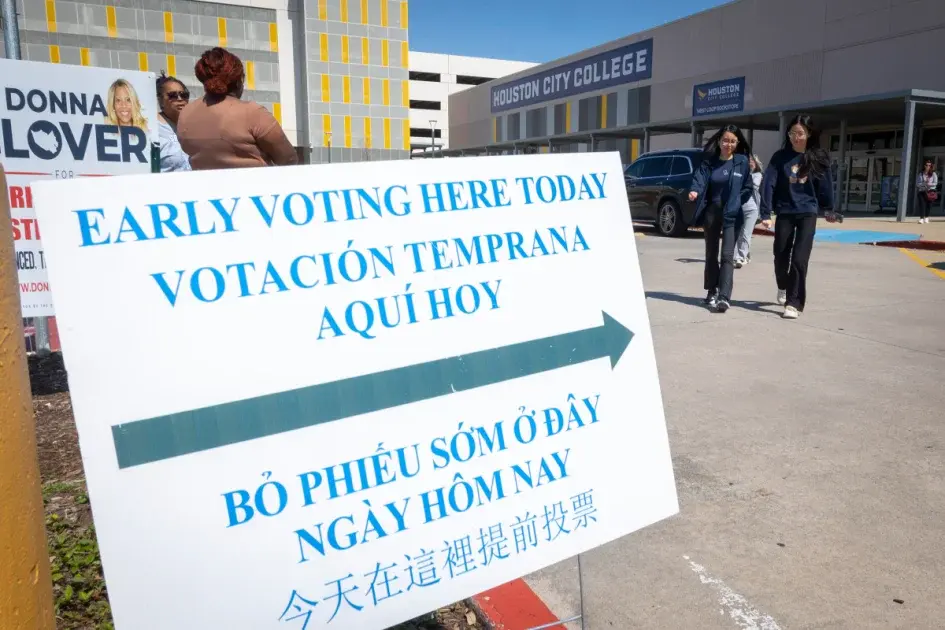
Texas counties are reporting record-breaking early voting turnout for the 2026 midterms, with Harris and Dallas counties shattering previous benchmarks. While Democrats currently lead in enthusiasm, consultants caution that high turnout does not guarantee a Democratic victory, noting that Republicans have significantly increased their base since 2018. The outcome hinges on mobilizing rural voters and undecided independents, with President Trump set to campaign in key red areas to counter the Democratic momentum.
Key points
- Harris County recorded over 104,000 ballots on Day 1, breaking the 2018 record by 41,000 votes, while Dallas County saw its highest Day 1 turnout ever.
- Record turnout is not limited to blue areas; GOP strongholds like Montgomery, Ellis, Bell, and McLennan counties also set midterm records.
- Consultants warn that early voting skews toward the party with higher enthusiasm, currently Democrats, but Republicans may close the gap as the pool of enthusiastic Democratic voters shrinks.
- President Trump is scheduled to campaign in Lubbock and Waco next week to mobilize Republican support in key red areas.
- Democrats need rural turnout to stay below 25% and Hispanic vote share around 25% to win, while Republicans need at least 25% of the vote from rural counties.
- Approximately 1.2 million voters who participated in the March Republican primary but sat out the general election are a key group to watch for Republican mobilization.
Background
Texas early voting began on October 19, 2026, for the November 3 midterm elections. The state's U.S. Senate race between Republican Ken Paxton and Democrat James Talarico is statistically tied and could determine Senate control. Prior to early voting, the state faced significant voter registration backlogs, including a 500,000-record error from the Department of Public System and a new 15,000-record backlog, which voting rights groups argue suppress turnout. In 2024, 80% of Texas voters cast ballots early, setting a high baseline for participation.
How outlets are covering it
The Texas Tribune emphasizes the need to wait for more data, noting that both parties claim high turnout benefits them, and highlights the importance of new and rural voters. The New Republic frames the Harris County record as a sign of Republican trouble, citing voter concerns about cost of living and the Iran war, and notes the race could turn Texas blue for the first time in over three decades. Click2Houston focuses on the logistical aspects of voting in Harris County, highlighting the 75 available locations and the flexibility for voters to choose any countywide site, while noting that wait times vary significantly across locations. The outlets agree on the record-breaking numbers but differ in their interpretation of the political implications, with The New Republic being more definitive about the Democratic advantage and The Texas Tribune more cautious about drawing conclusions from a single day.
Why it matters
The early voting data provides critical insights into voter engagement and potential outcomes in the 2026 Texas midterms, which could shift the balance of power in the U.S. Senate. The record turnout indicates high voter motivation, but the ultimate result depends on the mobilization of different voter demographics, including rural, Hispanic, and undecided voters. The ability of each party to turn out its base will determine whether Democrats can flip statewide seats or if Republicans can maintain their dominance in Texas.
What to watch
Early voting continues through October 30, 2026, with Election Day on November 3. President Trump is scheduled to campaign in Lubbock and Waco next week to mobilize Republican voters. Analysts will continue to monitor turnout trends, particularly in rural areas and among young and first-time voters, to assess the potential impact on the Senate race and other statewide contests.
- What early voting data in Texas means for results The Texas Tribune
- Texas voter registrations hit record 19 million The Texas Tribune
- Long line to vote? Harris County voters have 75 locations to choose from Click2Houston
- Texas’s Biggest County Shatters Early Voting Records The New Republic
- Travis County reports record turnout for first day of midterm election early voting KVUE
Want the full story? Read the original reporting
Read on The Texas Tribune