
Trump declares Oval Office a national monument to lock in gold decor
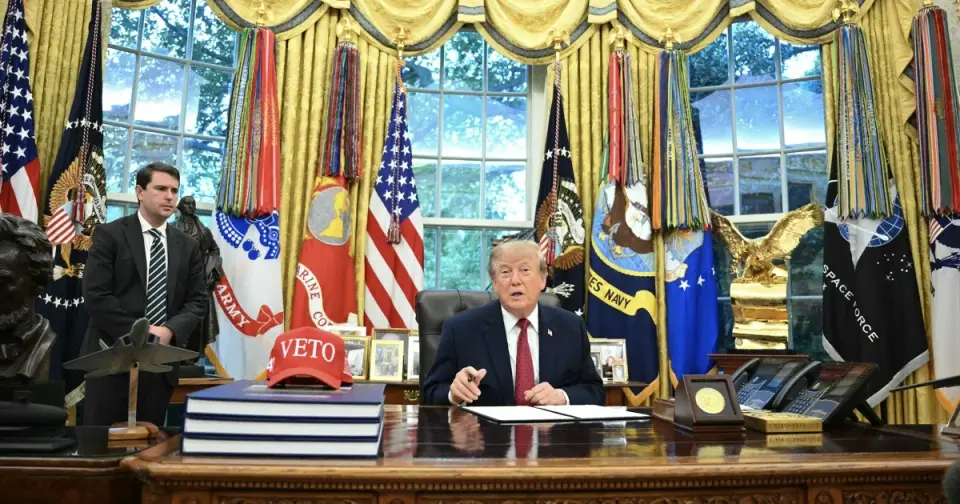
President Donald Trump signed a proclamation on November 5, 2026, declaring the Oval Office and Cabinet Room national monuments. The move aims to prevent future administrations from making major structural changes to these spaces, which Trump has extensively renovated with gold accents. This action follows significant Republican losses in the midterm elections, where Democrats gained control of Congress. While the proclamation allows for routine redecoration, it requires congressional approval for substantial modifications, a move critics argue is legally hollow given existing preservation laws.
Key points
- Trump signed a proclamation designating the Oval Office and Cabinet Room as national monuments, requiring congressional approval for major modifications.
- The move follows heavy Republican losses in the 2026 midterm elections, where Democrats secured control of Congress.
- Trump’s recent public appearances have focused on White House renovations, including a new ballroom and the Lincoln Memorial Reflecting Pool.
- The proclamation allows future presidents to redecorate and make operational changes but prohibits altering the historic structure or architectural character.
- Critics argue the order is legally meaningless because presidents already have limited power to change the White House, and it contrasts with Trump’s other controversial construction projects.
Background
In the lead-up to the November 2026 midterms, former President Barack Obama criticized Trump’s White House renovations, comparing the gold-heavy decor to a 'Cheesecake Factory.' This cultural clash highlighted broader tensions over aesthetic choices and spending priorities. Trump’s recent focus on construction projects, including a $600 million ballroom that required demolishing the historic East Wing, has drawn scrutiny from preservation groups. The current proclamation is the latest in a series of efforts by the administration to assert control over the physical landscape of the White House and Washington, D.C.
How outlets are covering it
NBC News and AP News report the proclamation as a direct response to the midterm election results, emphasizing Trump’s desire to leave a lasting physical legacy despite political setbacks. The Guardian highlights the specific gold accents in the Oval Office and notes the presence of a 'Veto' hat on the Resolute Desk during the signing, signaling Trump’s intent to block Democratic legislative priorities. BBC News provides legal context, noting that the White House is already a National Historic Landmark and that the new order may not significantly alter existing presidential powers. Legal expert Greg Werkheiser, cited by BBC, argues the move is hypocritical, as the administration has simultaneously sued to undermine preservation laws for other historic sites. All sources agree that the proclamation permits routine redecoration but restricts major structural changes, a nuance Trump emphasized to reporters.
Why it matters
This proclamation sets a precedent for how future presidents may interact with the White House’s historic spaces. It signals a shift toward codifying specific aesthetic choices as protected heritage, potentially limiting the traditional flexibility presidents have had in customizing their offices. The move also highlights the tension between executive authority and congressional oversight, particularly as Democrats now control Congress and may scrutinize or challenge the legal validity of such executive actions. It underscores the broader political strategy of using physical infrastructure as a symbol of legacy and power, even in the face of electoral defeat.
What to watch
Congress, now controlled by Democrats, is expected to review the proclamation, though it is unclear whether they will ratify or challenge it. The National Park Service may be tasked with maintaining the designated areas, as per the order. Future presidents will face a new legal framework for altering the Oval Office and Cabinet Room, potentially requiring congressional approval for major changes. The administration may continue to highlight its renovation projects in public appearances, while Democrats may use the proclamation as a symbol of executive overreach in their legislative agenda.
- Trump focuses on White House decor for second straight day in post-midterm remarks NBC News
- Trump signs order to prevent future presidents from changing Oval Office BBC
- Trump makes the Oval Office a national monument. But future presidents can still redecorate AP News
- Trump signs proclamation to try to prevent changes to gold-covered Oval Office The Guardian
- Trump says he’s declaring Oval Office and Cabinet Room national landmarks to prevent future changes CNN
Want the full story? Read the original reporting
Read on NBC News