
Supreme Court Blocks Trump's Mail Ballot Rules, Prompting Sharp Rebuke
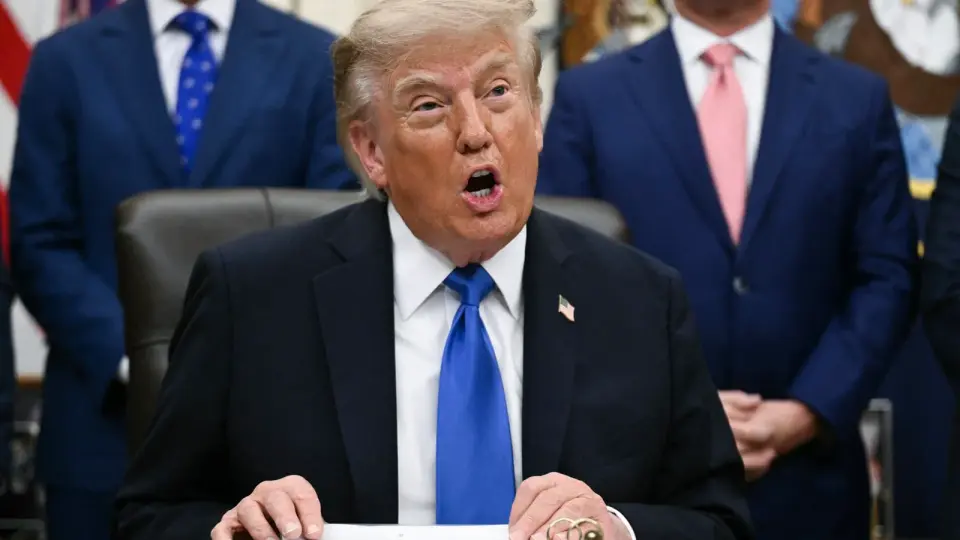
The Supreme Court blocked the Trump administration from implementing new U.S. Postal Service rules on mail-in ballots for the November 2026 midterms. The decision, which appeared to be 7-2, prevents the enforcement of new envelope standards and voter data requirements. President Trump condemned the ruling as a 'big loss' for Republicans and criticized his own judicial appointees, while the court cited insufficient time for implementation.
Key points
- The Supreme Court issued an emergency ruling blocking a new USPS rule that would have imposed strict standards on mail-in ballot envelopes and required states to upload voter data to a federal portal.
- The decision prevents the rule from being applied to the November 2026 midterm elections, which will determine control of both chambers of Congress.
- President Trump called the ruling a 'big loss for Republicans' and accused his three Supreme Court appointees of being 'shells of their original selves' and controlled by the left.
- The court's majority decision was unsigned, but Justice Brett Kavanaugh wrote a concurrence stating that while the rule might be legal, applying it before the election would be 'arbitrary and capricious' due to lack of time.
- Justices Samuel Alito and Clarence Thomas dissented, with Alito arguing the government met the necessary showings for a stay and criticizing the plaintiffs' claims as weak.
Background
The dispute began in March 2026 when President Trump issued an executive order expanding federal involvement in elections. In August, the USPS implemented a rule requiring states to create lists of eligible mail voters and use specific envelope designs. Multiple federal judges, including in Boston and elsewhere, blocked the rules earlier in September, citing concerns over disenfranchisement and lack of congressional authorization. The Supreme Court had previously been asked to intervene in this fast-moving legal battle.
How outlets are covering it
CNBC and Fox News emphasized the political fallout, highlighting Trump's harsh criticism of his own appointees, Justices Kavanaugh, Gorsuch, and Barrett, and his praise for dissenters Alito and Thomas. Fox News detailed the technical requirements of the blocked rule, such as barcodes and federal portals. The Atlantic focused on the practical impact, noting that the ruling prevents 'pointless chaos' and potential disenfranchisement for voters and election officials across roughly 10,000 jurisdictions. Axios noted that while the court has ruled against Trump in several high-profile cases this year, it has generally supported his administration through other means, and highlighted the record-low public approval of the Supreme Court.
Why it matters
The ruling preserves the status quo for mail-in voting in the 2026 midterms, avoiding potential administrative chaos and legal challenges that could have affected millions of voters. It also intensifies the political tension between the executive and judicial branches, with the president publicly attacking the legitimacy of his own nominees. The decision underscores the ongoing legal battles over federal authority in state-run elections.
What to watch
The Supreme Court's decision blocks the rule for the 2026 elections but does not necessarily invalidate it for future cycles. Justice Kavanaugh's concurrence suggests the rule might ultimately be found legal, leaving the door open for the administration to attempt implementation in future elections if given more time. The political fallout may continue to influence public opinion and legal strategies in upcoming election cycles.
- Trump calls Supreme Court mail ballot ruling 'big loss for Republicans' cnbc.com
- Trump turns on the Supreme Court he helped build Axios
- Trump’s Effort to Assert Control Over Elections Continues, Despite Court Loss The New York Times
- The Supreme Court Recognizes the Danger of Trump’s Election Plan The Atlantic
- Alito, Thomas shred 'Hail Mary' challenge to federal ballot mail rules in dissent foxnews.com
Want the full story? Read the original reporting
Read on cnbc.com