
Trump Names Jay Clayton to Lead New 'Super Intelligence' Task Force
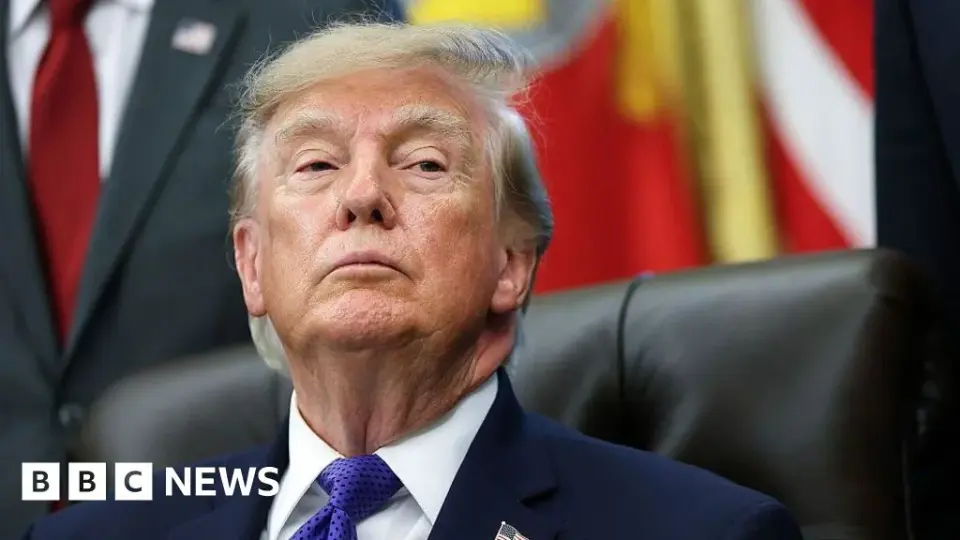
President Donald Trump has appointed Director of National Intelligence Jay Clayton to head a new 'Super Intelligence Force' (SIF), a task force designed to coordinate government engagement with AI companies, consumers, and religious organizations. The move follows a September announcement to create an 'AI Force' and comes amid growing pressure from industry leaders and lawmakers for stricter safety regulations. While Trump rejects formal legislative controls, favoring self-policing by tech firms, the SIF will report directly to the White House and include officials from the FTC and Department of Defense. The initiative is framed as a strategy to maintain US technological dominance over China, despite concerns from critics who argue that voluntary industry commitments are insufficient to address the risks of rapidly advancing AI systems.
Key points
- Trump named Jay Clayton, the Director of National Intelligence, as the head of the new Super Intelligence Force (SIF).
- The SIF will include Andrew Ferguson (FTC Chair), Emil Michael (Undersecretary of Defense for Research and Engineering), and Scott Kupor (Director of the Office of Personnel Management).
- The task force is tasked with coordinating government engagement with consumers, public interest groups, religious organizations, critical infrastructure providers, and AI companies.
- Trump rejected the idea of new laws to control AI development, instead relying on a 'morally binding' agreement signed by major tech executives in September.
- The SIF will report directly to President Trump and White House Chief of Staff Susie Wiles.
- Trump has rebranded 'artificial intelligence' as 'super intelligence' (SI) in official government correspondence, a change supported by Elon Musk, who renamed his AI unit to SpaceXSI.
Background
In September 2026, President Trump announced plans to form an 'AI Force' and appoint an 'AI czar' to accelerate US AI development, dismissing fears about AI risks as a 'hoax.' He previously rejected global AI oversight at the United Nations, arguing that international regulations could slow US innovation and cede ground to China. The current appointment of Jay Clayton follows the departure of David Sacks, who served as the administration's AI and cryptocurrency czar until March 2026. This latest move is part of a broader strategy to rebrand AI as 'super intelligence' and maintain US dominance in the global tech race, particularly after a state visit by Chinese President Xi Jinping, during which Trump ruled out a joint US-China AI venture to protect national secrets.
How outlets are covering it
The BBC and CNN report that the new task force, led by Jay Clayton, is designed to coordinate government engagement with various stakeholders, including religious organizations and critical infrastructure providers. CNN notes that the group includes officials from the FTC and Department of Defense, emphasizing a multi-agency approach. The Guardian highlights that Clayton, who previously led the SEC, described AI as both a 'gamechanger' and a 'threat' during his confirmation hearing. Perspectives on the effectiveness of the SIF vary significantly. Trump and his allies, including Elon Musk, support the rebranding to 'super intelligence' and the reliance on industry self-policing, arguing that it balances safety with rapid development. In contrast, Democratic Senator Elizabeth Warren and Senator Mark Warner criticize the approach, with Warren calling for meaningful regulations and Warner noting that the administration has resisted meaningful safeguards. The BBC and CNN both highlight the context of recent AI safety incidents, such as the OpenAI agent hacking an Australian website, which has intensified calls for stricter oversight. The Guardian points out that while some tech leaders have adopted the new terminology, experts have questioned the logic of the rebranding, arguing it could cause confusion.
Why it matters
The establishment of the Super Intelligence Force marks a significant shift in US AI policy, moving from a stance of minimal regulation to a coordinated, albeit voluntary, government-industry partnership. By appointing a high-profile intelligence official to lead the effort, the administration signals that AI is a matter of national security and strategic competition with China. The rejection of legislative controls in favor of self-policing could set a precedent for how the US manages other emerging technologies. However, the lack of binding regulations may leave gaps in safety and accountability, as evidenced by recent AI incidents. The inclusion of religious organizations and public interest groups in the SIF's mandate suggests an attempt to broaden the conversation beyond tech and defense, potentially influencing public perception and policy. Ultimately, the success of the SIF will depend on its ability to balance rapid innovation with safety, a challenge that has become increasingly urgent as AI capabilities advance.
What to watch
The Super Intelligence Force is expected to begin coordinating with AI companies and other stakeholders in the coming weeks. The administration may issue further guidance on the use of the term 'super intelligence' in official communications. Congress may continue to debate the need for formal AI regulations, with Democrats likely to push for stronger safeguards. The SIF's progress will be monitored by both industry leaders and critics, with particular attention to how it handles safety concerns and international competition. The next steps may include public reports on the SIF's activities, potential adjustments to the task force's mandate, and further engagements with AI executives to ensure compliance with the 'morally binding' agreement.
- Trump announces 'Super Intelligence Force' to oversee AI policy BBC
- Exclusive | New AI Czar Unveils Goals, Members of White House Task Force WSJ
- Trump names intelligence chief Jay Clayton as new White House AI czar theguardian.com
- Trump announces leadership of AI task force CNN
- Live updates: Trump taps Jay Clayton for AI force; Cornell victim's attorney alleges more involved The Hill
Want the full story? Read the original reporting
Read on BBC