
Trump Signs New Orders to Narrow Birthright Citizenship After Supreme Court Loss
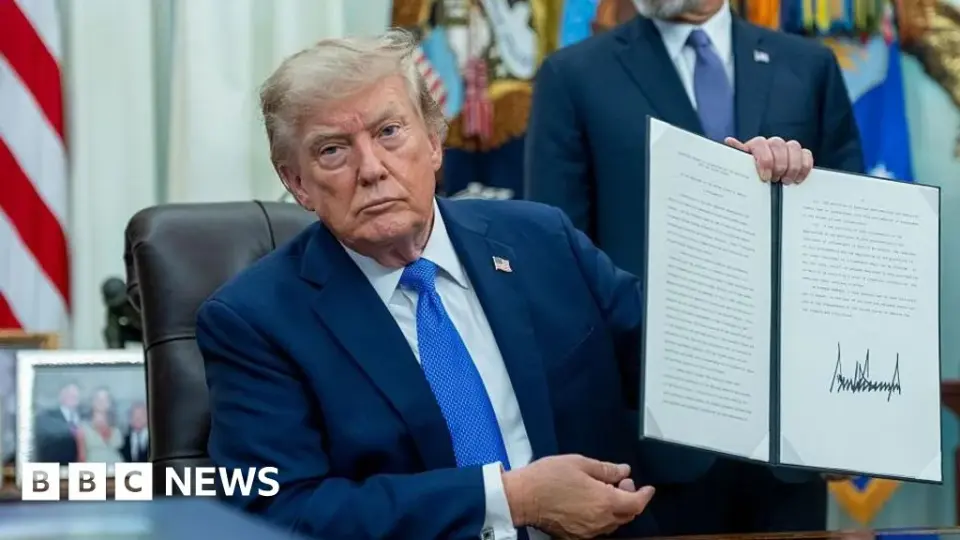
President Trump signed two executive orders on August 6, 2026, attempting to restrict birthright citizenship and ban 'birth tourism' following a Supreme Court ruling that struck down his previous, broader attempt. The new orders target specific groups, including children of foreign government employees and those involved in terrorist activities, while the administration argues these measures are legal exceptions rather than a repeal of the 14th Amendment.
Key points
- Trump signed two executive orders on August 6, 2026, weeks after the Supreme Court ruled his previous attempt to end birthright citizenship unconstitutional.
- The first order excludes citizenship for children of non-citizen parents who are foreign government employees, members of foreign terrorist organizations, or have engaged in fraud to obtain citizenship.
- The second order targets 'birth tourism,' prohibiting entry for the primary purpose of giving birth to secure citizenship, a practice Trump claimed involved hundreds of thousands of babies.
- Stephen Miller, the White House deputy chief of staff, stated the administration is using existing immigration laws to enforce these limits, arguing the Supreme Court's June ruling did not bar these specific exceptions.
- Legal experts and Democratic lawmakers argue the orders are unconstitutional, noting that the Supreme Court already settled the issue in June and that the new measures are a 'back door' attempt to circumvent the 14th Amendment.
Background
This move follows a June 2026 Supreme Court decision that struck down Trump's 2025 executive order, which had sought to broadly end birthright citizenship for all children of non-citizens. The Court, in a 6-3 ruling, affirmed that the 14th Amendment guarantees citizenship to anyone born on US soil, with Chief Justice John Roberts emphasizing that the right belongs to 'every free-born person in this land.' Trump had previously called the decision 'unfair' and 'bad,' vowing to pursue alternative legal avenues to achieve his policy goals.
How outlets are covering it
The administration, including Stephen Miller, framed the new orders as necessary security measures to prevent 'malign foreign actors' from exploiting the system, citing data that suggests birth tourism is a significant issue. Conversely, the Migration Policy Institute cited census-based estimates suggesting only 22,000 to 26,000 babies are born annually through birth tourism, contradicting the administration's claims of hundreds of thousands. Legal scholar Gabriel Chin noted that while the president has some power to restrict entry for the purpose of childbirth, he lacks the authority to deny citizenship to a child already born in the US. Democratic leaders, including Senators Ron Wyden and Jeff Merkley, condemned the orders as 'un-American' and a violation of settled constitutional law, while the Oregon Attorney General called the moves a 'blatant attempt' to chip away at rights after a Supreme Court loss.
Why it matters
These executive orders represent a significant shift in US immigration policy, potentially affecting the citizenship status of thousands of children born to specific categories of non-citizens. The move highlights the ongoing tension between the executive branch and the judiciary regarding the interpretation of the 14th Amendment and the scope of presidential power over immigration. It also signals a continued effort by the administration to restrict immigration through legal loopholes after a major Supreme Court defeat, likely leading to further legal challenges and political polarization.
What to watch
The new executive orders are expected to face immediate legal challenges from state attorneys general and civil rights organizations. The administration will likely defend the orders in court, arguing they fall within existing exceptions to birthright citizenship recognized by the Supreme Court. Meanwhile, the political debate over immigration and the 14th Amendment is likely to intensify, with Democrats using the issue to criticize the administration's 'overreach' and Republicans defending the measures as necessary for national security and border integrity.
- Trump again tries to limit US birthright citizenship with new executive orders BBC
- Live Updates: Trump Targets Birthright Citizenship Again in New Executive Orders The New York Times
- Oregon leaders slam Trump orders targeting birthright citizenship statesmanjournal.com
- Trump again tries to curb birthright citizenship and ‘birth tourism’ through executive action CNN
- ACLU blasts Trump’s new orders on birthright citizenship, saying they are doomed to fail in court– live The Guardian
Want the full story? Read the original reporting
Read on BBC