
Supreme Court faces emergency bid to halt injunction on White House ballroom
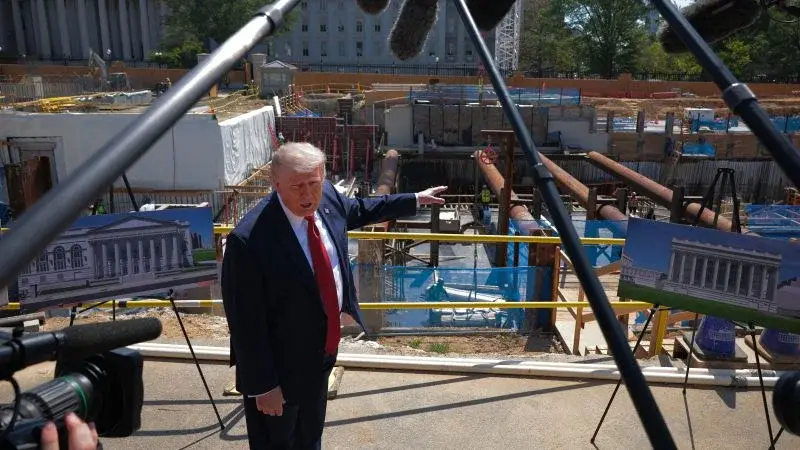
The Trump administration filed an emergency request with the Supreme Court on August 14 to pause a lower-court injunction blocking the $400 million White House ballroom project. Solicitor General John Sauer argued the construction is vital for national security and presidential safety, while the National Trust for Historic Preservation contends the project requires congressional approval. The DC Circuit Court of Appeals had ruled the president lacks unilateral authority to rebuild the East Wing, though it paused the order for 14 days to allow an appeal. The administration claims the project is 65% complete, while critics describe the funding mechanism as a 'Rube Goldberg' scheme involving private donors.
Key points
- Solicitor General John Sauer filed a 45-page application on August 14 asking the Supreme Court to immediately stay the DC Circuit's injunction blocking above-ground construction.
- The administration argues the ballroom is an 'integrated military complex' required for the president's safety, citing recent assassination attempts and the need to protect the underground bunker.
- The DC Circuit Court of Appeals ruled 2-1 on August 7 that the White House lacks authority to proceed without congressional approval, calling the executive's action 'self-help.'
- The National Trust for Historic Preservation, which sued over the project, stated that Congress has not granted the executive branch unfettered authority to redesign the White House.
- The administration claims the project is 65% complete, with a 70-foot concrete superstructure already in place, while critics note the $400 million funding came from private donors via a complex nonprofit arrangement.
- The Supreme Court must decide whether to intervene before the injunction takes effect on August 21, as the lower courts paused implementation to allow for this appeal.
Background
This dispute follows a series of legal challenges to Trump's Washington D.C. renovation projects. In July 2026, the administration also sought Supreme Court review of a defamation verdict, arguing presidential immunity. The ballroom case specifically stems from the demolition of the East Wing last year without notifying Congress, a move that triggered the lawsuit by the National Trust for Historic Preservation. Previous archive coverage noted that while underground bunker work was permitted to continue, the above-ground ballroom faced a legal halt due to lack of congressional authorization.
How outlets are covering it
CNN and CBS News emphasize the administration's national security arguments, noting Sauer's claim that the ballroom shields a military installation and that halting work creates safety risks. CNBC highlights the 'drone port' on the roof as a security justification. In contrast, the National Trust for Historic Preservation, as reported by CNN and CBS, argues the administration is evading the rule of law and that the project is a matter for Congress, not executive self-help. WBFF notes the administration's claim that the project is 65% complete and that the National Trust lacks standing, while CBS details the 'Rube Goldberg' funding mechanism involving private donors like Lockheed Martin and Amazon.
Why it matters
This case tests the limits of executive power over federal property and the White House grounds. If the Supreme Court allows construction to continue, it could set a precedent for unilateral executive action on major federal projects without congressional approval. Conversely, upholding the injunction would reinforce the principle that significant changes to historic federal buildings require legislative authorization, impacting future presidential renovation plans and the balance of power between the executive and legislative branches.
What to watch
The Supreme Court must decide whether to grant the emergency stay before August 21. If the court denies the request, construction on the above-ground ballroom will likely halt, though underground work may continue. If granted, the project will proceed while the full legal appeal is heard. The administration aims to complete the project by summer 2028, months before the current presidential term ends.
- Trump asks Supreme Court to let him build ballroom, citing national security needs and architectural values cnn.com
- Trump asks Supreme Court to let White House ballroom construction continue CNBC
- Trump asks Supreme Court to intervene in White House ballroom legal fight CBS News
- Trump asks Supreme Court to intervene in White House ballroom dispute WBFF
- Trump asks Supreme Court to allow White House ballroom work to continue BBC
Want the full story? Read the original reporting
Read on cnn.com