
Trump’s Portrait Hits U.S. Currency in Historic 250th Anniversary Coin
The U.S. Mint has begun circulating a gold-colored $1 coin featuring President Donald Trump’s portrait to mark the nation’s 250th anniversary. This move breaks a 160-year tradition barring living individuals from U.S. currency, leveraging a 2020 law that authorized semiquincentennial designs. The coin is the latest in a series of government assets, including buildings and passports, bearing the president’s name or likeness.
Key points
- The U.S. Mint announced on Wednesday that a gold-colored $1 coin with Trump’s likeness is now in circulation and available for purchase.
- The coin commemorates the nation’s 250th anniversary, with the front displaying 'LIBERTY' and 'IN GOD WE TRUST' and the back featuring the presidential seal with '250'.
- This is the first time a living person has appeared on U.S. currency since 1866, when Congress prohibited such portraits.
- The coins are sold in packages of 25 or 100, ranging from $1.55 to $2.44 per coin, with the 25-coin package starting at $61.
- The administration is using a 2020 law authorizing 'emblematic' designs for the semiquincentennial to justify the coin, despite a 2005 law requiring presidents to be dead for two years before appearing on dollar coins.
Background
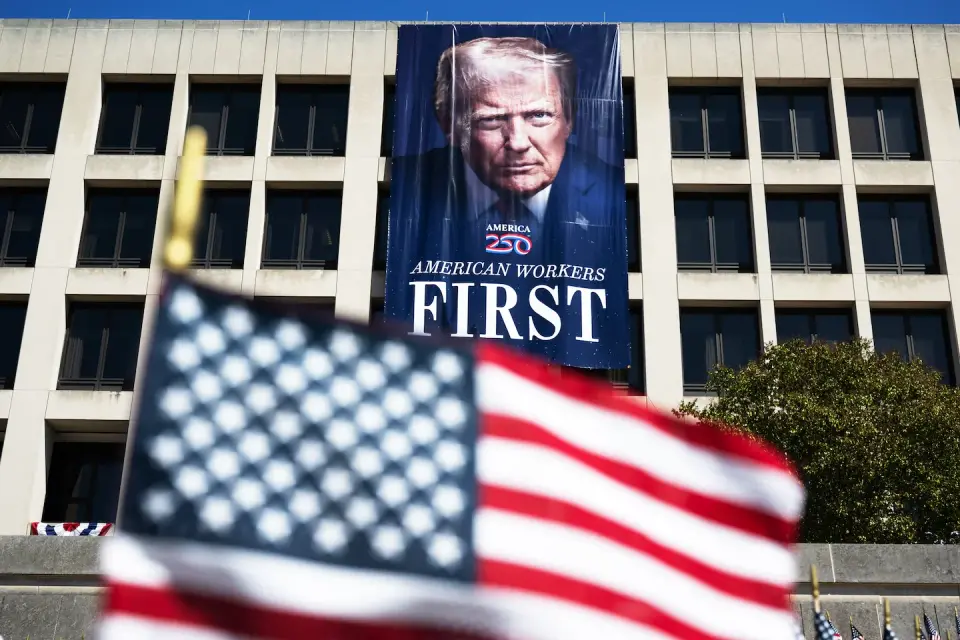
This development follows a broader pattern of the Trump administration placing the president’s name or likeness on various government assets, including the Kennedy Center, federal building banners, passports, and National Park passes. The 250th anniversary celebrations have increasingly centered on Trump, with the president describing the July 4 events as a 'Trump rally.' The coin release is part of a larger effort to cement the president’s legacy on national identity, following earlier moves like renaming Lake Ontario to 'Lake America' and proposing a $250 bill with his portrait.
How outlets are covering it
The Washington Post frames the coin as part of a broader trend of the administration placing Trump’s name and face on government items, noting that some changes have led to lawsuits. Politico emphasizes the historical significance of the coin, highlighting that it is the first time a living person has appeared on U.S. currency since 1866, and notes the administration’s use of a 2020 law to justify the move. AP News focuses on the practical aspects, such as the coin’s availability and pricing, while MS NOW critiques the move as part of a pattern of Trump 'getting away with it all,' arguing that the coin breaks with a long-standing tradition and may be unlawful. The sources differ in their emphasis, with The Post and Politico focusing on the historical and legal aspects, while MS NOW critiques the broader implications of the administration’s actions.
Why it matters
The release of the Trump coin marks a significant departure from a long-standing tradition in U.S. currency, potentially setting a precedent for future administrations. It also highlights the administration’s efforts to shape national identity and legacy, which could have broader implications for how the government uses public assets and symbols. The legal and historical debates surrounding the coin may influence future discussions about the role of living individuals in national symbols and the boundaries of executive power in shaping public memory.
What to watch
The next steps will likely involve monitoring the public and political reaction to the coin, as well as any legal challenges that may arise from its release. The administration may also continue to push for other changes, such as the proposed $250 bill with Trump’s portrait, which would be the first time a living person appears on U.S. paper currency. The outcome of these moves could influence future debates about the role of living individuals in national symbols and the boundaries of executive power in shaping public memory.
- The places where the government has put Trump’s name and face The Washington Post
- US Mint begins circulation, sale of Trump $1 coins Politico
- Heads or tails? $1 coin with Trump’s face and gold finish goes on sale AP News
- Opinion | Trump's new $1 coin plan shows how he gets away with it all MS NOW
- Trump’s Gold-Colored $1 Coin Now Available: What to Know U.S. News & World Report
Want the full story? Read the original reporting
Read on The Washington Post