
Putin Frees US Teacher Hubbard as Witkoff Delivers Peace Framework in St. Petersburg
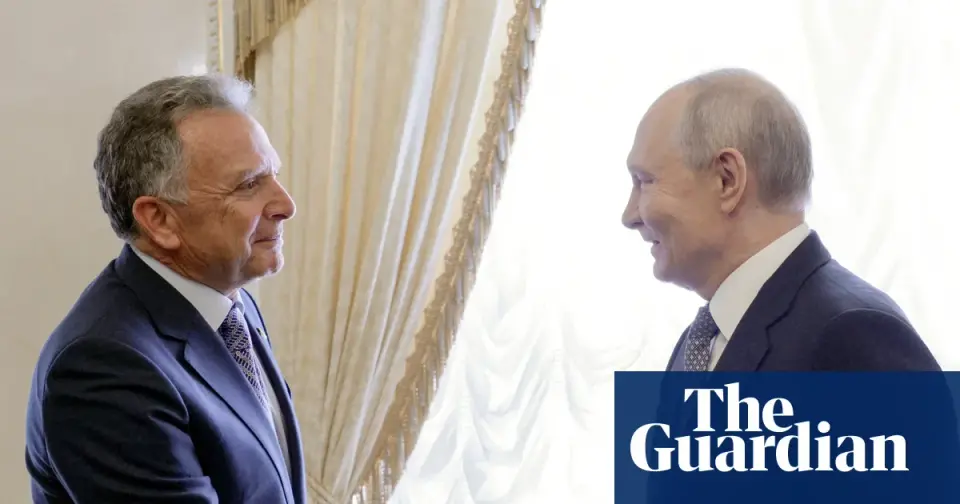
Vladimir Putin ordered the release of Stephen Hubbard, a 74-year-old American teacher detained in Russia since 2022, during a meeting with US envoy Steve Witkoff in St. Petersburg. The release followed a direct appeal from Donald Trump and was not part of a prisoner swap. Witkoff presented a peace framework to Putin, praising him as a 'humanitarian,' while Moscow signaled willingness to resume trilateral talks in November. The move coincides with strained US-Ukraine relations over energy sanctions and satellite access restrictions.
Key points
- Putin released Stephen Hubbard, a 74-year-old former teacher from Michigan, who had been imprisoned for over four years on mercenary charges.
- The release was unilateral, with no prisoner swap, following a direct request from President Trump.
- Witkoff met Putin at the Constantine Palace, presenting a peace framework and praising Putin as a 'humanitarian.'
- Moscow indicated willingness to resume trilateral peace talks in November, though no immediate breakthrough is expected.
- The release occurred amid tensions between Washington and Kyiv over Russian diesel imports and restricted access to Starshield satellite technology.
Background
This development follows a series of diplomatic efforts to end the war in Ukraine, including a phone call between Trump and Putin in September 2026 and recent meetings in Oslo. The US administration has faced criticism for excluding Ukrainian and European voices from earlier stages of the peace process, while Ukraine has complained about disruptions in US intelligence-sharing and satellite access.
How outlets are covering it
The Guardian and The New York Times emphasize the diplomatic significance of the release as a calculated move by Moscow to align with Trump's position on Ukraine, offering the US president a victory before midterm elections. Channel 3000 focuses on the humanitarian aspect, highlighting Hubbard's poor health and the lack of a prisoner swap. CNN notes the broader context of US-Russia relations, including the controversial deal to resume Russian diesel exports. All sources agree that the release was a direct result of Trump's appeal, but they differ in their assessment of its impact on the peace process, with The Guardian and NYT suggesting it may not lead to an imminent breakthrough, while Channel 3000 frames it as a positive step toward peace.
Why it matters
The release of Hubbard marks a significant shift in US-Russia relations, potentially influencing the trajectory of peace negotiations in Ukraine. It also highlights the growing tensions between Washington and Kyiv, as the US administration prioritizes diplomatic gains with Moscow over supporting Ukraine's military and technological needs. The move could have implications for the broader geopolitical landscape, including energy markets and the balance of power in the region.
What to watch
Moscow has indicated willingness to resume trilateral peace talks in November, but no immediate breakthrough is expected. The US administration will likely continue to pursue diplomatic channels with Russia, while Ukraine may face further restrictions on satellite access and intelligence-sharing. The impact of the Russian diesel exports on US consumers and global energy markets will be closely monitored, as analysts question whether the volumes involved will significantly ease the supply squeeze.
- Putin orders release of jailed American as he meets Trump envoy for Ukraine talks The Guardian
- Russia Releases American Stephen Hubbard From Prison, State Media Reports The New York Times
- Russia frees retired US schoolteacher held since 2022 Channel 3000
- Russia frees 74-year-old American Stephen Hubbard it captured in occupied Ukraine CNN
- Russia frees U.S. citizen held since 2022 after plea from Trump The Washington Post
Want the full story? Read the original reporting
Read on The Guardian