
Legal experts split on Trump’s narrow birthright citizenship orders
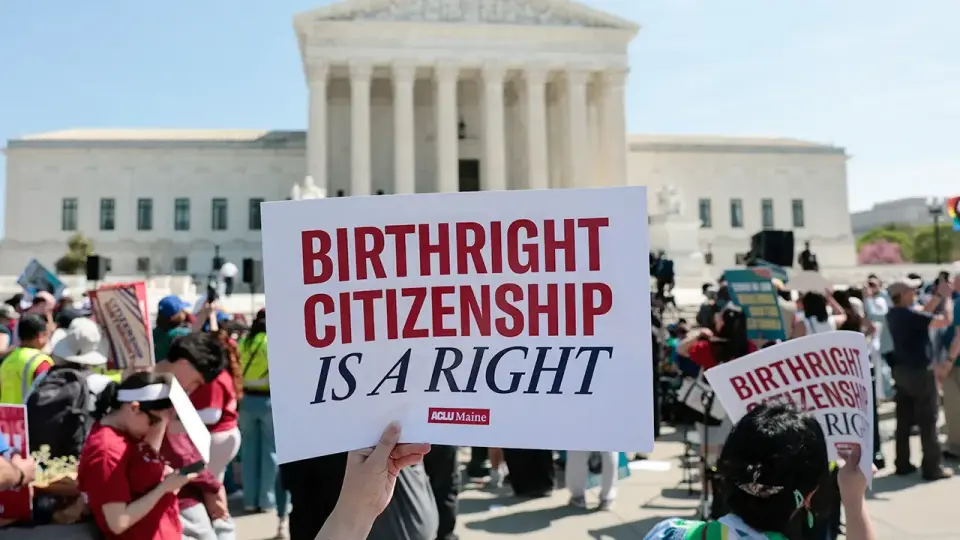
Following a June Supreme Court ruling that upheld broad birthright citizenship, President Trump issued two narrower executive orders on August 6, 2026. These orders target children of foreign terrorists, diplomats, and those involved in 'birth tourism.' While conservative legal experts argue these measures rely on historical exceptions, critics and some judges view them as unconstitutional expansions of executive power. A federal judge recently denied a temporary injunction, allowing the legal battle to continue.
Key points
- Trump signed two executive orders on August 6, 2026, after the Supreme Court struck down his initial broad ban on birthright citizenship in June.
- The first order directs agencies to withhold citizenship documents for children of foreign terrorist organization members, diplomats, and those involved in fraudulent birth tourism schemes.
- The second order targets 'birth tourism' by directing the State Department and DHS to deny visas or pursue removal for individuals entering the U.S. primarily to give birth.
- The orders are scheduled to take effect on September 6, 2026, but face immediate legal challenges in Maryland and New Hampshire.
- A federal judge denied a temporary restraining order, instructing plaintiffs to file a revised complaint to address the new executive actions directly.
Background
In June 2026, the Supreme Court ruled 6-3 that children born in the U.S. to parents who are unlawfully or temporarily present are citizens at birth under the 14th Amendment. This decision reversed Trump’s initial 2025 executive order, which had broadly barred citizenship for children of non-citizens. The current orders represent a second attempt to narrow citizenship rights by targeting specific categories, such as 'alien enemies' and birth tourists, rather than all non-citizen parents. Previous coverage noted that while the Supreme Court upheld the core principle of birthright citizenship, it left open questions regarding historical exceptions for diplomats and enemy combatants.
How outlets are covering it
Fox News highlights that conservative legal experts from the Manhattan Institute and America First Policy Institute believe the new orders have stronger legal footing because they rely on longstanding exceptions for 'alien enemies' and diplomats recognized in the 1898 case United States v. Wong Kim Ark. However, Fox News also notes that David Bier of the Cato Institute and Amanda Frost of the University of Virginia argue the orders are unconstitutional, with Frost pointing out that the 'enemy' exception historically applied only to occupied territories, not merely residents. Al Jazeera reports that District Judge Deborah Boardman, a Biden appointee, called the order 'unprecedented' but denied a temporary injunction, allowing the case to proceed. Le Monde emphasizes the impact on surrogacy, noting the orders target foreign nationals, particularly Chinese and French citizens, who use U.S. surrogacy to secure citizenship for their children. The Mercury News features an opinion piece from Larry Oda, a Japanese American born in a WWII internment camp, arguing that the 'alien enemy' exception is a wartime concept that should not apply in peacetime to strip children of citizenship based on their parents' status.
Why it matters
The outcome of these legal challenges will determine whether the executive branch can unilaterally redefine the scope of the 14th Amendment's citizenship clause. If the orders survive, they could set a precedent for excluding specific groups from birthright citizenship based on their parents' political or legal status, potentially affecting thousands of families. Conversely, if struck down, it will reinforce the Supreme Court's June ruling that birthright citizenship is a broad constitutional right not subject to executive narrowing. The case also tests the limits of executive power in defining who is 'subject to the jurisdiction' of the United States.
What to watch
The executive orders are set to take effect on September 6, 2026, unless blocked by a court. A Maryland judge is scheduled to hear an injunction request on August 28, 2026, while a related motion is pending in New Hampshire. Plaintiffs, including a coalition of immigrant families and advocacy groups, are expected to file a revised complaint to address the new orders directly. The legal battle may ultimately reach the Supreme Court, where the interpretation of 'alien enemies' and 'jurisdiction' could be the deciding factor.
- Trump’s tougher round-two birthright citizenship strategy hinges on key legal distinction, experts say Fox News
- US judge denies injunction against Trump’s new birthright citizenship order Al Jazeera
- Donald Trump undermines surrogacy for foreign nationals in the United States Le Monde.fr
- US judge questions but won't yet block Trump's new birthright citizenship order Reuters
- Opinion: Birthright citizenship is not a wartime exception The Mercury News
Want the full story? Read the original reporting
Read on Fox News