
Veterans seek emergency court order to halt Trump arch excavation
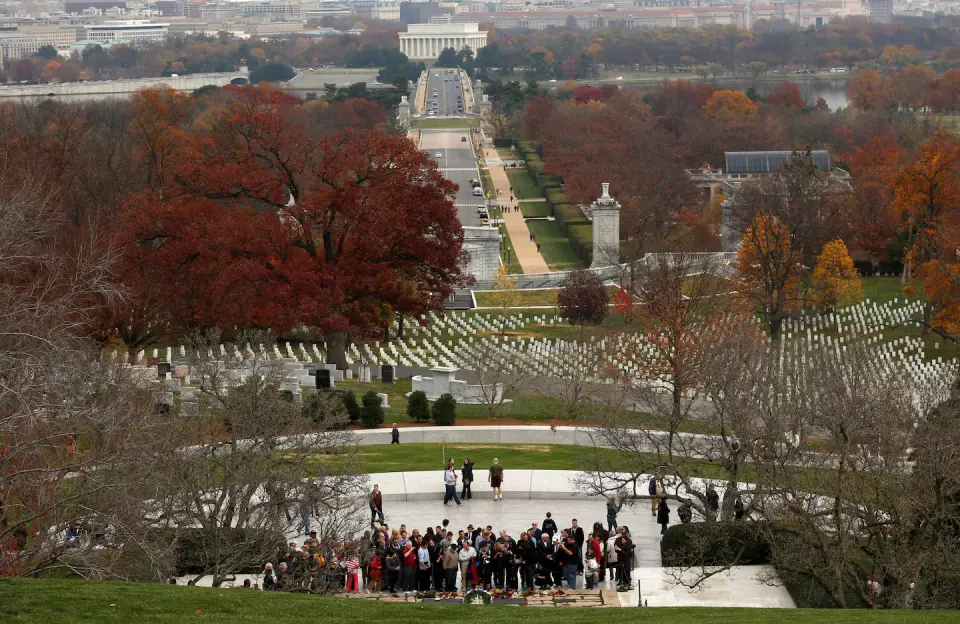
Three Vietnam War veterans have filed an emergency request with a federal judge to block the start of excavation work for President Trump’s planned 250-foot arch near Arlington National Cemetery. Interior Secretary Doug Burgum announced that construction would begin within two weeks, despite ongoing federal reviews and a lack of congressional authorization. The veterans argue the administration is attempting to create a fait accompli to bypass judicial oversight, while the Justice Department cites recent Supreme Court rulings to dismiss the lawsuit.
Key points
- Interior Secretary Doug Burgum announced on Thursday that excavation for the 250-foot arch would begin within two weeks, with full construction targeted for completion in two to three years.
- Three Vietnam War veterans, represented by Public Citizen, filed an emergency motion on Friday asking Judge Tanya S. Chutkan to issue a temporary restraining order to halt work.
- The plaintiffs argue the project lacks congressional authorization and that the administration is rushing construction to render the project a fait accompli, mirroring arguments used for the White House ballroom.
- The Department of Justice filed a motion on Thursday to dismiss the lawsuit, citing a 5-4 Supreme Court decision that allowed the White House ballroom to proceed despite historic preservation challenges.
- Rep. Don Beyer (D-Va.) criticized the timeline as a rush ahead of the November election, citing unresolved concerns regarding traffic, emergency vehicle access, and flight risks at Reagan National Airport.
Background
This dispute follows a pattern of federal construction projects facing legal challenges, such as the border wall on tribal land and the White House ballroom. The arch project is part of a broader set of initiatives by the Trump administration to reshape Washington, D.C., including renovations to the Kennedy Center and the Lincoln Memorial Reflecting Pool. A National Park Service report released in August acknowledged adverse effects on historic sightlines but ultimately backed the project.
How outlets are covering it
The Washington Post and CNN emphasize the legal strategy of the veterans, focusing on the emergency filing and the administration’s attempt to outpace the courts. The New York Times highlights the lack of final approval and the aggressive timeline set by Burgum. ARLnow provides a broader local perspective, including Rep. Don Beyer’s concerns about traffic and safety, as well as the administration’s historical justification for the monument. The Justice Department’s position, reported by all outlets, relies on the Supreme Court’s recent ruling regarding the White House ballroom to argue that the veterans have not demonstrated concrete injury.
Why it matters
The case tests the limits of executive power in federal construction projects and the role of the judiciary in halting work before final approvals are granted. The outcome could set a precedent for other large-scale government projects facing legal challenges, particularly those involving historic preservation and public access.
What to watch
Judge Tanya S. Chutkan is expected to rule on the emergency motion for a temporary restraining order. If denied, excavation work is set to begin within two weeks. The Department of Justice will continue to argue for dismissal of the lawsuit, while the veterans’ attorneys plan to provide further evidence to the court regarding the lack of congressional authorization and potential harms to Arlington National Cemetery.
- Veterans make emergency request to block construction of Trump’s arch The Washington Post
- Trump to Break Ground on Arch Before Getting Approval The New York Times
- Trump's arch may break ground without final approval. Veterans are trying to stop it NPR
- NEW: Excavation for Trump’s arch at Memorial Circle to begin within two weeks ARLnow
- Trump ‘triumphal arch’ opponents seek emergency court action after groundbreaking plans were announced CNN
Want the full story? Read the original reporting
Read on The Washington Post