
Virginia Voters Repeal 2006 Marriage Ban, Enshrine Reproductive Rights, and Restore Felon Voting Rights
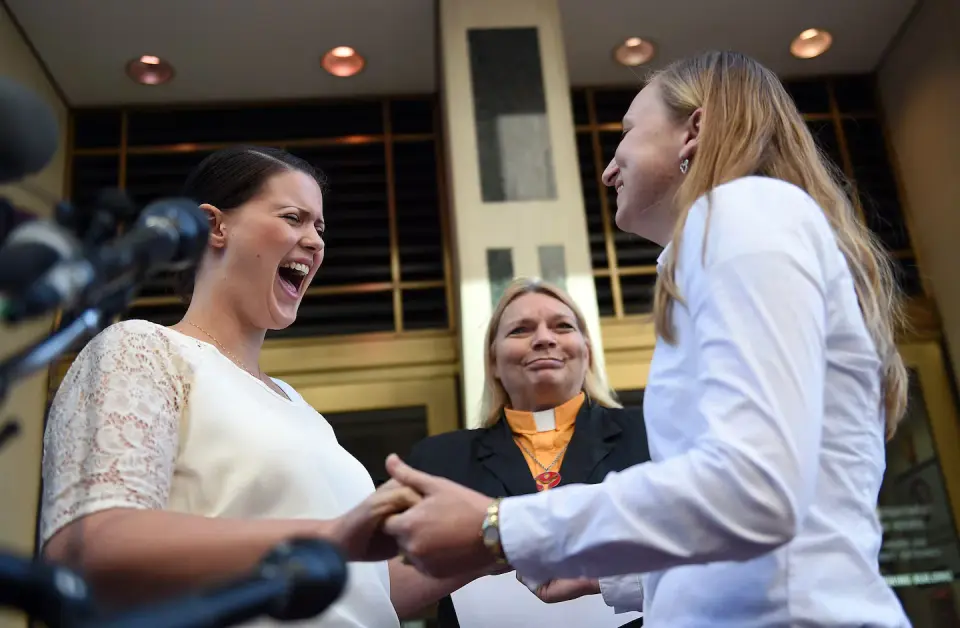
Virginia voters approved three constitutional amendments on Tuesday, repealing a 2006 ban on same-sex marriage, enshrining reproductive rights, and restoring voting rights to people with felony convictions. The measures passed with margins ranging from 56.6% to 62.5%, though a lawsuit challenges the reproductive rights amendment's procedural validity.
Key points
- Voters approved Question 1 (reproductive freedom) with 62.5% support, Question 2 (removing the same-sex marriage ban) with 57.5%, and Question 3 (restoring voting rights after felony sentences) with 56.6%.
- The 2006 ban on same-sex marriage, which was rendered defunct by a Supreme Court ruling over a decade ago, was formally removed from the state constitution.
- The new voting rights amendment restores the franchise to people with felony convictions immediately upon release, replacing a 1902 law that imposed a lifetime ban.
- The Founding Freedoms Law Center filed a lawsuit in April challenging the reproductive rights amendment, alleging procedural failures in posting language on courthouse doors and misleading ballot wording.
- Governor Abigail Spanberger expressed confidence that the vote results will stand, while opponents called the lawsuit a sham.
Background
Virginia had previously allowed former felons to vote only through gubernatorial pardon or petition, a process that disproportionately affected people of color. In 2023, former Republican Governor Glenn Youngkin revived the lifetime ban. The 2006 same-sex marriage ban was passed when Anthony LeCounte was a 17-year-old high school student in Alexandria; he later married legally in the Blue Ridge Mountains. The recent California ban on child marriage highlights a broader national trend toward defining marriage eligibility, though Virginia's focus was on repealing existing restrictions rather than adding new ones.
How outlets are covering it
The Washington Post highlighted the personal narrative of Anthony LeCounte, framing the repeal of the 2006 ban as a symbolic closure for those who lived through its passage. Mother Jones emphasized the racial history of the felony voting ban, noting it was enacted in 1902 by white delegates to disenfranchise Black voters, and cited The Sentencing Project’s report that over 250,000 Virginians were blocked from voting. WWBT focused on the legal challenge to the reproductive rights amendment, quoting Josh Hetzler of the Founding Freedoms Law Center on procedural defects, while Virginians for Reproductive Freedom dismissed the suit as an attempt to suppress voter will. ARLnow provided the aggregate vote counts and noted that Arlington Catholic Bishop Michael F. Burbidge criticized the outcomes, calling them a temporary political defeat. The outlets diverge on emphasis: The Post and Mother Jones focus on historical justice and civil rights, while WWBT centers on legal procedural disputes.
Why it matters
These amendments fundamentally alter Virginia’s constitutional framework regarding personal autonomy and civic participation. The restoration of voting rights for former felons addresses a legacy of Jim Crow-era disenfranchisement, while the enshrinement of reproductive rights provides a state-level safeguard following the overturning of Roe v. Wade. The legal challenge to the reproductive rights amendment could set a precedent for how procedural challenges to ballot initiatives are handled in Virginia courts, potentially affecting the stability of voter-approved constitutional changes.
What to watch
The lawsuit challenging the reproductive rights amendment will be heard by a judge in Tazewell Circuit Court on November 13, with the Founding Freedoms Law Center seeking to expedite the case to the Virginia Supreme Court. The General Assembly has already passed the amendment through a full election cycle, and Governor Spanberger has affirmed its validity. The voting rights amendment takes effect immediately, allowing those with felony convictions to vote upon release from incarceration.
- Virginia ripped up its gay marriage ban. They remember when it passed. The Washington Post
- Lawsuit challenges Virginia reproductive rights amendment after voters approve it WWBT
- A 124-Year-Old Voting Ban Designed to Silence Black Virginians Is Finally Gone Mother Jones
- Virginia's 3 constitutional amendments explained: What they mean for voters WUSA9
- Morning Notes for November 5, 2026 ARLnow
Want the full story? Read the original reporting
Read on The Washington Post