
California Winter Forecast: High Flood Risk, Uncertain Rainfall
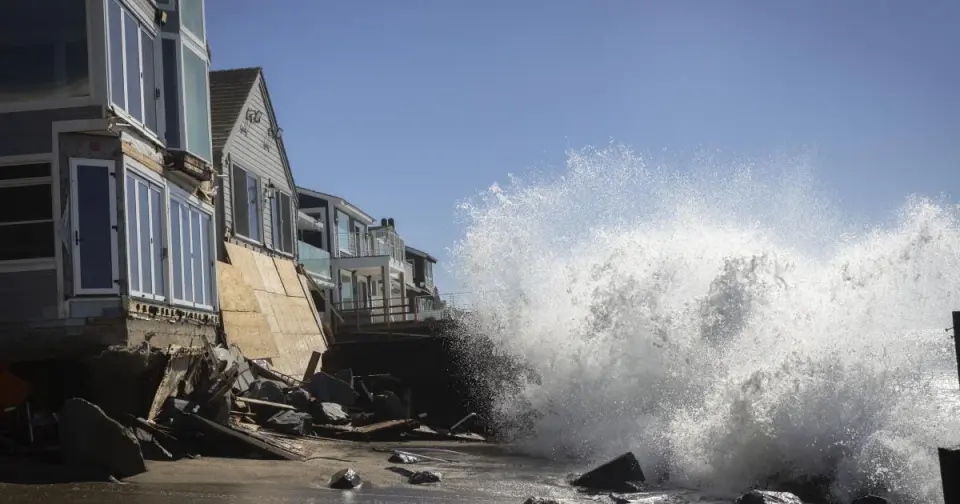
A record-strength El Niño is intensifying, creating high risks for coastal flooding and sea-level rise in California, though winter rainfall totals remain uncertain. While NOAA projects a 60-70% chance of above-normal precipitation in Southern California, experts debate whether this will result in historic deluges or a moderate season. King tides in November and December, combined with record ocean heat, are already causing severe coastal erosion and flooding from San Diego to Marin County. Governor Gavin Newsom has declared a state of emergency, but forecasts for inland rainfall vary widely, with some models predicting up to 2.5 times average precipitation while others suggest near-normal conditions.
Key points
- El Niño is strengthening, with a 60% chance of becoming the strongest on record since 1950, according to the National Weather Service.
- NOAA forecasts a 60-70% probability of above-normal precipitation for Southern California in January-March, but leaves a 30-40% chance of near-normal or below-normal rain.
- Coastal sea levels in Southern California are currently 16 inches higher than astronomical norms due to El Niño and global warming, setting new records in October.
- King tides in late November and December are expected to raise sea levels by 2-3 feet above recent peaks if aligned with storms, posing severe erosion risks.
- Governor Gavin Newsom has declared a state of emergency in California to prepare for anticipated floods and mudslides, particularly in wildfire-scarred areas.
Background
Recent coverage highlights growing concerns about infrastructure failure points in California due to the convergence of El Niño and climate change. A UC Davis study identified six high-risk zones for severe damage, while earlier reports noted federal funding cuts affecting emergency preparedness. The current event follows a pattern of increasing ocean heat, with scientists noting that atmospheric water vapor levels are unprecedented.
How outlets are covering it
Los Angeles Times emphasizes the scientific debate over rainfall intensity, noting that while coastal flooding is certain, inland precipitation outcomes vary. Grist highlights global impacts, estimating the El Niño could kill 450,000 people worldwide, and notes regional variations such as drier conditions in the Midwest. BBC focuses on the jet stream shift, predicting wetter winters in the southern US and warmer, drier conditions in the north, while cautioning that El Niño does not guarantee specific outcomes. All sources agree on the record strength of the El Niño but differ on the severity of California's winter rainfall, with some experts citing the 2015-16 El Niño as a precedent for a dry season despite strong ocean warming.
Why it matters
The uncertainty in rainfall forecasts complicates emergency planning and resource allocation for California. While coastal flooding is imminent, the potential for record inland rainfall could overwhelm infrastructure in areas already stressed by wildfires and drought. The event also serves as a real-time indicator of climate change impacts, with record ocean heat and sea levels signaling long-term trends that may intensify future weather patterns.
What to watch
Forecasters expect significant wet storms to begin in December, with January and February identified as the most likely months for major rainfall and flood concerns. King tides in late November and early December will test coastal defenses, and emergency planners are preparing for worst-case scenarios involving precipitation exceeding 2.5 times the average. Monitoring of the polar vortex and jet stream will be critical for predicting potential cold air outbreaks that could alter precipitation types in the northern US.
- Fearmongering or fair warning? A fierce debate over how bad California's El Niño winter will get Los Angeles Times
- What 165 days of record ocean temperatures will mean for extreme winter weather The Washington Post
- What the new 'astonishing' El Niño forecast means for California SFGATE
- A monstrous El Niño has arrived. Here’s what it means for where you live. Grist
- What could El Niño mean for winter weather in the US and Canada? BBC
Want the full story? Read the original reporting
Read on Los Angeles Times