
Xi’s Washington State Visit Ends With Trade Extension but No Major Breakthroughs
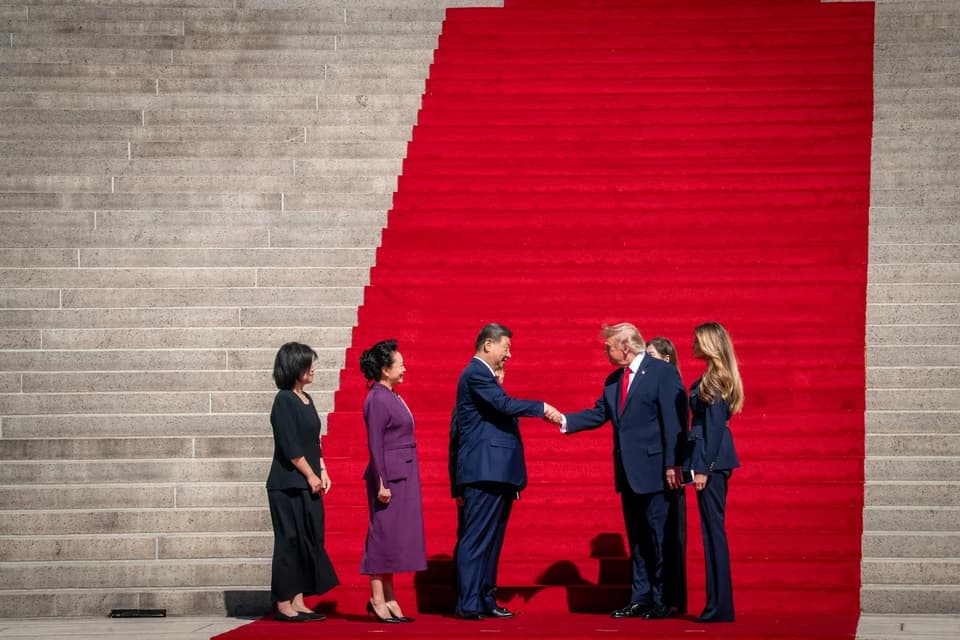
Chinese President Xi Jinping concluded a three-day state visit to Washington with President Donald Trump, marked by extensive ceremonial honors but limited substantive outcomes. The leaders extended a trade truce until January 10, 2026, and agreed to meet twice more this year, but failed to reach concrete agreements on artificial intelligence, Taiwan, or the Iran conflict. While the visit emphasized personal rapport and pageantry, critics noted the absence of tangible progress on key strategic issues.
Key points
- The US and China extended their existing trade truce until January 10, 2026, a two-month extension of the agreement reached in Busan, South Korea.
- Xi Jinping promised to send two pandas to Atlanta and invited 100,000 young Americans to visit China, while Trump hosted a lavish state dinner and toured the National Archives with Xi.
- No concrete agreements were reached on artificial intelligence regulation, Taiwan, or the Iran war, despite discussions on these topics.
- The leaders agreed to meet again at the APEC summit in Shenzhen in November and the G20 in Miami in December.
- Critics and analysts described the visit as 'diplotainment,' noting that ceremonial displays overshadowed substantive diplomacy, though some Chinese officials viewed the warm reception as a success.
Background
The summit followed preliminary talks in New York between US Treasury Secretary Scott Bessent and Chinese Vice Premier He Lifeng, which focused on AI, tariffs, and rare earths. Prior to the visit, US automakers lobbied to bar Chinese carmakers from the US market, citing national security risks. The trade truce, which lowered US tariffs and suspended Chinese controls on rare earth exports, was set to expire on November 10, 2026, making the extension a key outcome.
How outlets are covering it
The Washington Post emphasized the ceremonial nature of the visit, noting that Trump treated Xi as a peer but yielded few breakthroughs. The New York Times highlighted Xi’s efforts to influence US policy on Taiwan and Japan, using praise and historical references to challenge American support for these allies. CNBC focused on the trade extension and the lack of progress on AI and other global issues, while noting the extensive pageantry and the absence of TV pool coverage due to a temporary ban on major networks. The Independent criticized the visit as a distraction from domestic economic concerns, describing it as a 'red-carpet rollout' that offered little substance. Chinese state media, as reported by CNBC, framed the visit as a success, emphasizing the warm reception and the avoidance of the 'Thucydides Trap.'
Why it matters
The summit’s outcomes signal a continued focus on managing tensions rather than resolving them, with the trade extension providing temporary stability but leaving key strategic issues unresolved. The lack of progress on AI and Taiwan suggests that future negotiations, including the APEC and G20 meetings, will be critical in determining the trajectory of US-China relations. The emphasis on ceremony over substance also raises questions about the effectiveness of high-level diplomacy in addressing complex global challenges.
What to watch
The next major developments will likely come from the APEC summit in Shenzhen in November and the G20 in Miami in December, where the leaders are expected to meet again. Analysts warn that the calm surface of the current relationship may mask underlying tensions, with the trade truce’s short extension potentially serving as leverage for future negotiations. The absence of concrete agreements on AI and Taiwan suggests that these issues will remain central to future discussions.
- Trump embraces Xi as a peer, testing a new approach to China The Washington Post
- At Summit, Xi Sought to Tilt Trump’s Stance on America’s Place in Asia The New York Times
- Trump’s red-carpet rollout for Xi was everything MAGA didn’t need amid dire predictions The Independent
- America and China’s leaders indulge in pageantry as crises mount The Economist
- Trump, Xi wrap state visit centered on spectacle over substance. Here are the top takeaways CNBC
Want the full story? Read the original reporting
Read on The Washington Post