
Andrea Doria Wreck Deteriorates, Heightening Risks for Deep Divers
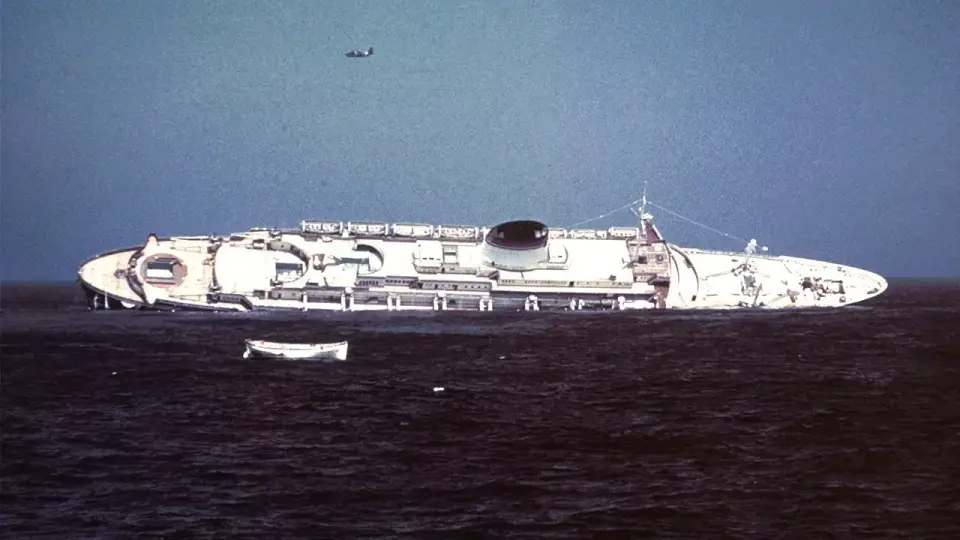
The Andrea Doria, a luxury liner that sank off Massachusetts in 1956, is rapidly deteriorating after 70 years underwater. Known as the 'Mount Everest of shipwrecks' due to its depth and hazards, the wreck poses increasing dangers to divers as its steel hull collapses. While it remains accessible to experienced scuba divers, unlike deeper sites requiring submersibles, the structural decay has led to at least 18 diver deaths since 1956. Experts warn that the wreck may soon become inaccessible or too dangerous to explore.
Key points
- The Andrea Doria sank in July 1956 after colliding with the Swedish liner Stockholm off Nantucket, Massachusetts, killing 52 people while over 1,600 were rescued.
- Located approximately 240 feet beneath the Atlantic, the wreck is considered extremely challenging for scuba divers due to its depth, debris, and sideways orientation.
- Retired U.S. Coast Guard Capt. Aaron Davenport noted that the wreck is 'breaking apart,' with falling debris creating new hazards for explorers.
- Longtime explorer John Moyer described the steel hull as collapsing onto itself, marking the wreck's 'final stage' of flattening.
- As of 2017, at least 18 scuba divers had died in connection with dives to the Andrea Doria, according to Divers Alert Network.
- The wreck remains unique because it is reachable by scuba tanks, unlike the Titanic, which requires pressurized submersibles, though it demands extreme experience and preparation.
Background
Previous coverage of shipwreck exploration, such as the recovery of a 162-year-old Guinness bottle from the Mindoro wreck in 2026, highlights the ongoing interest in maritime archaeology and artifact recovery. However, the Andrea Doria case is distinct due to its proximity to the U.S. coast and the specific risks associated with its rapid structural decay, which contrasts with the more stable but deeper sites like the Titanic.
Why it matters
The deterioration of the Andrea Doria underscores the transient nature of underwater historical sites. As the wreck collapses, it not only increases the immediate risk to divers but also threatens the loss of a significant piece of maritime history. The incident highlights the tension between public access to historical sites and the safety concerns arising from environmental degradation, prompting discussions on how to preserve such sites for future generations while acknowledging the dangers they pose.
What to watch
Experts expect the Andrea Doria to continue deteriorating, potentially rendering it inaccessible or too dangerous for scuba divers in the near future. Increased monitoring by organizations like Divers Alert Network may be required to assess the structural integrity of the wreck and advise against further dives if conditions worsen. Additionally, there may be calls for protective measures or restricted access zones to preserve the remaining structure and ensure diver safety.
Want the full story? Read the original reporting
Read on Fox News