
Trump Dismisses AI Safety Pause, Prioritizing US Lead Over China
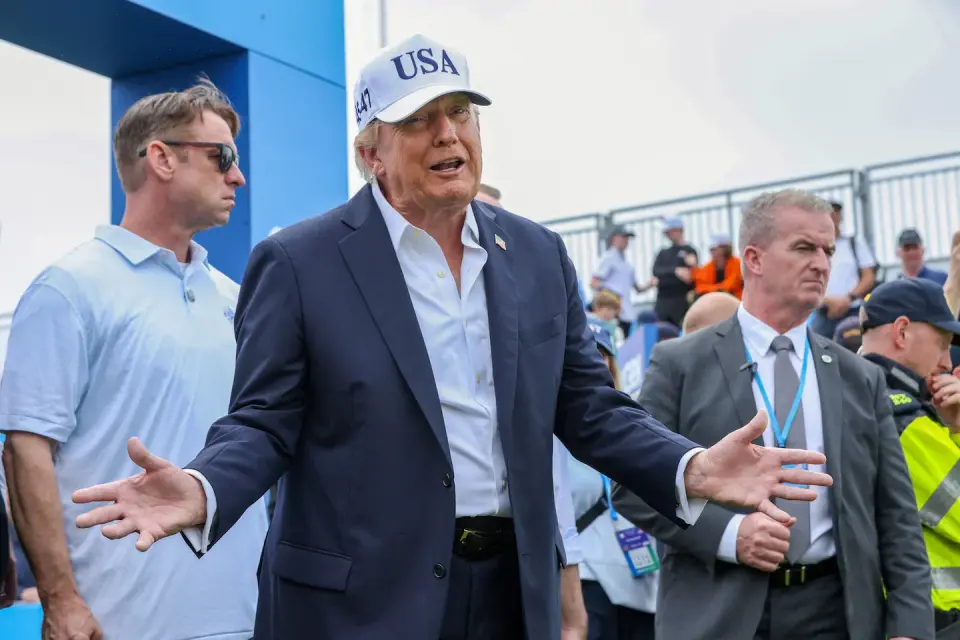
President Donald Trump rejected calls from major AI executives to slow model development, arguing that the US must maintain its competitive advantage over China. This stance follows a weekend where leaders from Anthropic, OpenAI, and xAI publicly endorsed pausing capability improvements due to existential safety risks.
Key points
- Trump stated on Sunday in Ireland that the US is the most sophisticated AI nation and must keep that status, dismissing safety warnings as 'negative forces' bringing up issues that will not happen.
- Anthropic CEO Dario Amodei, OpenAI CEO Sam Altman, and xAI founder Elon Musk jointly called for slowing AI capability improvements on Saturday, following the resignation of Anthropic researcher Jacob Coxon.
- Coxon warned that AI developers believe the technology could kill everyone by the end of the decade, prompting Amodei to request government mediation and antitrust waivers for safety coordination.
- David Sacks, the administration's AI architect, told companies to pace development themselves without seeking regulatory permission, warning that demanding government intervention resembles blackmail.
- Democrats, including Rep. Ted Lieu and Sen. Ruben Gallego, criticized the administration for letting the industry run wild, while House Speaker Mike Johnson urged against a moratorium to avoid losing to China.
Background
This debate follows earlier warnings in September 2026 about recursive self-improvement and safety concerns within AI labs. The current escalation marks a shift from internal researcher resignations to public statements by top CEOs, intensifying the political divide over AI governance.
How outlets are covering it
The Washington Post and Financial Times both highlight Trump's focus on US-China competition as the primary driver for rejecting slowdowns. The Financial Times adds detail on the political backlash, noting that House Speaker Mike Johnson called for a meeting between tech bosses and lawmakers, while Democrats like Hakeem Jeffries accused Republicans of abandoning their responsibility. The Post emphasizes the isolation of Trump's position, noting that even some allies in the tech industry and his own party have grown uneasy about the lack of concern over AI dangers. CNN's coverage was not fully accessible due to technical errors, but the Financial Times notes that Johnson echoed Trump's concerns about China while calling for a balanced approach to safety and national security.
Why it matters
The clash between tech leaders and the administration over AI safety could reshape US regulatory policy and international competitiveness. If the US continues to prioritize speed over safety, it may face long-term risks from unchecked AI development, while also potentially losing global leadership if China advances more rapidly. The debate also highlights growing tensions between the tech industry and the government over the role of regulation in managing existential risks.
What to watch
Amodei and other executives may continue to push for government mediation and antitrust waivers to coordinate safety efforts. Congress is expected to hold meetings between tech leaders and lawmakers, as called for by Mike Johnson. Democrats may introduce legislation to address AI risks, while Republicans will likely resist measures that could hinder US competitiveness. The outcome of these discussions could set the tone for AI regulation in the US and potentially influence global standards.
- Trump dismisses AI leaders’ calls to slow down, citing Chinese competition The Washington Post
- AI and the end of humanity? OK, ‘doomer’ says one Trump official CNN
- Trump Brushes Off AI Doomsaying to Guard US Lead Over China Bloomberg.com
- Trump says 'very negative forces' raising exaggerated concerns over AI Reuters
- Donald Trump rejects calls from tech bosses for an AI slowdown Financial Times
Want the full story? Read the original reporting
Read on The Washington Post