
El Niño Drives Record Tides Across California, Extending Flood Advisories Through Weekend
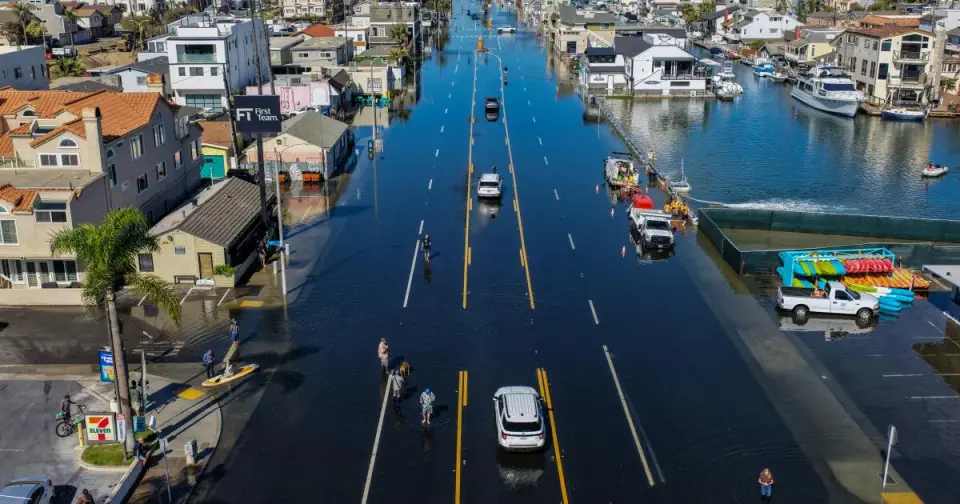
Record-breaking high tides driven by El Niño and a marine heatwave have inundated Southern and Northern California coastlines, breaking historical water level records. The National Weather Service has extended flood advisories through the weekend as tides remain elevated, with experts warning that future 'king tides' during winter holidays could cause significantly more severe flooding if storms coincide.
Key points
- The National Weather Service extended flood advisories for Southern California coastal counties through Friday and Bay Area advisories through Sunday, as tides declined slower than initially predicted.
- Tide gauges in San Pedro, Santa Barbara, La Jolla, and San Diego broke all-time records on Tuesday, with San Pedro reaching 8.19 feet, the highest since records began in 1923.
- Flooding impacted low-lying areas in Newport Beach, Long Beach, and San Francisco’s Embarcadero, leading to road closures and the submersion of businesses and homes.
- Scientists attribute the extreme water levels to a combination of El Niño, a marine heatwave, and a Kelvin wave, which have raised sea levels by 1.25 to 1.8 feet above astronomical norms.
- Experts warn that upcoming king tides around Thanksgiving and Christmas could add another foot or two to current levels, potentially creating up to 5 feet of sea level rise above average if storms align.
Background
This event follows a series of record-breaking tides in late October 2026, which were initially attributed to the convergence of El Niño, a marine heatwave, and astronomical cycles. Previous coverage noted that Los Angeles had already logged 12 coastal flood days in 2026, outpacing any year in the last 50 years. The current situation is viewed as a precursor to more severe winter conditions, with experts predicting that the combination of El Niño and Kelvin waves could lead to disastrous flooding if strong storms occur during high tide windows.
How outlets are covering it
The Los Angeles Times emphasizes the record-breaking nature of the tides in Southern California, highlighting specific gauge readings and the extension of flood advisories. The New York Times focuses on the broader California context, noting that tides are expected to get higher throughout the winter due to El Niño. Yahoo highlights the Bay Area, where flood advisories were extended through the weekend as water levels surpassed records for October and November. The Guardian provides a comprehensive view, noting the chaos across the state, including kayak commutes in Marin County, and warns that the current situation is a preview of potentially more disruptive conditions later in the year. All sources agree on the role of El Niño and marine heatwaves in driving the extreme tides, but differ in their geographic focus and the specific details of the flood advisories.
Why it matters
The record-breaking tides highlight the increasing frequency and severity of coastal flooding in California due to climate change and El Niño. The extended flood advisories and potential for more severe flooding during winter holidays pose significant risks to infrastructure, property, and public safety. The event underscores the need for preparedness and adaptation measures in coastal communities, as the combination of El Niño, marine heatwaves, and astronomical cycles could lead to unprecedented water levels in the coming months.
What to watch
The National Weather Service expects tides to gradually subside into the weekend, but flood advisories remain in effect. Experts predict that future king tides around Thanksgiving, Christmas, and Martin Luther King Jr. Day could break current records, especially if strong storms coincide. The potential for up to 5 feet of sea level rise above average during these events raises concerns about significant flooding and damage to coastal infrastructure. Residents are advised to prepare for potential road closures and avoid driving through water of unknown depth.
- SoCal coast braces for more flooding as El Niño’s high tides break records Los Angeles Times
- California’s High Tides Set Records This Week. They’re Going to Get Higher. The New York Times
- Bay Area flood advisories extended as water levels continue to shatter records Yahoo
- ‘Marin Is the Hotspot’: Bay Area to See Coastal Flooding Through Saturday KQED
- Record-breaking high tides spark chaos – and kayak commutes – across California The Guardian
Want the full story? Read the original reporting
Read on Los Angeles Times