
G20 Finance Ministers Clash Over U.S. Tariffs and Iran Sanctions
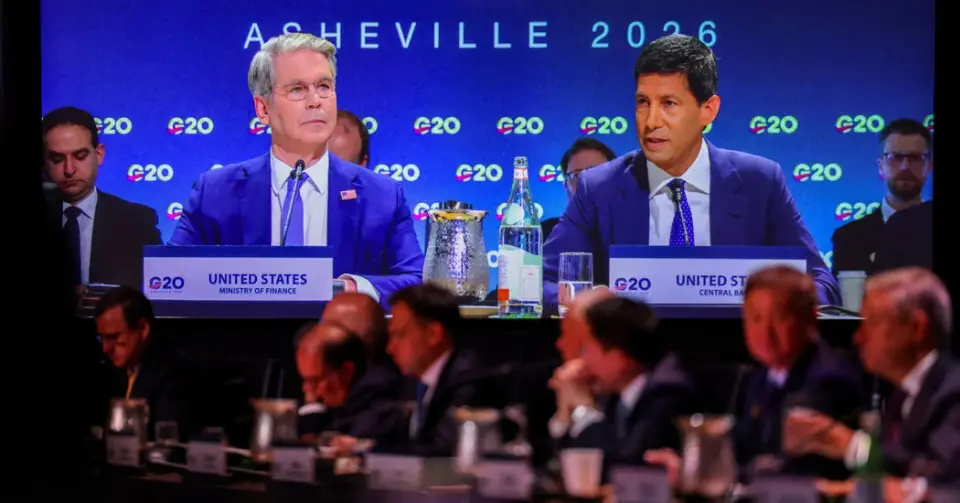
At the G20 finance meetings in Asheville, N.C., U.S. allies pushed back against Washington’s economic policies. While Treasury Secretary Scott Bessent touted U.S. growth and urged support for sanctions against Iran, European and Canadian delegates criticized U.S. tariffs and currency interventions. The summit highlighted a widening gap between Washington’s unilateral approach and its traditional partners.
Key points
- Treasury Secretary Scott Bessent opened G20 sessions by praising the U.S. economy and urging other nations to adopt similar policies.
- European, Canadian, and other allied delegates voiced dissatisfaction with U.S. tariffs, the ongoing conflict with Iran, and a recent decision to sell U.S. euro holdings to support the Japanese yen.
- Bessent claimed that the EU, Britain, and the UAE support the U.S. campaign to economically pressure Iran, a stance that contrasts with the broader diplomatic friction at the summit.
- The Washington Post reported that Bessent described the U.S. strategy as an effort to 'economically asphyxiate' Iran, while the New York Times noted that allies viewed these actions as harmful to global economic stability.
Background
This summit follows a series of recent U.S. actions that have strained relations with traditional allies. In late August, the U.S. unveiled sweeping new sanctions against Iran and faced criticism for restricting media access at a separate G20 leaders' summit in Florida. The current friction in Asheville builds on a broader pattern of U.S. unilateralism in economic and foreign policy, including previous disputes over trade and regional security.
How outlets are covering it
The New York Times emphasized the diplomatic friction, noting that allies explicitly criticized U.S. tariffs and the war with Iran as damaging to their economies. In contrast, The Washington Post focused on the U.S. administration's offensive posture, highlighting Bessent's claim that major allies support the 'asphyxiation' of Iran's economy. WLOS provided a local perspective, questioning the actual economic impact the summit had on the Asheville region, suggesting that the high-profile event may not have translated into significant local benefits.
Why it matters
The disagreements at the G20 finance meetings signal a potential shift in the U.S. relationship with its traditional economic partners. If allies continue to resist U.S. pressure on trade and currency, it could lead to a fragmented global economic order. The ability of the U.S. to maintain a unified front on issues like Iran sanctions is now in question, which may affect the effectiveness of international economic policy.
What to watch
The U.S. administration is expected to continue its pressure on Iran and its trade policies, potentially leading to further friction with European and Asian partners. Future G20 meetings will likely focus on whether these divisions can be managed or if they will result in a more fragmented global economic framework. The outcome of these negotiations will be crucial for the stability of global markets and the effectiveness of international sanctions.
- At G20 Summit, Some U.S. Allies Push Back on Trump’s Economic Approach The New York Times
- Bessent says U.S. plan to ‘asphyxiate’ Iran’s economy has allies’ support The Washington Post
- Five things to know from G20 finance summit The Hill
- How much did G20 benefit Asheville? Estimates differ dramatically WLOS
- Treasury Department blocks certain journalists from covering G20 meeting PBS
Want the full story? Read the original reporting
Read on The New York Times