
Pyongyang launches ten missiles after rejecting Trump's scaled-back drills
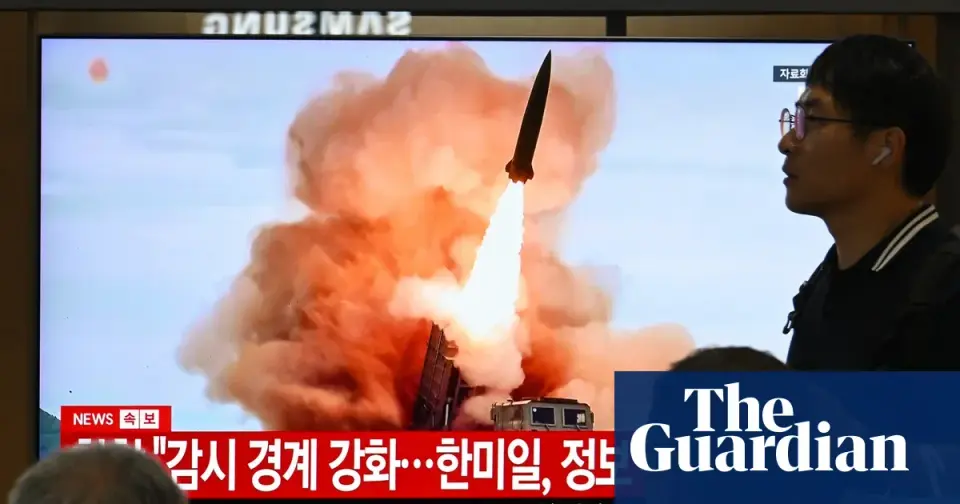
North Korea fired approximately ten short-range ballistic missiles toward the Sea of Japan on Thursday, one day after dismissing US President Donald Trump's order to scale back joint military exercises with South Korea. While Trump cited his personal rapport with Kim Jong-un and Seoul's stance on Iran as reasons for reducing the Ulchi Freedom Shield drills, North Korean leader Kim Yo-jong rejected the gesture as insufficient. She stated that the drills' aggressive nature remained unchanged despite their reduced size and denied any recent communication between her brother and the US president. South Korea's military and national security council responded by bolstering surveillance and coordinating with US and Japanese allies, while Seoul's president expressed cautious optimism that the move might eventually lead to dialogue.
Key points
- North Korea launched about ten short-range ballistic missiles from the Pyongyang region toward eastern waters on Thursday at 5 p.m. local time.
- The launches occurred one day after Trump ordered the Pentagon to substantially reduce the 11-day Ulchi Freedom Shield exercises, which were to end six days early.
- Kim Yo-jong, Kim Jong-un's sister, dismissed the drill reductions as 'not worthy of comment,' arguing they did not alter the exercises' provocative character.
- Kim Yo-jong denied Trump's claim that Kim Jong-un had responded to his request for a conversation, though she noted their personal relations remained 'excellent'.
- South Korea's Joint Chiefs of Staff and National Security Council held emergency meetings, urging Pyongyang to halt launches banned by UN resolutions and coordinating with the US and Japan.
- Trump told reporters he expects to meet Kim Jong-un this year, while South Korean President Lee Jae Myung viewed the drill cuts as a potential step toward peace.
Background
This escalation follows a pattern of North Korean missile tests preceding major US-South Korea exercises, including launches in early August 2026. The current tension is heightened by North Korea's expanded nuclear arsenal, which Trump acknowledged includes 57 weapons, and its strategic alliance with Russia. Previous coverage noted that while Seoul pledged to maintain the alliance despite Trump's orders, analysts warned that scaled-back drills could weaken deterrence. The current missile barrage signals Pyongyang's continued rejection of US overtures without broader policy changes.
How outlets are covering it
The Guardian and NBC News report the core facts of the missile launches and the immediate diplomatic fallout, emphasizing the timing relative to the drill reductions. The Financial Times provides deeper analysis, highlighting Kim Yo-jong's role as a 'bad cop' and the strategic shift in North Korea's position due to its nuclear capabilities and Russian alliance. While The Guardian and NBC focus on the military response and the dismissal of the overture, the Financial Times notes that South Korean President Lee Jae Myung interpreted the drill cuts positively, contrasting with the skepticism of other officials. All sources agree that Kim Yo-jong denied direct communication with Trump, but the Financial Times adds that analysts view this as a potential opening for future dialogue rather than a total rejection.
Why it matters
The missile launches and diplomatic standoff test the durability of the US-South Korea alliance and the viability of Trump's personal diplomacy with North Korea. The rejection of scaled-back drills suggests Pyongyang requires more substantial concessions to resume talks, while the missile tests violate UN resolutions and heighten regional security risks. The interplay between US policy, South Korean alliance commitments, and North Korea's strategic leverage with Russia defines the current geopolitical landscape in East Asia.
What to watch
Watch for further North Korean missile tests or diplomatic statements as Trump and Kim Jong-un navigate their personal relationship. Monitor South Korea's response to the alliance strain and whether the US will make additional concessions to resume dialogue. The outcome of potential US-North Korea summit talks and the impact of North Korea's Russian alliance on regional security will be key developments.
- North Korea fires 10 missiles day after Trump curtails South Korea joint drills The Guardian
- North Korea fired about 10 short-range ballistic missiles toward the sea, Seoul says NBC News
- North Korea fires a suspected missile toward the sea, Japan says NPR
- North Korea launches missile barrage after dismissing Donald Trump’s overture Financial Times
- North Korea launches ballistic missiles as Trump seeks to rekindle nuclear talks with Kim Jong Un CBS News
Want the full story? Read the original reporting
Read on The Guardian