
NTSB data reveals failed braking systems and aborted landing attempt in fatal Miami Amazon jet crash
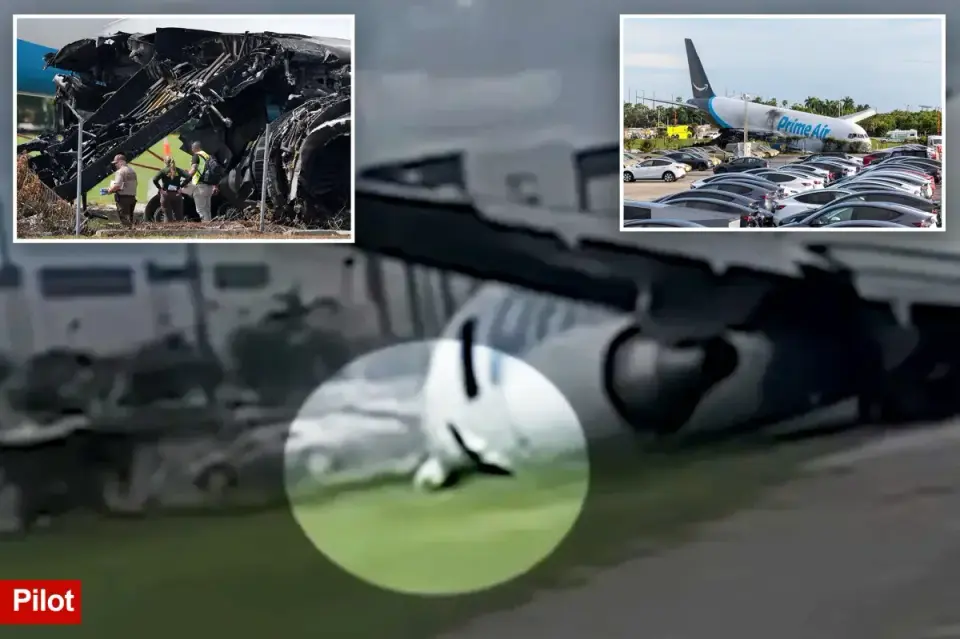
Federal investigators have released preliminary data indicating that the Amazon cargo jet that crashed in Miami on Sunday failed to deploy key braking systems and attempted an aborted landing seconds before impact. The Boeing 767, operated by 21 Air, overran Runway 30 at Miami International Airport, killing five workers from a cleaning company and injuring five others, including the two pilots. While the aircraft’s wheel brakes were applied, flight data shows no activation of speed brakes or thrust reversers. Investigators noted that the pilots briefly increased throttle to full power, suggesting a possible go-around attempt, before returning to idle. The crash has prompted scrutiny of the operator’s safety record and the airport’s lack of an Engineered Material Arresting System (EMAS) to stop runaway aircraft.
Key points
- NTSB data shows speed brakes and thrust reversers did not deploy during the crash, despite wheel brakes being applied.
- Flight data indicates pilots briefly increased throttle to full power, suggesting an attempt to abort the landing (go-around) before the crash.
- The crash killed five employees of Professional Ocean Service Corp. and injured five others, including pilots Felipe Silva Molina and Joseph Carroll.
- Miami International Airport lacks an Engineered Material Arresting System (EMAS), raising questions about safety measures to prevent aircraft from leaving the runway.
- Former 21 Air pilots have raised concerns about safety issues at the company, which operates the Amazon cargo jet.
Background
The crash occurred on Sunday, September 6, 2026, when Prime Air Flight 7598, a Boeing 767-300 operated by 21 Air, overran Runway 30 at Miami International Airport while landing from San Juan, Puerto Rico. The aircraft struck a van carrying seven workers from Professional Ocean Service Corp. and a nearby SUV, killing five people and injuring five others. The NTSB has been investigating the crash, focusing on factors such as landing speed, braking, weather, and the aircraft’s maintenance history. The crash disrupted flights at Miami International Airport, with dozens of cancellations and delays reported in the days following the incident.
How outlets are covering it
The New York Post highlighted the emotional distress of the pilots, reporting that one pilot exclaimed 'My career is over' moments after the crash. Fox News emphasized the NTSB’s findings that key braking systems did not deploy, while CNN detailed the sequence of events, including the brief increase in throttle that suggested a go-around attempt. The Miami Herald focused on the ongoing investigation and the impact on airport operations, noting that former 21 Air pilots had raised safety concerns. All sources agreed on the basic facts of the crash but differed in their emphasis on the technical details, the human impact, and the broader safety implications.
Why it matters
The crash underscores the importance of proper braking systems and safety measures at airports, particularly those surrounded by urban areas. The lack of an EMAS at Miami International Airport has raised questions about whether the airport needs better equipment to prevent similar incidents in the future. The crash also highlights the need for thorough investigations into the safety records of cargo operators and the importance of pilot training and experience in preventing such tragedies.
What to watch
The NTSB is expected to interview the two pilots and release the cockpit voice recorder data after the interviews. The agency will continue to investigate the crash, focusing on factors such as the aircraft’s performance, the pilots’ actions, and the safety measures in place at the airport. The investigation is expected to take several weeks, with a final report to be released in the coming months.
- Distressed pilot of deadly Amazon cargo jet wreck reportedly exclaimed 'My career is over' moments after crash New York Post
- Data shows Amazon jet’s key braking systems did not deploy during deadly Miami crash: NTSB Fox News
- Live plane crash updates: Miami flight delays, runway status, pilot interviews Miami Herald
- Pilots applied full power seconds before Amazon cargo plane overran Miami runway, killing 5 in cleaning van, officials say CNN
- Amazon Cargo Jet Pilots Appeared to Try Aborting Landing, N.T.S.B. Investigation Indicates The New York Times
Want the full story? Read the original reporting
Read on New York Post