
Rubio Declares 'No Need' for Iran Strikes as US Pursues Economic Squeeze
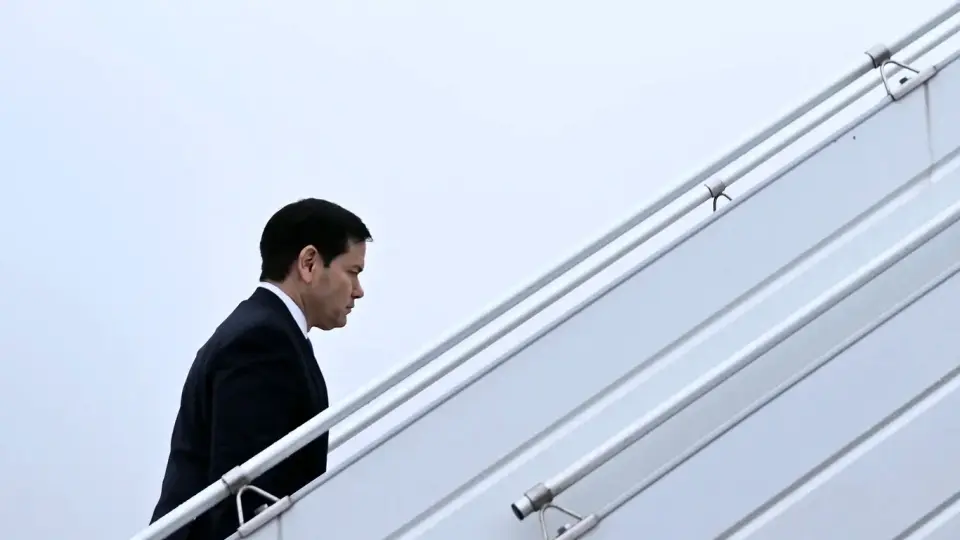
Secretary of State Marco Rubio told G7 counterparts in Paris that the US has chosen a 'third option' between war and diplomacy: intensifying economic pressure on Iran. He stated that 'major combat operations' are no longer necessary, citing the effectiveness of the current blockade and a new operation called 'Iron Gate' to cut off land routes for weapons. While Trump signaled 'positive momentum' after meeting Qatar’s prime minister, Iran’s Supreme Leader has ordered an end to the 'no war, no deal' status quo, creating a risk of escalation if economic pain does not force Tehran to negotiate.
Key points
- Rubio told G7 foreign ministers in Paris that the US is pursuing a 'strangulation' strategy via economic sanctions and a naval blockade, rather than resuming military strikes or signing a deal.
- The administration launched a new operation dubbed 'Iron Gate' to cut off land routes Iran uses to move advanced weaponry and technology.
- Trump told Qatar’s prime minister that new strikes are 'quite unlikely' and that the US is 'locked and loaded' but prefers the status quo due to Gulf allies' preferences.
- Iran’s Supreme Leader Mojtaba Khamenei ordered an end to the 'no war, no deal' stalemate, demanding a clear conclusion to the conflict, which some analysts fear could lead to IRGC escalation.
- Rubio noted that the economic campaign is 'devastating' and has no end date, aiming to force Iran to accept terms by making its economy unsustainable.
Background
The US and Israel launched strikes against Iran in late February 2026, killing Ayatollah Ali Khamenei and triggering an eight-month conflict. Recent weeks saw a third US carrier group deployed to the region and stalled diplomacy in New York. The current shift away from military action follows Republican losses in the November 2026 midterm elections, which analysts link to rising oil prices caused by the Strait of Hormuz blockade.
How outlets are covering it
Axios highlights internal administration divisions, noting that Rubio, Treasury Secretary Scott Bessent, and CIA Director John Ratcliffe pushed for the economic 'strangulation' strategy against factions favoring renewed strikes. The New York Times emphasizes Rubio’s explicit statement that 'major combat operations' are no longer needed, framing it as a post-midterm de-escalation signal. Yahoo News focuses on the diplomatic angle, noting that Iran’s demands for reopening the Strait of Hormuz remain on the table, while British Foreign Secretary Ed Miliband called for an 'all-out diplomatic effort' to end the stalemate. AP News, while covering the same G7 summit, shifted focus to Ukraine, noting that European allies are pushing for inclusion in US-Russia-Ukraine talks in Abu Dhabi, a separate but concurrent diplomatic priority for the administration.
Why it matters
The US pivot to economic pressure over military action aims to avoid the political costs of a renewed war that hurt Republicans in the midterms. However, the strategy risks prolonged instability in the Gulf, with allies like Turkey and Iraq warning that US pressure on their trade with Iran could cause domestic instability. Meanwhile, Iran’s leadership is signaling a potential shift toward more aggressive regional attacks if the economic squeeze does not yield a diplomatic breakthrough, raising the risk of an unintended military confrontation.
What to watch
Watch for the outcome of Qatar’s mediation efforts, which include bringing in China and European countries as guarantors to ease Iranian distrust. The next critical test is whether Iran’s economic pain forces it to accept US terms or if the IRGC interprets the stalemate as a green light for aggressive attacks in the region. Additionally, the US-Russia-Ukraine talks in Abu Dhabi will test whether the administration can manage multiple high-stakes diplomatic fronts simultaneously.
- Trump swung between war and diplomacy — then chose a third way Axios
- Rubio says no need for major combat operations against Iran given US economic campaign Reuters
- Rubio urges nations to ‘step up’ on Strait of Hormuz security AP News
- Rubio says 'no need' to attack Iran as diplomacy gathers pace Yahoo
- Rubio Says ‘Major Combat Operations’ in Iran War Are No Longer Needed The New York Times
Want the full story? Read the original reporting
Read on Axios