
Rubio Warns of War Spillover as Kyiv and Moscow Exchange Heavy Strikes
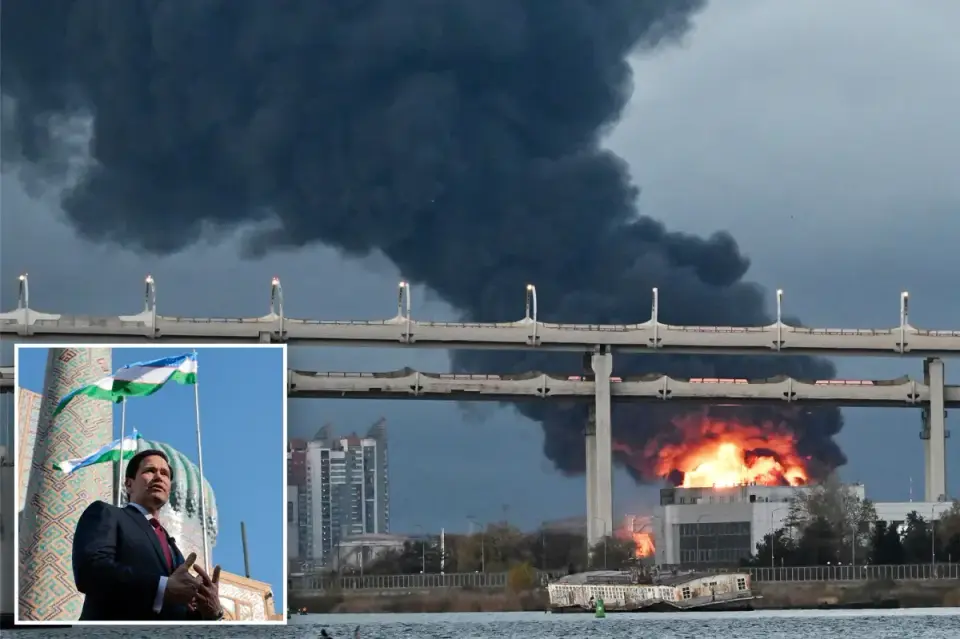
US Secretary of State Marco Rubio warned that the four-year-old Russia-Ukraine conflict carries a 'real risk' of spreading to neighboring countries due to drone malfunctions or sabotage. Speaking in Uzbekistan, Rubio urged both sides to focus on ending the war, denying reports that the US paused intelligence sharing. Simultaneously, Russia launched a 'massive strike' on Kyiv, while Ukraine launched over 1,000 drones against Russian oil terminals in St. Petersburg, marking a significant escalation since the collapse of a brief 'energy ceasefire.'
Key points
- Rubio stated in Samarkand that the war poses a risk of escalation into other nations via failed sabotage or drones affected by electronic warfare.
- Rubio denied that the US suspended intelligence sharing with Ukraine, contradicting claims by Ukrainian President Volodymyr Zelensky.
- Zelensky accused the US of intentionally throttling Starlink satellite internet speeds to send a 'message,' a claim Treasury Secretary Scott Bessent called 'reckless.'
- Russia launched a massive overnight strike on Kyiv, damaging a 25-story residential building and a subway station, killing at least one woman.
- Ukraine retaliated with over 1,000 drones targeting St. Petersburg oil terminals, logistics centers, and data centers, leaving 20,000 people without electricity.
- President Trump paused a new sanctions package on Russia, citing national interest, while Zelensky criticized the move as rewarding Moscow.
Background
This escalation follows the collapse of a short-lived 'energy ceasefire' declared by President Trump in early October. Previous tensions included a failed August 2025 Alaska meeting and a recent G20 invitation to Vladimir Putin. The current crisis is marked by a breakdown in US-Ukraine relations, with Zelensky accusing Washington of prioritizing Russian fuel imports over Ukrainian security.
How outlets are covering it
The New York Post and France 24 emphasize Rubio's diplomatic efforts and his denial of intelligence pauses, framing the situation as a push for peace. The Guardian highlights the sharp diplomatic rift, focusing on Zelensky's accusations of US sabotage via Starlink and Bessent's defense of the administration. All sources agree on the physical escalation, noting the massive exchange of strikes on energy and civilian infrastructure, but differ on the narrative of US intent: Washington views its actions as peace-building, while Kyiv views them as complicity in Russian aggression.
Why it matters
The conflict's proximity to NATO borders, evidenced by recent drone incursions into Lithuanian airspace, raises the risk of a broader European war. The collapse of the energy ceasefire and the pause on US sanctions signal a potential shift in Western policy that could embolden Russian military operations while deepening the diplomatic crisis between Washington and Kyiv.
What to watch
Analysts expect continued tit-for-tat strikes on energy infrastructure as the 'energy ceasefire' remains broken. The US is expected to analyze the global impact of its sanctions pause, while Ukraine may further escalate attacks on Russian refineries. A potential three-way meeting between Trump, Putin, and Xi Jinping remains under discussion but is not yet finalized.
- Rubio warns there's 'real risk' Russia-Ukraine war could spread into another country as he calls for end to conflict New York Post
- Zelenskyy thanks Trump for resumed intelligence sharing after US Starlink ‘message’ The Guardian
- Rubio says Ukraine and Russia should be focused on ending the war Reuters
- Zelensky Says Intelligence Sharing With US Working Again Yahoo Finance
- Russia pounds Kyiv as Rubio urges Ukraine's Zelensky to 'focus' on ending the war France 24
Want the full story? Read the original reporting
Read on New York Post