
UN adopts Equal Earth map to correct Mercator distortions
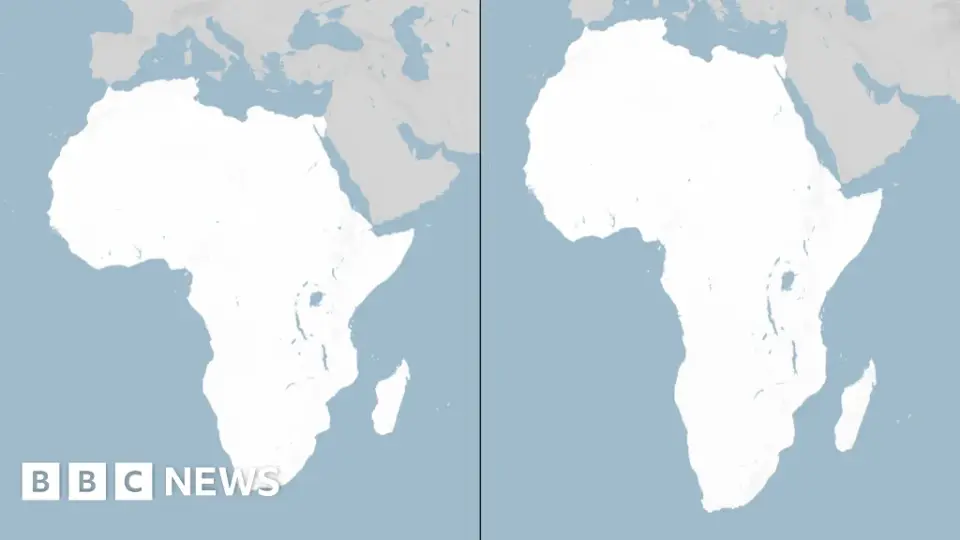
The UN General Assembly voted 164-1 to adopt the Equal Earth projection, replacing the Mercator map to accurately reflect continental sizes. The resolution, sponsored by Togo and backed by the African Union, aims to correct historical distortions that minimized Africa. France announced it will abandon Mercator for the Eckert IV projection, while the US opposed the change.
Key points
- The UN General Assembly passed the 'Correct the Map' resolution with 164 votes in favor, six abstentions, and one vote against from the United States.
- The resolution promotes the Equal Earth projection, developed in 2018, which accurately represents the relative surface areas of continents, particularly Africa, which is 14 times larger than Greenland.
- France announced it will abandon the Mercator projection in favor of the Eckert IV projection, citing the need for accurate geographical representation in diplomacy and education.
- The Mercator projection, created in 1569 for navigation, distorts sizes by inflating regions near the poles and shrinking equatorial areas, leading to skewed global perceptions.
- The vote is non-binding but encourages international organizations, educational institutions, and technology platforms to adopt more accurate map projections.
Background
Previous coverage indicated that the UN vote was anticipated as a significant shift in global cartography, with the African Union and Togo leading the campaign to replace the Mercator projection. Earlier reports highlighted the potential impact on education and technology, including calls for tech platforms to update their maps to reflect accurate continental sizes.
How outlets are covering it
BBC and CNN emphasize the symbolic and practical significance of the UN vote in correcting historical distortions that minimized Africa. France24 and Le Monde focus on France's decision to abandon the Mercator projection, highlighting the geopolitical implications and the shift toward more accurate representations. The US opposition is noted by BBC, while France's support is detailed by France24 and Le Monde. The perspectives highlight the tension between historical cartographic conventions and the push for accurate geographical representation.
Why it matters
The adoption of the Equal Earth projection by the UN and the shift by France signal a broader move toward accurate geographical representation, which can influence global perceptions, education, and policy. Correcting map distortions helps ensure that regions like Africa are not visually minimized, potentially impacting international relations and development priorities.
What to watch
International organizations, educational institutions, and technology platforms are expected to adopt the Equal Earth or other accurate projections in response to the UN resolution. France's switch to the Eckert IV projection may influence other nations to follow suit, leading to a gradual shift away from the Mercator projection in official and educational contexts.
- UN votes to adopt new world map showing Africa's true size BBC
- UN votes to adopt new map that makes our world look very different CNN
- UN approves resolution in support of map that shows Africa's true size Reuters
- France to abandon 'distorted' Mercator map projection: minister france24.com
- France adopts fairer world map ahead of UN vote on more balanced geography lemonde.fr
Want the full story? Read the original reporting
Read on BBC